
Beyond the Transaction: Improving Self-Service Systems via Emotional Virtual Agents
2527_Towards the improvement of self-service systems via emotional virtual agents.
This research investigates the integration of affective computing into self-service systems (SST) through emotional virtual agents. It identifies specific facial expressions triggered by system failures and evaluates the perceived appropriateness of agent emotional responses, establishing a foundation for more empathetic human-computer interaction in retail.
TL;DR
Self-service technology (SST) is a staple of modern retail, yet it remains a primary source of consumer frustration. This paper explores a critical evolution: transforming these "cold" interfaces into empathetic agents. By identifying the specific facial expressions users make when things go wrong and testing how users react to emotional agents, the authors provide a roadmap for creating interfaces that don’t just process payments, but actually "understand" user frustration.
The Affective Gap in Automation
The primary motivation for this research stems from a simple observation: when a self-checkout machine fails, the user experiences a surge of negative emotion. Traditional systems are "blind" to this. This lack of emotional intelligence often leads to "technostress" and decreased consumer loyalty. The authors argue that for SST to truly succeed, it must employ Affective Computing—the ability to detect, interpret, and respond to human emotions.
Methodology: Mapping Frustration to Action Units
The study was structured in two rigorous phases:
- Emotion Detection: Using cameras and facial recognition, the researchers tracked Action Units (AUs)—the fundamental building blocks of facial expressions—while users interacted with a simulated shopping task. This proved that system errors consistently trigger detectable negative facial cues.
- Perception Evaluation: Users were then shown different emotional responses from a virtual agent (e.g., Surprise, Disgust, Neutral) following a system error to determine what felt "natural" versus what felt "intrusive" or "offensive."
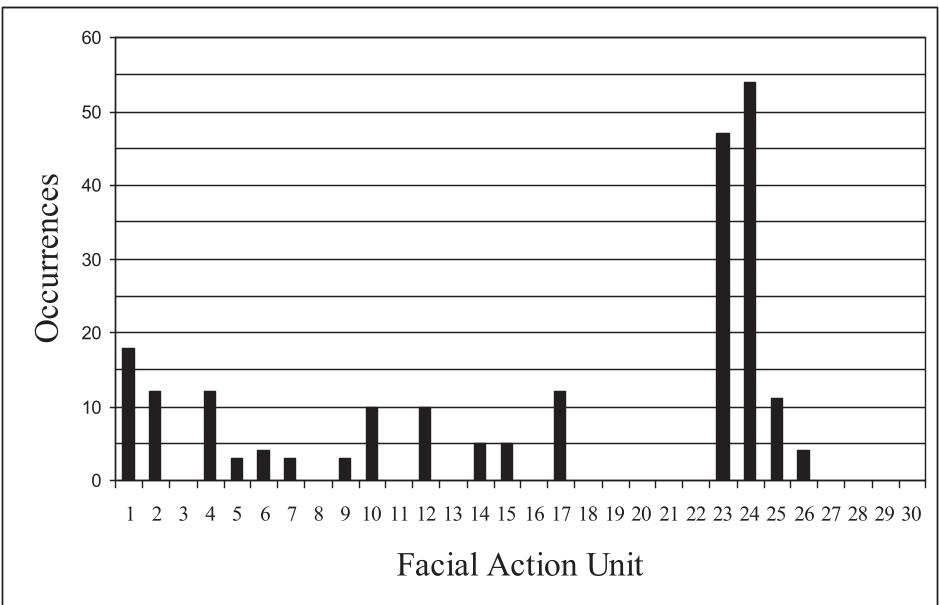 Figure 1: This chart illustrates the specific facial muscle movements (AUs) captured during user interactions, validating that computer vision can reliably detect user frustration in real-time.
Key Insights: Why "Neutral" Wins
The experimental results yielded a surprising counter-intuitive finding:
- The "Neutral" Preference: Despite the push for "emotional" agents, users rated neutral behavior as the most appropriate response to a failure.
- The Disgust Paradox: Displaying disgust was viewed as highly inappropriate, likely because users perceived it as the agent being disgusted at them rather than at the system error.
- Gender Differences: The research highlighted a significant Inductive Bias in how we perceive agents. Women were notably more critical of an agent's "Surprised" expression during an error than men were, suggesting that agent design must be tailored to user demographics.
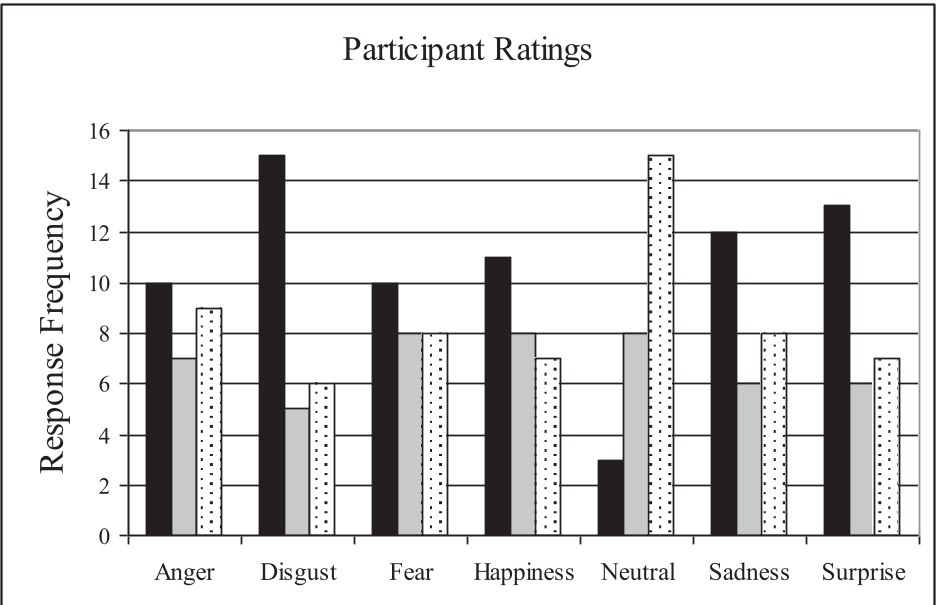 Figure 2: The distribution of appropriateness ratings shows a clear preference for neutral and empathetic responses over more extreme emotional displays like disgust.
Critical Analysis & Conclusion
This work highlights a pivotal shift from Functional HCI to Emotional HCI. While the study was conducted in 2012, its findings are more relevant than ever in the age of AI avatars.
Limitations: The study primarily focuses on facial expressions. In a real-world messy retail environment, lighting and occlusion (e.g., users looking down at their bags) might hinder AU detection.
Future Outlook: The next frontier is Multimodal Affective Computing. Combining the facial AU detection discussed here with voice tone analysis and gait tracking could create a 360-degree emotional awareness that allows self-service systems to intervene before the user becomes visibly angry, perhaps by automatically summoning a human assistant or offering a compensatory discount.
Takeaway: In the design of virtual agents, "more emotion" is not always better. The key to successful interaction lies in contextual appropriateness and demographic sensitivity.