
In Their Shoes: Decoding the Psychology of Chinese Crowdworkers
2557_In Their Shoes A Structured Analysis of Job Demands, Resources, Work Experiences, and Platform Commitment of Crowdworkers in China.
This paper presents a structured analysis of Egyptian-born crowdsourcing dynamics within the Chinese context, specifically focusing on the ZBJ.com platform. By adapting the Job Demands-Resources (JD-R) model, the authors establish a causal link between work characteristics, worker well-being (burnout/engagement), and long-term platform commitment among 289 Chinese crowdworkers.
TL;DR
Is the gig economy a path to freedom or a digital trap? This study moves beyond simple wage analysis to explore the physical and cognitive mechanics of crowdwork in China. By surveying 289 workers on ZBJ.com, researchers found that platform loyalty is a delicate balance: while heavy demands breed burnout, specialized resources (like feedback and skill growth) act as a "psychological buffer" that keeps workers committed.
Background: The Hidden Scale of Chinese Crowdsourcing
With over 30 million crowdworkers as of 2017, China's "witkey" (public intelligence) economy is a titan. However, most HCI (Human-Computer Interaction) research has been Euro-centric. This paper fills the gap by placing the "Job Demands-Resources" (JD-R) lens over the Chinese digital workforce to see what actually drives their engagement.
The "Why" and "How": The JD-R Mechanism
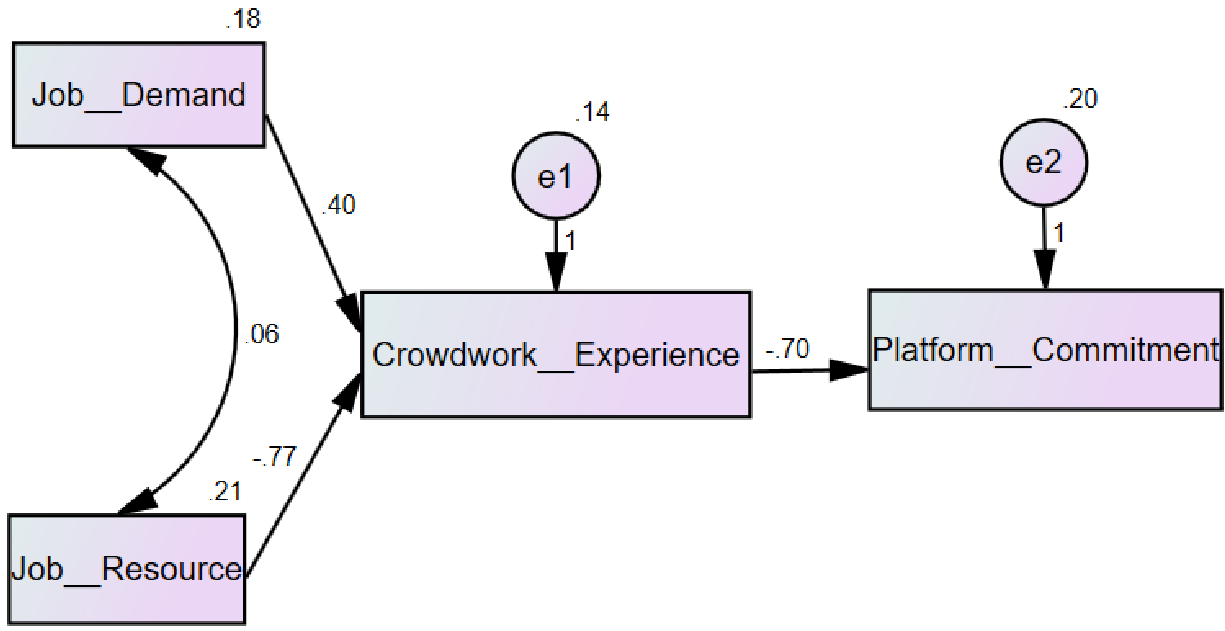
The authors hypothesize that crowdwork isn't a flat experience—it's a causal chain.
- Job Demands (Work pressure, Physical strain, Equipment complexity) lead to Exhaustion.
- Job Resources (Self-development, Feedback, Requester support) lead to Engagement.
- The balance of these two determines Platform Commitment (Loyalty and Acknowledgement).
The Causal Architecture
The path analysis clearly shows that negative work experiences act as a "bottle-neck" for platform loyalty. If a platform increases demands without providing resources, loyalty drops regardless of the pay.
Surprising Insights from Demographic Analysis
The study’s most provocative findings come from how different groups perceive their "digital shoes":
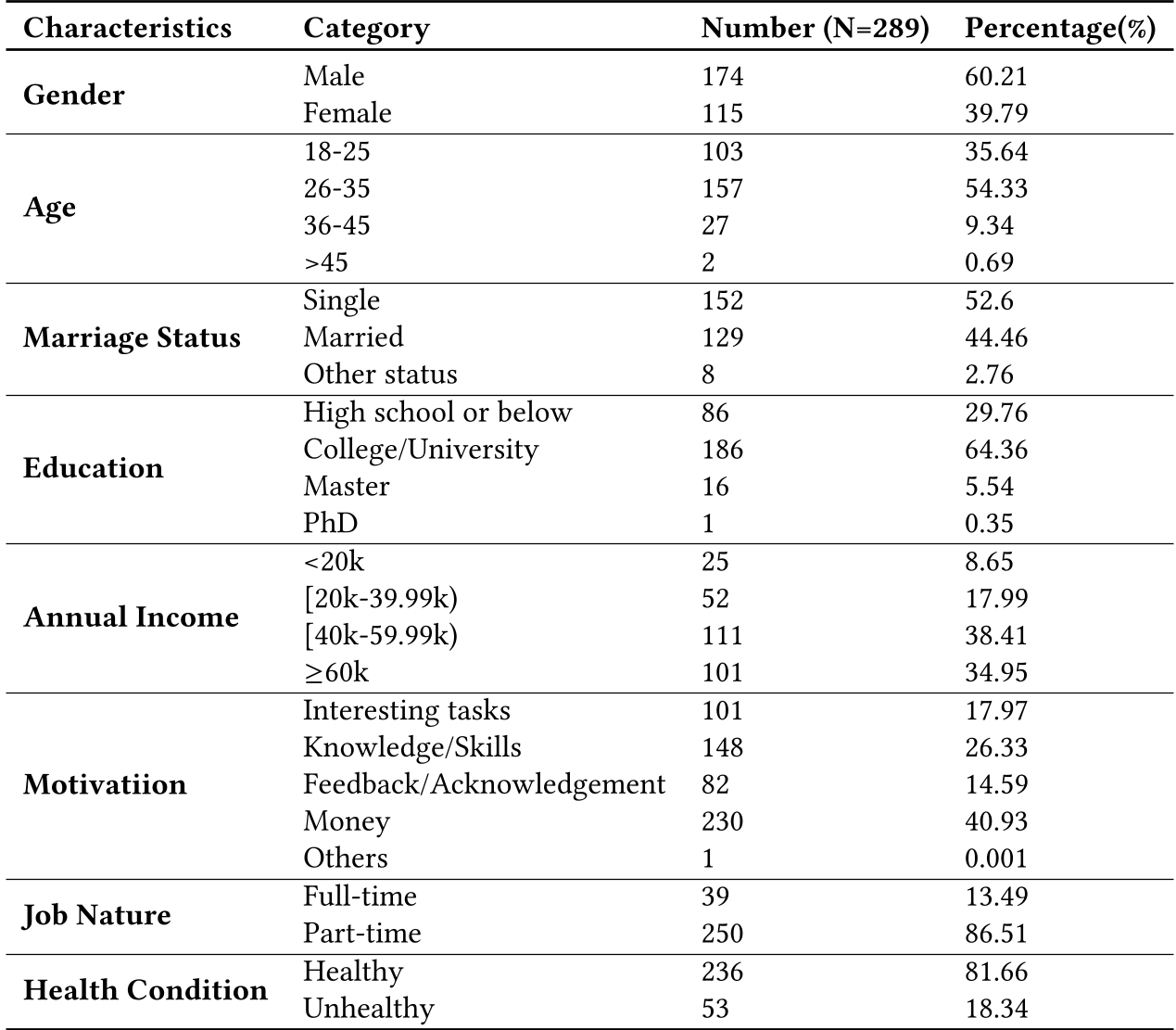
- The Low-Income Paradox: Contrary to the assumption that low-wage work is miserable, low-income workers in China reported higher loyalty and better "maladjustment" scores. For this group, the platform provides a vital alternative to unemployment, and they are more motivated to seek out resources and feedback to secure their income.
- The Overqualified Burnout: Workers with Masters or PhD degrees reported higher disengagement. They perceive fewer opportunities for self-development because the tasks often fall below their skill ceiling.
- Full-Time vs. Part-Time: Full-timers are the "power users"—they have more equipment complexity and pressure but also more social connections and requester support. Interestingly, part-timers were found to be more "engaged" because they choose tasks based on interest rather than obligation.
Quantifying the Struggle
The researchers identified specific "vectors" of stress. For instance, Physical Demand (muscle endurance and strength) was surprisingly relevant for high-income and highly educated groups who often take on long-cycle, complex "Macrotasks" like software industrial design.
Critical Insight & Future Outlook
The paper argues that platforms like ZBJ.com should stop treating workers as anonymous processors. Instead, they should:
- Integrate with Social Tech: Bridge platform communications with apps like WeChat to reduce the "exhaustion" caused by clunky administrative overhead.
- Policy Recognition: Regulators must recognize "Freelance Digital Employment" as a legitimate category to provide the insurance and "safety buffers" that current crowdworkers lack.
Conclusion: Platform commitment is a psychological outcome. To build a sustainable workforce, platforms must pivot from being simple "task brokers" to "resource providers" that foster self-fulfillment.
Limitations
- Self-Report Bias: Data relies on the honesty of workers.
- Platform Specificity: Findings from ZBJ.com might not perfectly mirror niche platforms like EPWK.com.