
Deciphering the Mind with Fuzzy Logic: A Novel Hybrid Expert System for Psychosis Prediction
3175_Fuzzy-Logic-Based Screening and Prediction of Adult Psychoses A Novel Approach.
This paper introduces a 3-tier Fuzzy Logic (FL) framework for the screening and prediction of seven adult psychoses. By integrating Fuzzy C-Means (FCM) and Entropy-based Fuzzy Clustering (EFC) with Genetic Algorithm (GA) optimization, the system achieves a low-cost, accurate diagnostic support tool.
TL;DR
This research presents a sophisticated Expert System (ES) designed to screen and predict seven major adult psychoses (including Schizophrenia and Mania). By leveraging Fuzzy Logic (FL) and Genetic Algorithms (GA), the authors developed a tool that mimics a psychiatrist's "differential diagnosis" process. It achieves significantly higher predictive accuracy (RMS deviation ~0.01) compared to standard statistical regression, making it a viable decision-support candidate for resource-constrained clinical settings.
Background: The "Fuzziness" of Mental Health
Psychiatric diagnosis is notoriously difficult. Unlike a blood test for diabetes, mental illness involves subjective symptoms, "look-alike" presentations, and noisy data collected from relatives rather than the patients themselves.
The authors identify a critical gap: traditional mathematical models are too rigid for the nuance of human behavior, and neural networks often lack the transparency needed for medical justification. They position this work as a low-cost approximation tool that bridges the gap between expert intuition and computational precision.
Methodology: The Three-Tier Architecture
The researchers didn't just build a classifier; they built a pipeline that mirrors clinical workflow.
1. Data Collection & Statistical Grounding
Starting with the Brief Psychiatric Rating Scale (BPRS), they identified 24 symptoms (e.g., Somatic Concern, Hallucinations, Motor Retardation). They used a Plackett-Burman Design to create symptom combinations, which were then evaluated by 40 practicing psychiatrists to establish a ground-truth probability for seven illnesses.
2. Tier-2: Differential Diagnosis via Fuzzy Clustering
To simulate how a doctor groups similar cases, the authors employed two clustering techniques:
- Fuzzy C-Means (FCM): Assigns data points to clusters with degrees of membership.
- Entropy-based Fuzzy Clustering (EFC): Focuses on data similarity and distribution density to find natural cluster centers.
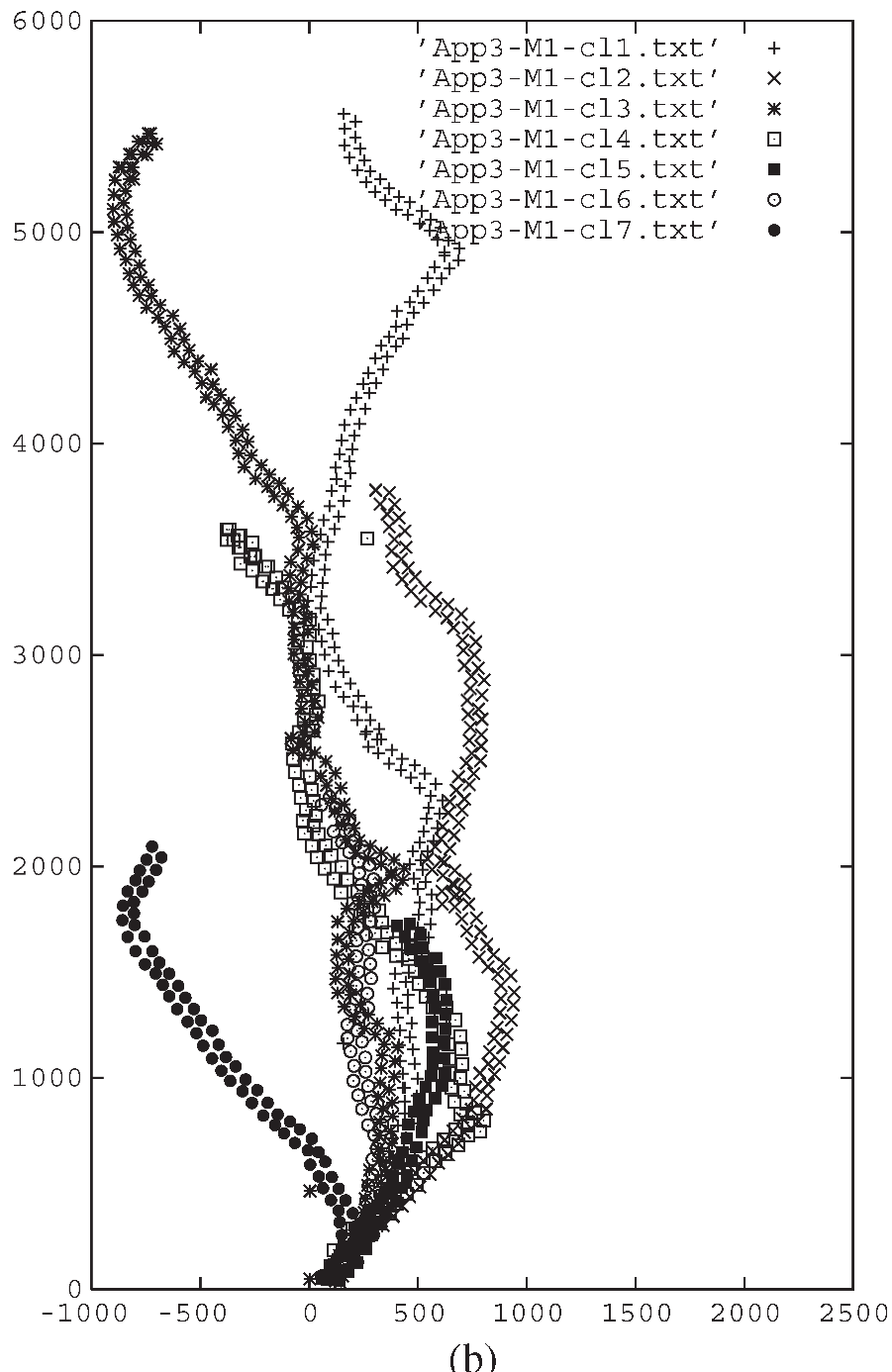 Figure 1: Comparison of cluster formations. FCM (a) proved more compact, while EFC (b) offered faster computation but more overlap.
3. Tier-3: The GA-Tuned Fuzzy Logic Controller (FLC)
The "magic" happens here. The cluster centers are converted into "If-Then" fuzzy rules. To ensure the model doesn't get stuck in local optima, a Genetic Algorithm (GA) is used offline to fine-tune the membership functions () and weights ().
Experimental Results & Insights
The system was validated against 28 random cases and 41 real-world diagnosed cases.
- Superior Accuracy: The FLC models (FLC-I and FLC-II) consistently yielded lower RMS errors than traditional regression.
- Epidemiological Insight: Both algorithms identified Schizophrenia (~42%) and Organic Psychosis (~27%) as the most frequent diagnoses, matching real-world clinical distributions.
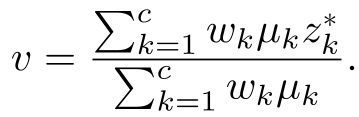 Equation: The modified output expression for the Fuzzy Logic Controller, incorporating GA-tuned weights.
Critical Analysis & Conclusion
Why it works
The success of this approach lies in its Adaptability. By using a batch mode of learning and GA-based tuning, the system "injects" flexibility that static statistical models lack. It handles the "nonlinear" nature of psychoses—where a small change in one symptom (like 'Anxiety') might drastically shift the diagnosis when paired with another (like 'Grandiosity').
Limitations & Future Work
- Offline Training: Currently, the GA tuning happens offline. The authors suggest that moving toward online learning (where the system learns from every new patient it sees) is the next frontier.
- Data Source: The reliance on secondary history (relatives) remains a bottleneck, though the fuzzy logic helps mitigate the resulting "noise."
Final Takeaway
This paper is a masterclass in applying "Soft Computing" to "Soft Science." It demonstrates that in fields where data is messy and human experts are few, an interpretable, fuzzy-logic-based system can be as effective—if not more so—than a human clinician in making the first critical screening.