
Social-Aware D2D: Orchestrating Incentives for Efficient Video Distribution
3235_Social Attribute Aware Incentive Mechanism for Device-to-Device Video Distribution.
This paper proposes a social-attribute-aware incentive mechanism for D2D video distribution in cellular networks. By introducing a grid-based clustering method and a Stackelberg game-based pricing model, it achieves a 9.6% higher video offload rate compared to random selection strategies and significant improvements in video quality (PSNR +11.5% to 25.2%).
TL;DR
The explosion of mobile video traffic is choking modern base stations. This paper introduces a master-slave video distribution framework that utilizes D2D (Device-to-Device) Multicast. By selecting "Core Users" based on social familiarity and mobility stability, and motivating them through a Stackelberg game-based pricing mechanism, the system significantly reduces network load while improving video quality (PSNR) by over 11%.
Problem & Motivation: The Myth of the Altruistic User
As video content accounts for over 70% of mobile data traffic, base stations (BS) face a redundancy crisis: multiple users in the same area often request the same popular content. While D2D communication offers a way to "offload" this traffic by letting users share data directly, two major hurdles remain:
- Mobility Instability: Users move unpredictably, causing D2D links to break frequently.
- Selfishness: Forwarding video consumes battery and buffer space. Why should a user help the BS for free?
The authors argue that prior works fail because they assume users are "selfless." In reality, a sustainable D2D ecosystem requires a mathematical balance between social trust and economic incentive.
Methodology: Social Logic meets Game Theory
The proposed system operates through a two-stage process of selection and motivation.
1. Grid-Based Clustering and User Selection
The network is divided into a grid to prevent redundant multicast areas. Users are filtered through two social metrics:
- Stay Probability: Calculated from historical stay time in a cluster. Only stable users are chosen as candidates to ensure D2D links don't drop mid-stream.
- Familiarity: Based on the Pareto distribution of encounter intervals. Users who encounter each other frequently are more likely to cooperate and maintain stable links.
2. The Stackelberg Incentive Mechanism
To overcome selfishness, the authors model the BS-User relationship as a Stackelberg Game.
- The Leader (BS): Sets a "Uniform Price" for regular users and a "Preferential Price" for Core Users.
- The Followers (Core Users): Decide how many packets to forward based on the "Encouragement Price" (the discount they receive).
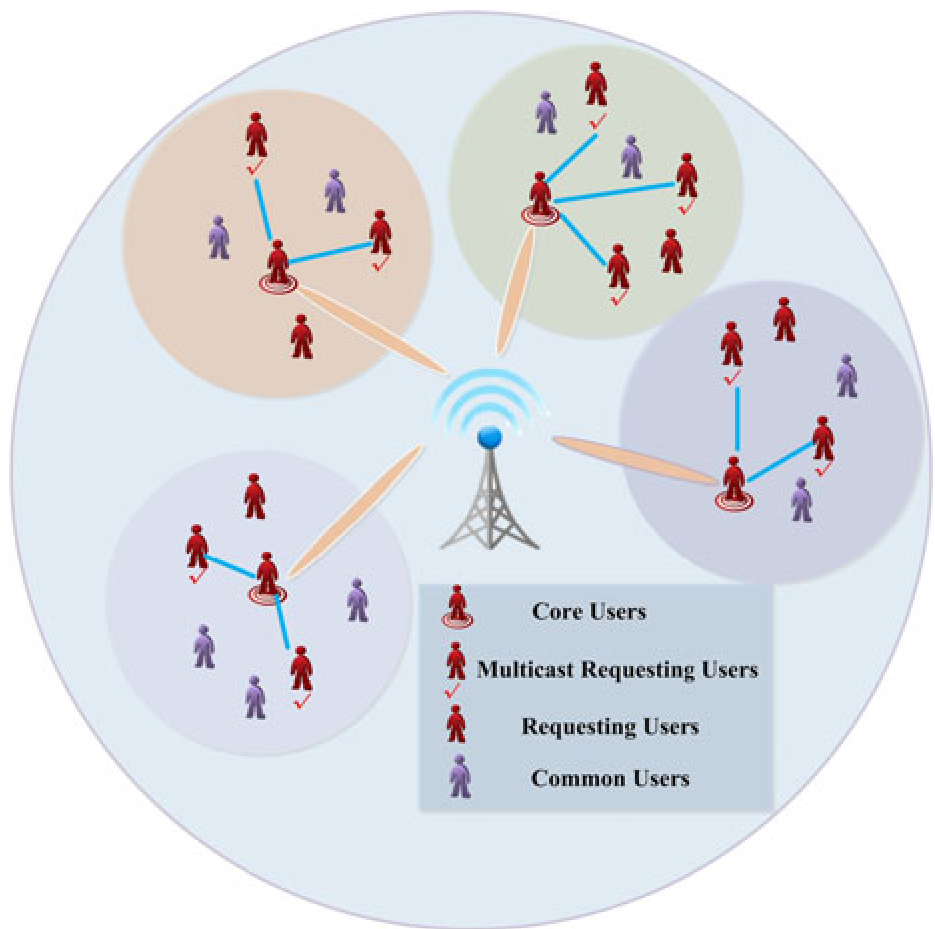 Figure 1: The proposed D2D multicast video distribution system architecture.
Experiments & Results: Quantitative Proof
The researchers validated their model using the Infocom06 human mobility dataset, providing a more realistic testbed than synthetic random walk models.
Performance Gains
- Video Quality (PSNR): The proposed mechanism achieved 11.5% to 25.2% higher PSNR than non-incentive baselines. By rewarding core users, the system ensures higher-quality data packets are forwarded rather than dropped.
- Delivery Rate: A massive 47% improvement over tradition WiFi/D2D solutions that ignore social attributes.
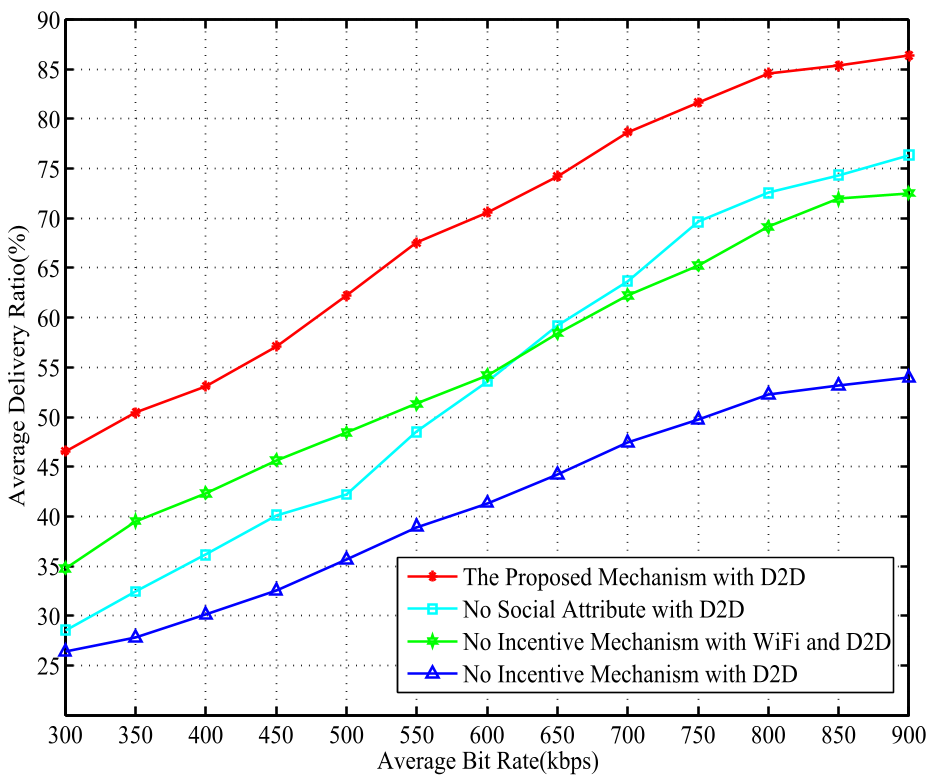 Figure 2: Video delivery rate comparison. Note the stability of the proposed method as bit rates increase.
The "Distance" Factor
A critical finding was the available video frame rate relative to the distance from the BS. Traditional methods degrade rapidly as distance increases, but the social-aware selection of Core Users keeps the frame rate high by utilizing stable local "hops."
Deep Insight & Conclusion
Takeaway
The core contribution of this work isn't just the D2D link itself, but the quantification of social attributes. By treating "familiarity" as a resource, the network can predict link stability more accurately than signal-to-noise ratio (SNR) alone could.
Limitations & Future Work
While the Stackelberg game solves the "why distribute" problem, it introduces computational overhead in the negotiation phase. The authors note that while efficient, future iterations must account for the specific energy depletion rates of mobile devices more granularly to prevent "Core User burnout."
As we move toward 6G, this "Social-Aware" philosophy will likely become a cornerstone of decentralized network management.