
Beyond Sentiment: Using Online Discourse as a Microdemocracy Tool for Policy Making
3399_Online Discourse as a Microdemocracy Tool Towards New Discursive Epistemics for Policy Deliberation.
This study develops a content analysis framework based on Jurgen Habermas’ concept of Validity Claims to extract collective knowledge from online policy discourses. By analyzing 355 messages across three different Russian platforms regarding a food destruction decree, the authors demonstrate how online discussions can serve as microdemocracy tools for policy deliberation.
TL;DR
Is online arguing just "noise," or is it a goldmine for better government policy? This study explores how the collective intelligence found in Russian online discussions—triggered by a controversial law to destroy imported Western food—can be distilled into "epistemic knowledge." By applying Habermas' Validity Claims, the authors demonstrate how to transform raw internet comments into a structured Decision Support System (DSS) for democratic governance.
The "Medium vs. Message" Problem in E-Democracy
For years, e-participation has been stuck in a "push-button" rut. We have e-petitions that collect signatures (Yes/No), but they rarely capture the why. As Stephen Coleman argues, there is a "disjuncture" between the machinery of the state and the habits of networked citizens.
The authors argue that policy making isn't just a technical task; it’s a value-loaded process. Current social network analysis (SNA) treats us as "nodes" and "ties," but it misses the epistemic potential—the actual knowledge—generated when citizens debate the ethics of a law.
Methodology: The Discourse Pyramid
To solve this, the researchers turned to Jurgen Habermas and his theory of Validity Claims (VCs). They propose that every meaningful comment is a "speech act" that seeks validation from others.
How the Analysis Works:
- Raw Texts: The chaos of natural language.
- Validity Claims: Coding the texts to find the "normative rightness" the author is claiming (e.g., "Destroying food is a sin").
- Intersubjective Solidarity: Identifying where participants agree or disagree to form "truth" clusters.
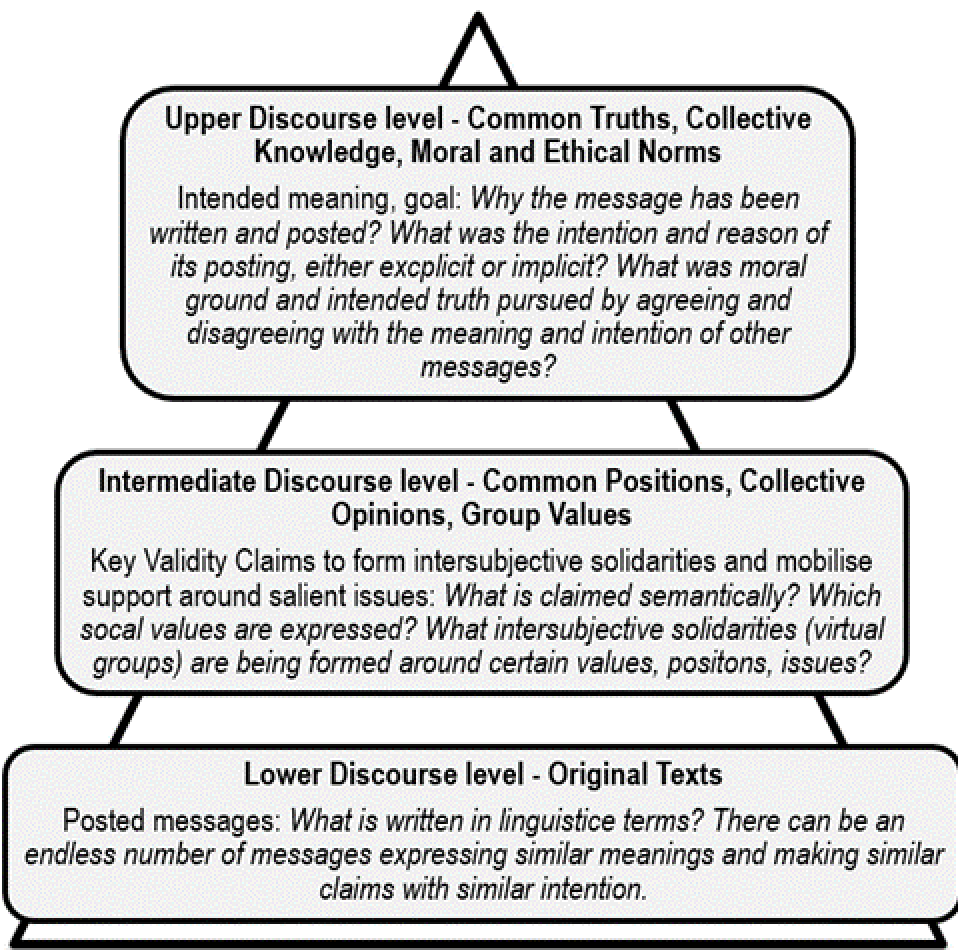 Figure 1: The three-layer pyramid model for distilling knowledge from discourse.
The Case Study: The Russian "Food Destruction" Decree
In 2015, Russia began destroying banned Western food imports. This provoked an immediate outcry. The researchers analyzed three distinct "spaces":
- Change.org: An e-petition platform (Independent).
- Meduza (VKontakte): An independent news outlet.
- NTV: A state-controlled TV channel.
Key Findings:
The study found a fascinating split based on platform ownership:
- On Change.org and Meduza, the discourse was highly cohesive. People agreed that the law was "pointless and irrational" and that food should be given to the poor.
- On NTV, the discourse was "agonistic" (conflict-driven). 80% of responses involved disagreement, yet 64% of participants ultimately supported the government, viewing the destruction as a necessary blow against corruption and foreign influence.
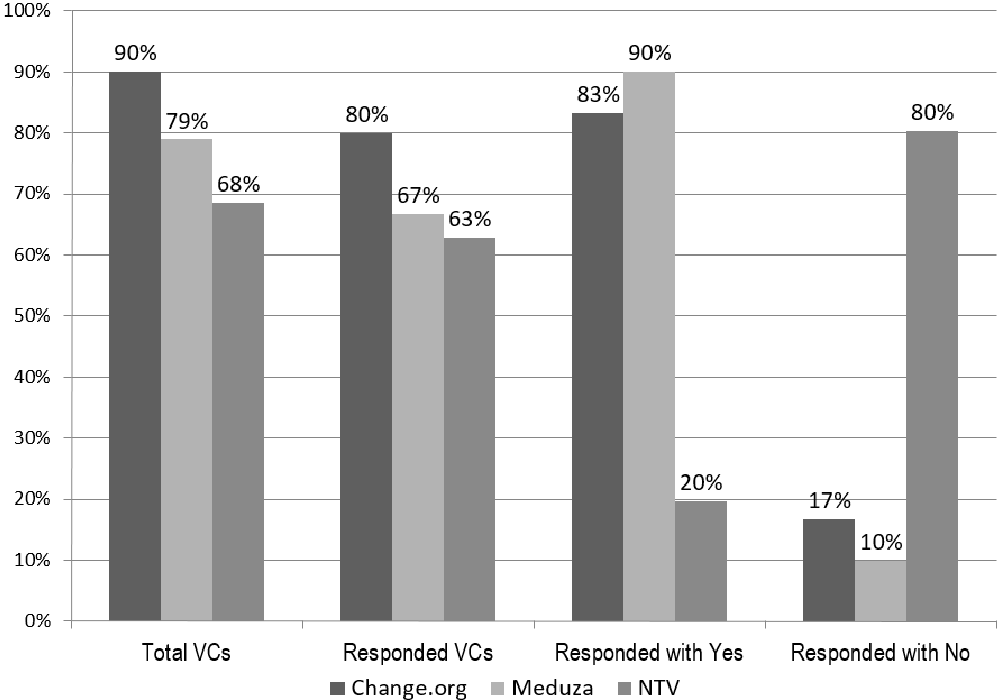 Figure 2: Comparison of agreement/disagreement levels across different platforms.
Conclusion: From Chatter to Decision Support
The study proves that online debates meet the minimal standards of deliberation: they are rational, meaningful, and dialogic.
The Takeaway for Policy Makers: Instead of just looking at the number of signatures on a petition, governments can use this VC-based method to see the "spectrum of issues." For example, the discourse revealed that even those who support the government might worry about how the food is destroyed or whether officials are stealing it.
Future Work: The authors are now moving toward an intelligent interactive decision support system that can perform this discursive analytics in a semi-automated mode—moving beyond "sentiment analysis" to "logic analysis."
Limitations
The study is localized to the Russian context and a specific event. However, the framework of Discursive Epistemics provides a universal roadmap for any democracy looking to turn internet "noise" into "signal."