
Amplifying Meaning: A Neural Approach to Social Network Emergency Discovery
3715_A Study on Online Social Networks Theme Semantic Computing Model.
This paper proposes a numerical textual semantic analysis model using artificial neural networks to handle short, colloquial social network texts (e.g., Weibo). It introduces techniques for linear amplification of topic semantics and a discovery algorithm for emergencies based on semantic vector distance and transitive closure extension.
TL;DR
Social media platforms like Weibo and WeChat produce a massive volume of "micro-information"—ultra-short, colloquial, and rapid-fire texts. This paper introduces a numerical model that converts these texts into neural vectors and applies Semantic Amplification to discover emerging topics and emergencies, overcoming the limitations of traditional models like LDA in sparse data environments.
Background & Positioning
In the landscape of Natural Language Processing (NLP), microblogs present a unique challenge. Unlike academic papers or news articles, a tweet's meaning is often buried in internet slang and "noisy" shorthand. The authors position this work as a bridge between high-dimensional neural representations and practical topic discovery, moving away from "Bag of Words" (which ignores context) toward a Vector Inner Product space that honors semantic intuition.
The Pain Point: Why LDA Fails Microblogs
Traditional Latent Dirichlet Allocation (LDA) relies on the "document-word" matrix. However:
- Sparsity: A 140-character post is too short to establish statistical co-occurrence.
- Colloquialism: Different words are used for the same concept (e.g., various slang terms for an emergency), creating "semantic faults."
- Transience: The real-time nature of social networks requires a model that can handle "fission-like" spreading speed without massive computational overhead.
Methodology: The Core of Semantic Scaling
The authors propose that to find similarities between sentences that don't share words, we must amplify their semantic reach.
1. Vectorization
Each keyword is mapped to a real-valued vector using an artificial neural network. A sentence is then represented as the average of its component vectors:
2. Semantic Amplification (Linear Scaling)
To find similar topics, the model applies a linear transformation to these vectors.
- Radial Scaling: Pushes the vector along its existing dimensions using a diagonal matrix .
- Spherical Scaling: Creates a "Scale Semantic Set" (a hypersphere) containing all vectors within a distance of the original sentence vector.
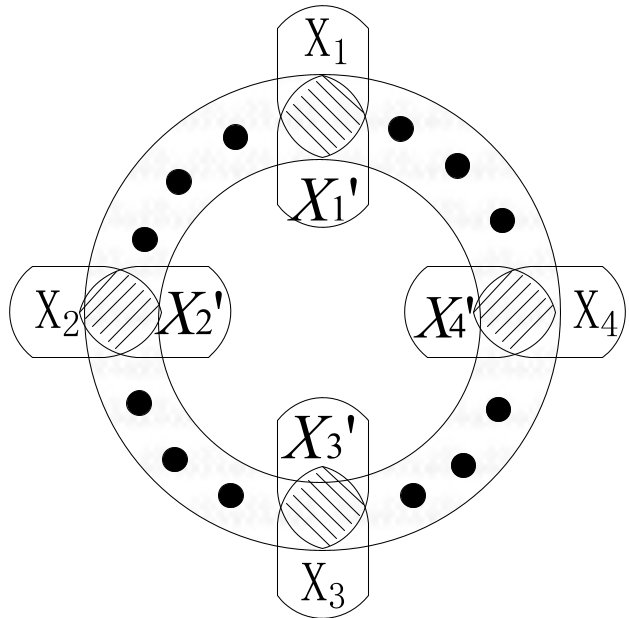 Figure 1: Generation Method of the Equivalence Class Set of Closure of Vectors’ Extensions.
3. Orthogonal Base Vectors
Instead of manually defining topic keywords, the paper proposes finding an "Orthogonal Base." Two vectors are considered orthogonal if their inner product is below a threshold . This allows the system to identify the "skeleton" of a new topic autonomously.
Experiments & Results
Using the Argus crawling tool, the authors analyzed approximately 6 million Sina Weibo users.
Key Findings:
- Distance Reduction: By applying spherical and radial amplification, the semantic distance between microblog posts and user "interest tags" was significantly reduced, allowing for better matching.
- Robustness: The model maintained accuracy even when users used different cyber-slang, thanks to the "Transitive Closure" property where if Word A Word B and Word B Word C, then Word A and C are linked in the topic space.
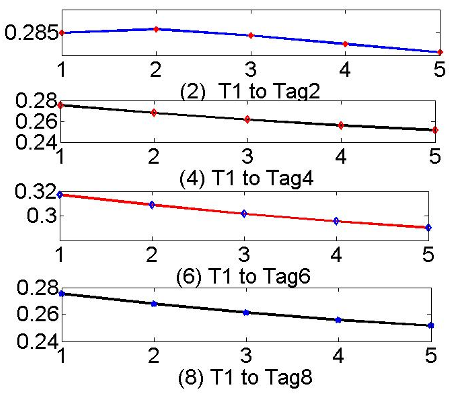 Figure 2: Observation of how spherical amplification changes distances to relevant tags.
Critical Insight & Conclusion
The true value of this work lies in its Heuristic Scaling. By mathematically "stretching" the meaning of a short sentence, the researchers compensate for the lack of linguistic context.
Takeaway: Future social monitoring systems shouldn't just look for keyword matches; they should look for "neighborhoods" in vector space. While the paper relies on older Word2Vec architectures, the logic of Semantic Equivalence Classes remains a cornerstone for modern emergency detection systems.
Limitations: The "scaling" factor must be carefully tuned. Over-amplification leads to "semantic drift," where the original meaning is lost in a sea of unrelated neighbors.