
Beyond the Retweet: A Dynamic Network Perspective on Twitter Activity
3736_Representation and Analysis of Twitter Activity A Dynamic Network Perspective.
This paper presents a hybrid research framework combining qualitative survey data ("small data") with dynamic network analysis of Twitter API logs. It introduces a temporal network perspective to model information flow, distinguishing between "star-like" broadcasting and "chain-like" discussion structures while accounting for psychological motivations and passive consumption.
TL;DR
Is big data lying to us? This research argues that looking at Twitter through static graphs is like reading a movie script out of order. By combining a qualitative survey with dynamic network analysis, the authors reveal that information flow is dictated by temporal sequences and hidden user motivations—like "impression management"—that big data alone fails to capture.
Context: The Static Graph Trap
In the world of Social Network Analysis (SNA), we often represent connections as lines on a map. However, in digital media, a "follow" is a long-term state, while a "tweet" is a fleeting event. Traditional SNA fails because it assumes ties exist concurrently. The authors argue for a Dynamic Network Perspective, where the order of events matters: you cannot respond to a comment that hasn't happened yet, and the path information takes is restricted by time.
The "Small Data" Insight: Why We Tweet
The researchers didn't just crawl the API; they asked 211 users why they do what they do.
- The Myth of Influence: Contrary to popular belief, most users aren't trying to change the world. They use Twitter for "impression management"—sharing informative content to look smart to their "imagined audience."
- The Presence of Silence: Content production is rare. Most "activity" is actually passive consumption, which creates an invisible influence loop that data mining cannot see.
Methodology: Mapping the Flow
The authors used the RAPID (Real-time Analytics Platform for Interactive Data-mining) to track 20,000 tweets. They categorized interactions into two distinct topological structures:
- Star Networks: Typical of influential/promotional accounts (User 7). A central node broadcasts to many people who don't necessarily talk to each other.
- Chain Networks: Typical of deep political or social debates (User 6). Long trails of back-and-forth communication between a small, highly engaged group.
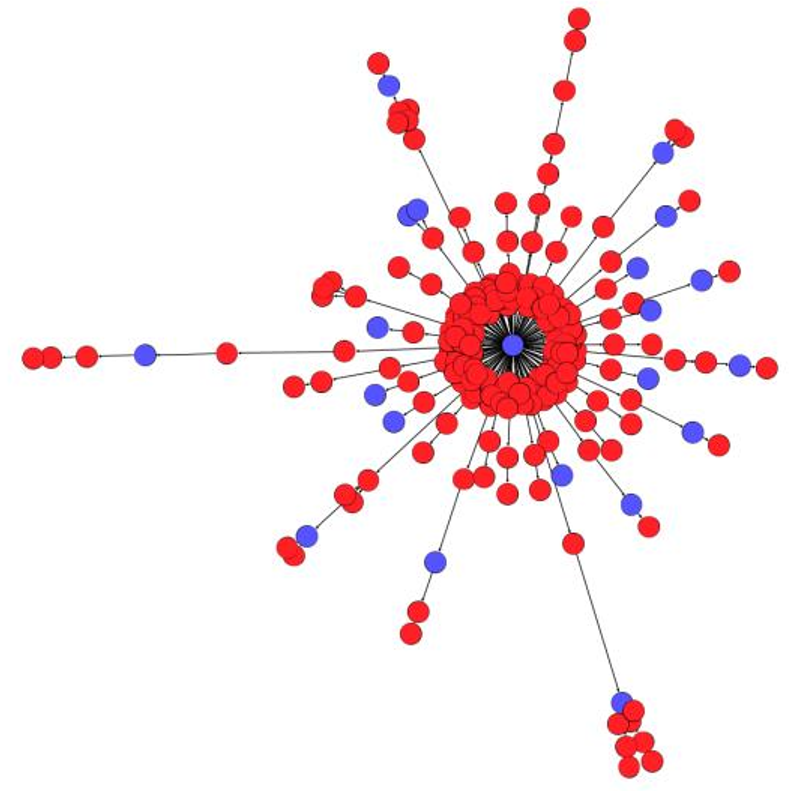 Fig 1: A "Star" discussion network showing high-breadth broadcasting.
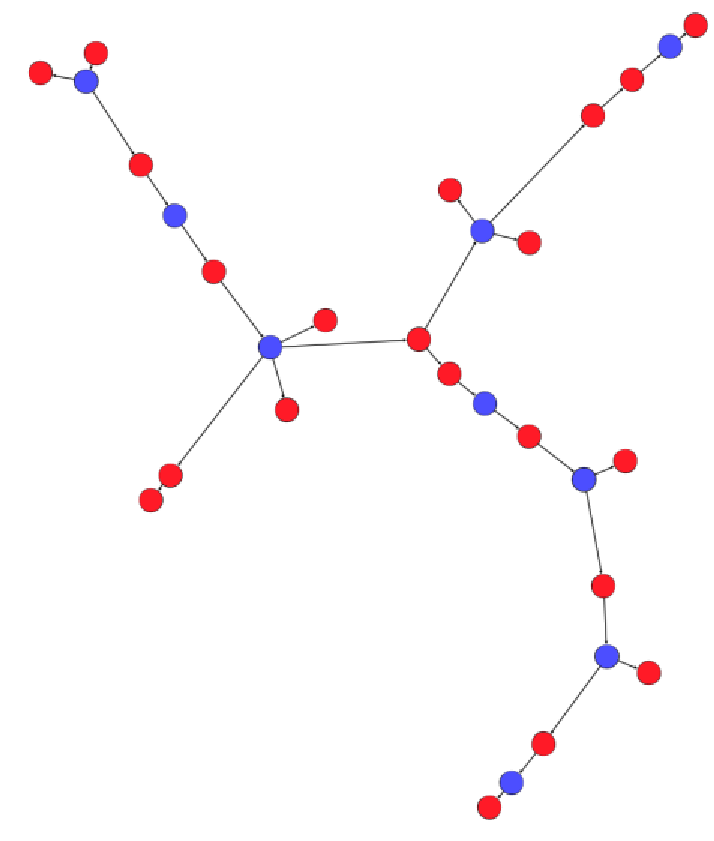 Fig 2: A "Chain" discussion network showing high-depth engagement.
Key Results & Critical Analysis
The study found a striking correlation between popularity-seeking and network metrics:
- Reciprocity: Users who want to be popular don't just have more followers; they have a significantly higher percentage of "reciprocated" links (40.7% vs 25.9%).
- The Strategy Paradox: Using strategies (like hashtags or images) increases the total reach over time, but doesn't necessarily make every individual tweet go viral.
The Case of User 7: A fascinating outlier. User 7 had 45,000 followers and high influence but rarely used hashtags or links. Digital trace data alone couldn't explain his success. The survey revealed the "Why": he was associated with major offline tech companies. This proves that Social Media doesn't exist in a vacuum—it is an extension of offline reality.
| Metric | User 6 (Chain) | User 7 (Star) |
|---|---|---|
| Behavior | Discussion/Debate | Promotion/Interaction |
| Avg. Users/Discussion | 7.25 | 22.16 |
| Source of Discussion | 100% | 100% |
| Network Type | Reciprocal/Cohesive | Branching/Disconnected |
Conclusion: Toward a Hybrid Future
The industry takeaway is clear: Big Data is the 'What', but Small Data is the 'Why'. To truly understand how information diffuses, we must:
- Model interactions as sequences, not just edges.
- Account for cross-platform influence (e.g., Instagram driving Twitter followers).
- Acknowledge passive users as the largest segment of the network.
The paper concludes that while Twitter is a powerful broadcasting tool, its most complex "conversational" structures are rare and highly dependent on the specific social identity of the participants.