
Software Engineering: The Revolutionary Art of Binding a Digital Civilization
3904_How the Work of Software Professionals Changes Everything.
This seminal perspective explores the philosophical and socio-economic value of software engineering during the post-dot-com era. It advocates for the profession as a unique blend of "knowing, making, and doing" that serves as both a creative outlet for individuals and a critical binding force for global civilization.
TL;DR
In the wake of the dot-com bust, James Cusick’s classic reflection examines the existential crisis of the software professional. By grounding technical work in classical philosophy, the article argues that software development is an "expressive medium" that combines theorization (knowing), artisanship (making), and practical application (doing), making it an essential, non-commoditizable pillar of modern society.
Context: A Profession at a Crossroads
The early 2000s were a bleak time for Silicon Valley. The "dot-com debacle" and "telecom tragedy" had turned an era of unprecedented job surpluses into one of massive layoffs. Experienced developers found themselves in a world where the Sunday New York Times job section shrunk from pages to columns overnight. This sparked a fundamental question: Is software work still worth doing?
The author rejects the bleak outlook by examining the "essence of work" itself. He posits that while industrialization once robbed workers of meaning through "Scientific Management" (Taylorism), software engineering restores the "instinct of workmanship" by requiring individual creativity and abstract thought.
Methodology: The Philosophical Triad of Software
Cusick draws on the Greek categories of human activity—Knowing, Making, and Doing—to define the software lifecycle. Unlike traditional manufacturing, where a worker might only perform one repetitive motion, a software professional engages in a holistic creative process:
- Theorization (Knowing): Analyzing the real world to specify solutions.
- Poetics/Artisanship (Making): Modeling, designing, and building the code.
- Practical Attainment (Doing): Deploying and operating the systems that run the world.
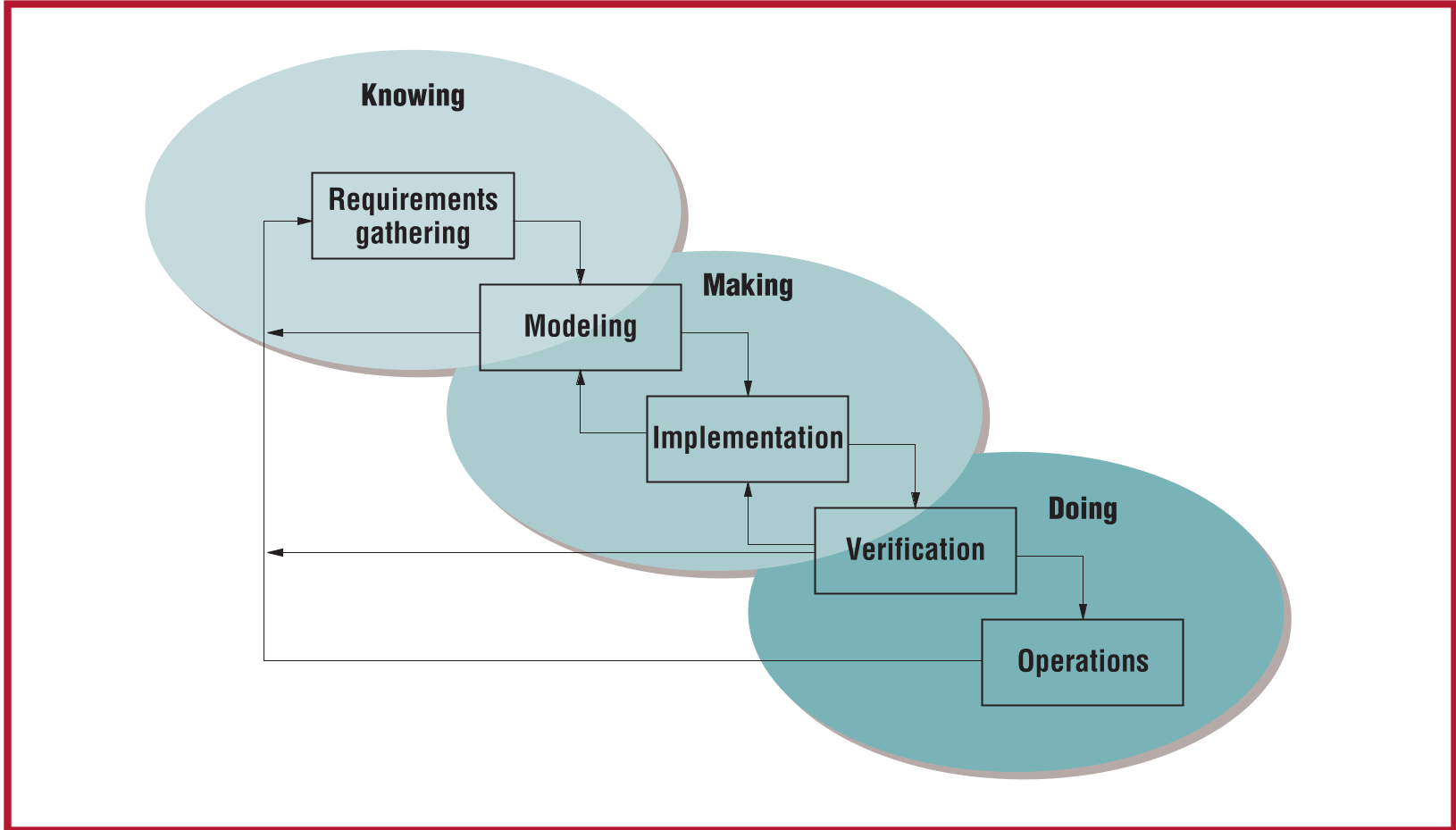 Figure 1: The mapping of the software lifecycle to classical human activities.
The inherent "freedom to perform a job in one’s own way" is what keeps software humanized and expressive.
The Binding Force of Civilization
The article presents the software engineer as the "true revolutionary." While 19th-century engineers shaped the physical world, today’s engineers shape abstractions.
Software has become the repository of our collective knowledge. Rules governing law, medicine, and finance are no longer just in books; they are codified in distributed systems. This "binding force" creates an incremental build-out of society that allows for continuous refinement—a luxury physical engineering (like building a car) rarely enjoys.
Results and the Global Shift
The paper acknowledges the reality of Global Distributed Development. It notes that while the "Making" (coding) might move to lower-wage regions, the "Knowing" (requirements/architecture) and "Doing" (operation) often remain local.
 The shift from labor shortage to job deficit created a "bleak mood" that this paper sought to counteract.
Key findings include:
- Labor Market Volatility: Over 528,000 IT jobs were eliminated in 2001 alone.
- The Offshore Trend: Prediction that 30% of Global 2000 companies would use offshore contracting by 2005.
- Resilience: Despite outsourcing, the inability to automate "domain understanding" ensures that software development cannot be fully commoditized.
Critical Insight: The Future of the "Thinking" Engineer
Cusick concludes that the software field will increasingly require flexibility. We are moving toward a "digital age" where the Internet is just a prototype for a more seamless computing environment.
Takeaway for Today's Reader: The paper’s message is even more relevant in the age of AI. Just as the developers of 2002 feared outsourcing, today's developers fear automation. However, the author's core insight—that software work is about converting pure abstractions into operational controls—suggests that as long as there is change in the world, there will be work for those who can "think" software.
Final Verdict: Should you recommend a career in software to the next generation? Only if they want a seat at the table of the "true revolutionaries" who bind and change the global civilization.