
Empowering Specialized Education: A New Frontier in 3D AR for Interactive Communication
A New 3D Augmented Reality Application for Educational Games to Help Children in Communication Interactively
This paper introduces a novel 3D Augmented Reality (AR) application designed for Augmentative and Alternative Communication (AAC) to assist children with communication difficulties. By integrating 27-DOF hand tracking, particle filters, and QR-based character selection, the system provides a real-time interactive educational game environment that achieved high user satisfaction (9.23/10) in primary school settings.
TL;DR
This research presents a sophisticated 3D Augmented Reality (AR) framework designed to help children with communication challenges. By leveraging high-degree-of-freedom (27-DOF) hand tracking and real-time pose estimation, the system creates an immersive educational game environment where children can interact with 3D characters, bridging the gap between physical play and digital therapy.
Problem & Motivation: Beyond Static Communication
For children with special needs, particularly those requiring Augmentative and Alternative Communication (AAC), traditional tools are often static or biologically limited. While previous AR efforts addressed specific conditions like Asperger syndrome or focused on simple facial overlays, they lacked a comprehensive Human-Computer Interaction (HCI) model that supports complex, non-verbal manual gestures in real-time.
The authors identified that the core challenge lies in robustness and engagement: how to maintain high-accuracy hand tracking on mobile hardware while providing an experience "magical" enough to maintain a child's attention.
Methodology: The Mechanics of Interaction
The system's technical backbone is a multi-layered tracking architecture:
- 3D Hand Modeling: Instead of simple skeletons, the authors use 39 truncated quadrics to represent a 27-DOF hand model (4 for fingers, 5 for the thumb, 6 for global pose).
- Hybrid Likelihood Estimation: The system doesn't rely solely on color or edges. It calculates a joint likelihood: This ensures that even if the background color is similar to skin tones, the edge map (via Chamfer distance) keeps the tracking locked.
- The "Golden Energy" Function: To isolate the region of interest (ROI) in real-time, the system integrates a scoring function that filters out environmental noise, allowing for a smooth 14 FPS experience on standard mobile devices.
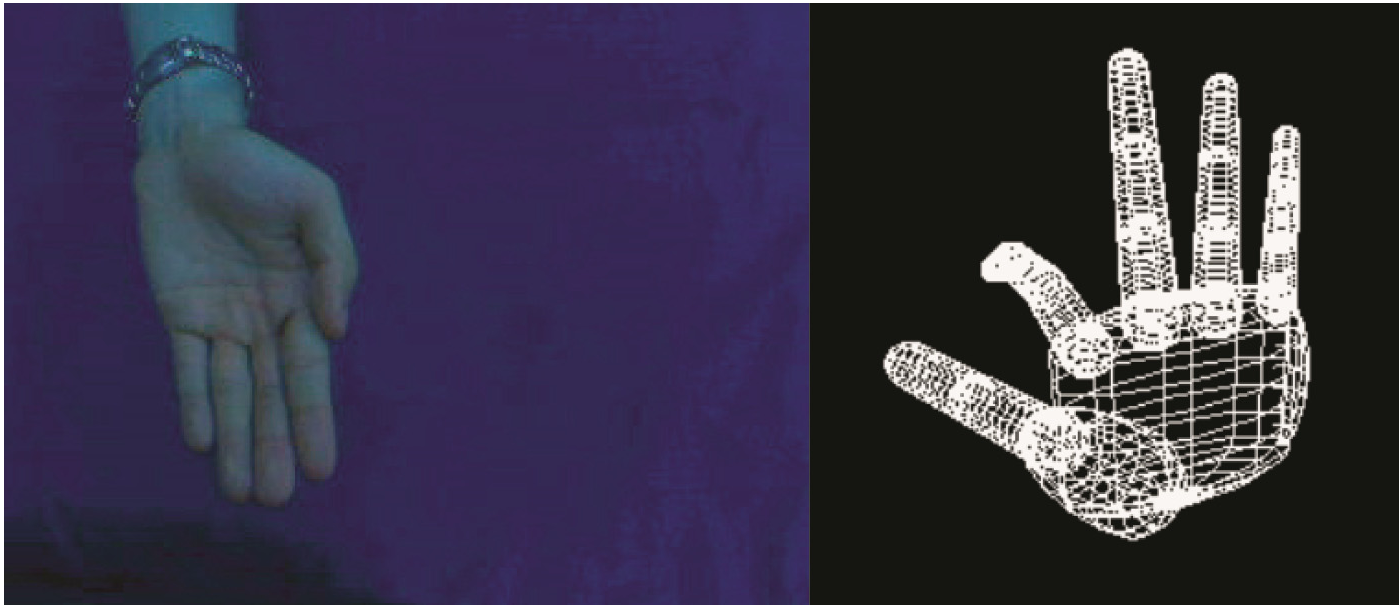 Figure 1: The 27-DOF hand model construction using quadrics.
Experimental Results: Real-World Impact
Testing was conducted with 10 children (aged 8-12) to measure both technical performance and psychological reception.
- Performance: Stable 14 FPS, providing the "fluidity" necessary for AR immersion.
- User Feedback: The system excelled in User Satisfaction (9.23/10) and Smoothness (9.01/10).
- The "Ease of Use" Gap: Interestingly, the lowest score was in interface ease-of-use (7.72/10). Participants suggested that while the technology is powerful, children still require physical prompts or better in-app tutorials to master the interaction gestures.
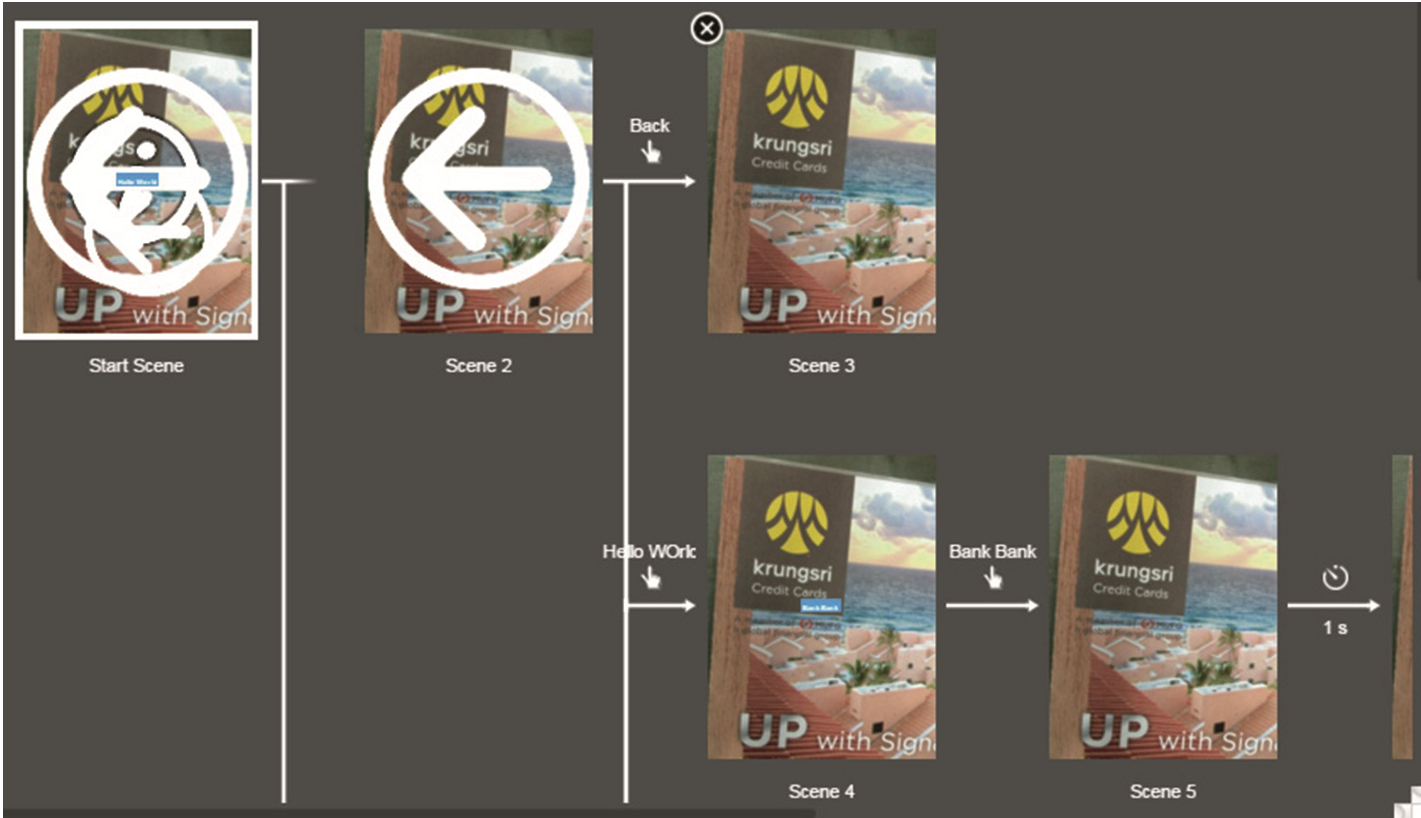 Figure 2: Representative results of 3D characters overlaid on real-world backgrounds.
Critical Analysis & Conclusion
The value of this work lies in its holistic approach. It doesn't just provide a tracking algorithm; it integrates QR-code access, Google SketchUp assets, and "Augmented Flexible Tracking" (printed coloring photos) to create a ecosystem for learning.
Limitations: The primary technical hurdle remaining is occlusion. When a hand moves behind an object or another hand, the particle filter can struggle. Additionally, the UI requires more "child-centric" design to lower the learning curve.
Future Outlook: The authors suggest moving toward adaptive randomized ensemble tracking to handle complex occlusions—a move that could shift this from a controlled educational tool to a robust, everyday assistive technology for the disabled.