
Beyond the Looking Glass: An Integrated Framework for 3D Cultural Heritage Virtualization
On the application of 3D technologies to the framework of cultural heritage
This paper presents a mobile virtual environment designed for the high-resolution, photorealistic visualization of 3D virtualized cultural heritage sites. It introduces a novel integrated framework that utilizes compact support feature vectors for content-based indexing and retrieval of both image textures and 3D geometries, achieving robust characterization of digital archaeological collections via cluster analysis.
TL;DR
As historical sites face unprecedented physical degradation, virtualization has become a necessity rather than a luxury. This paper introduces a comprehensive framework that goes beyond simple 3D scanning; it offers a mobile, cost-effective stereo visualization system and a sophisticated mathematical indexing method for "Query by Prototype," allowing scholars to search for artifacts based on their geometric and textural DNA rather than subjective text descriptions.
The Conservation-Accessibility Paradox
The fundamental motivation behind this work is a tragic irony in heritage management: the more a site is valued and visited, the faster it is destroyed. Scholars are often forced to choose between allowing access for research and locking artifacts away to prevent decay. Virtualization is the "panacea," but it brings new technical hurdles. How do we ensure a model is accurate (conforming to the original) rather than just precise (reproducible)? And as our digital libraries grow into the thousands, how do we find a specific fragment or identify patterns across centuries of art?
Methodology: The Geometry of Discovery
The authors break their methodology into two critical components: Visualization and Exploration.
1. Cost-Effective Immersive Visualization
Instead of relying on million-dollar VR "CAVE" systems, the authors developed a portable "Virtual Theatre." It uses:
- Dual Laptops & DLP Projectors: One handles the left-eye view, the other the right.
- Circular Polarization: By using circular rather than linear filters, the system ensures that if a scholar tilts their head to examine a detail, the 3D effect doesn't collapse (a common issue known as crosstalk).
- Tiled Wall Scalability: The architecture is distributed, meaning more projectors can be added to increase resolution without overhauling the software.
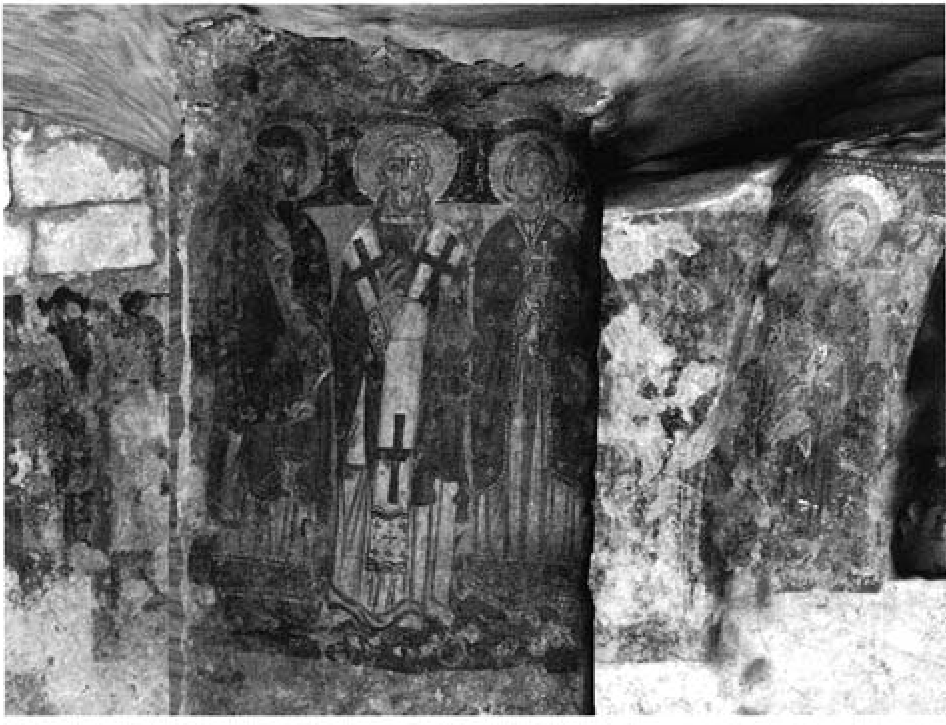 Fig 1: Visualizing a 9th-century Byzantine fresco using the mobile virtual theatre.
2. Content-Based Retrieval (CBR)
The "secret sauce" of the paper lies in how it describes an object without using words.
- For Textures: Instead of segmenting an image (which is error-prone), the authors use a Sobol sequence to sample the image quasi-randomly. They generate 2D histograms of Hue and Saturation, creating a "color signature" that is robust against viewpoint changes.
- For 3D Shapes: They use the concept of Cords. By calculating the tensor of inertia, they establish an "Eigenframe" (a unique internal coordinate system). This makes the search rotation and scale invariant. Whether a vase is scanned upside down or is half the size of another, its mathematical signature remains the same.
Experimental Validation: From Byzantine Crypts to Broken Vases
The system was stress-tested on two major Italian heritage sites: the Crypt of Santa Cristina and the Torre dell'Aquila. The results proved that mathematical indexing could uncover relationships that humans missed. In one instance, the system identified that two separate Egyptian tablets in a database were actually parts of the same original wooden piece—a match that text-based search would have never found due to initial mislabeling.
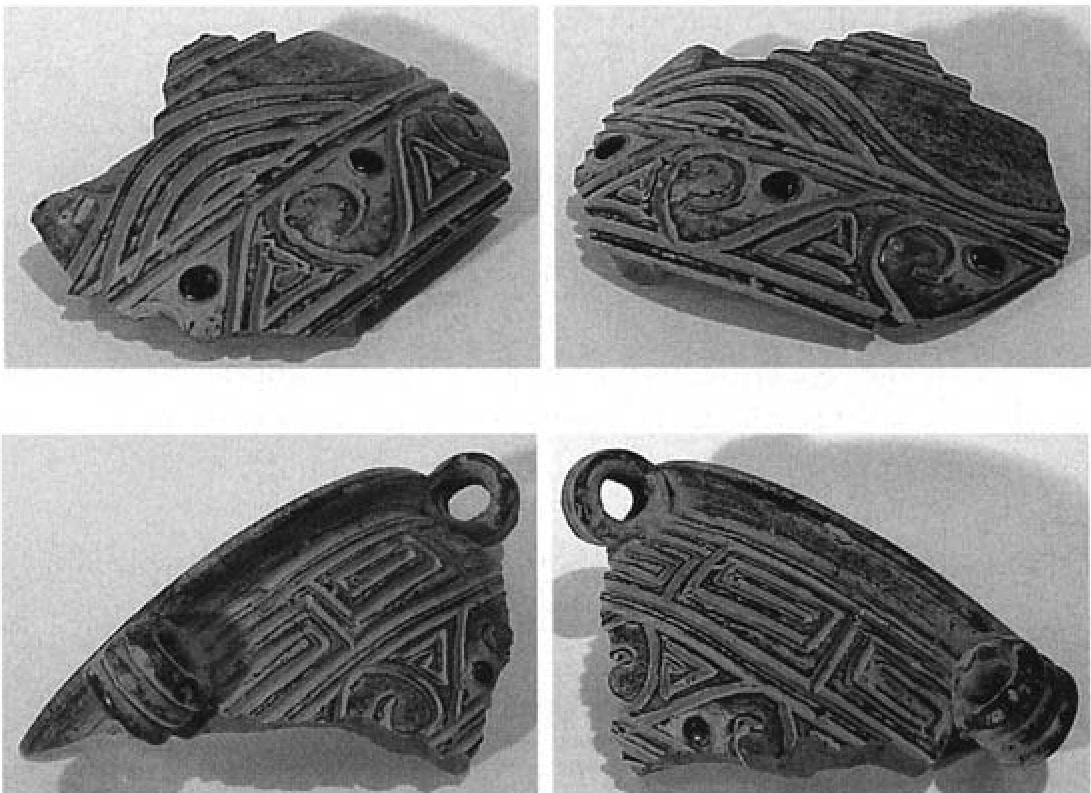 Fig 2: Automated clustering of fragments. The system recognized the 'rim' and 'ear' pieces of a broken vase based solely on geometric descriptors.
Critical Insight: The "Integrated" Future
The authors argue that virtualization is a five-step pipeline:
- Virtualization (Scanning)
- Documentation (Adding metadata like calibration and environmental logs)
- Indexation (Creating the content-based vectors)
- Retrieval/Characterization (Using cluster analysis to find links)
- Visualization (The final immersive experience)
The real value of this paper is the move toward Semi-Automated Classification. By using the WaveCluster algorithm (a wavelet-transform-based clustering method), the system can handle high-dimensional 3D data and find "irregular shape clusters" without any prior knowledge.
Conclusion and Future Outlook
While the paper was written in an era of early 3D scanning, its foundational logic—that shape is a "universal language"—is more relevant than ever in the age of AI and Large Reconstruction Models. The limitation, however, remains the reliance on "raw data" documentation; unless every lab shares their calibration files, the "accuracy" vs. "precision" gap will continue to haunt digital archaeology. For future work, the integration of these geometric descriptors into a global, searchable "Heritage Web" remains the ultimate goal.