
Smart Pedagogy: Revolutionizing Learning through Crowdsourcing and Intelligent Systems
5016_Crowdsourcing-Based Learning the Effective Smart Pedagogy for STEM Education.
This paper conceptualizes "Smart Pedagogy" within Smart Education (SmE) systems, focusing on the integration of Crowdsourcing-based Learning (CBL). It evaluates how smart features like sensing, adaptation, and anticipation enhance the learning experience for undergraduate and graduate students.
TL;DR
Smart Pedagogy is the heartbeat of modern Smart Education (SmE). This research defines the "smartness" of educational environments through six critical capabilities—from sensing to self-organization—and demonstrates that Crowdsourcing-based Learning (CBL) significantly boosts student engagement and performance. The data shows an overwhelming 97-100% approval rate for integrating these collective intelligence strategies into academic courses.
The Evolution of "Smart" in Education
The digital transformation of the classroom is no longer just about putting tablets in hands; it's about the intelligence of the ecosystem. The core problem addressed here is the rigidity of traditional pedagogy. To overcome this, the authors propose a framework where the environment itself is "aware" and "proactive."
The research identifies a hierarchy of smartness that moves beyond simple automation:
- Sensing & Awareness: Using IoT and BYOD to collect data.
- Inferring: Using logic to process raw data into insights.
- Anticipation: Predicting final grades based on current performance and historical "intelligence."
Methodology: What Makes Pedagogy "Smart"?
The authors emphasize that Smart Pedagogy isn't a single tool but a constellation of strategies. The methodology centers on Crowdsourcing-based Learning (CBL), where the collective effort of students, peers, and experts creates a self-sustaining knowledge loop.
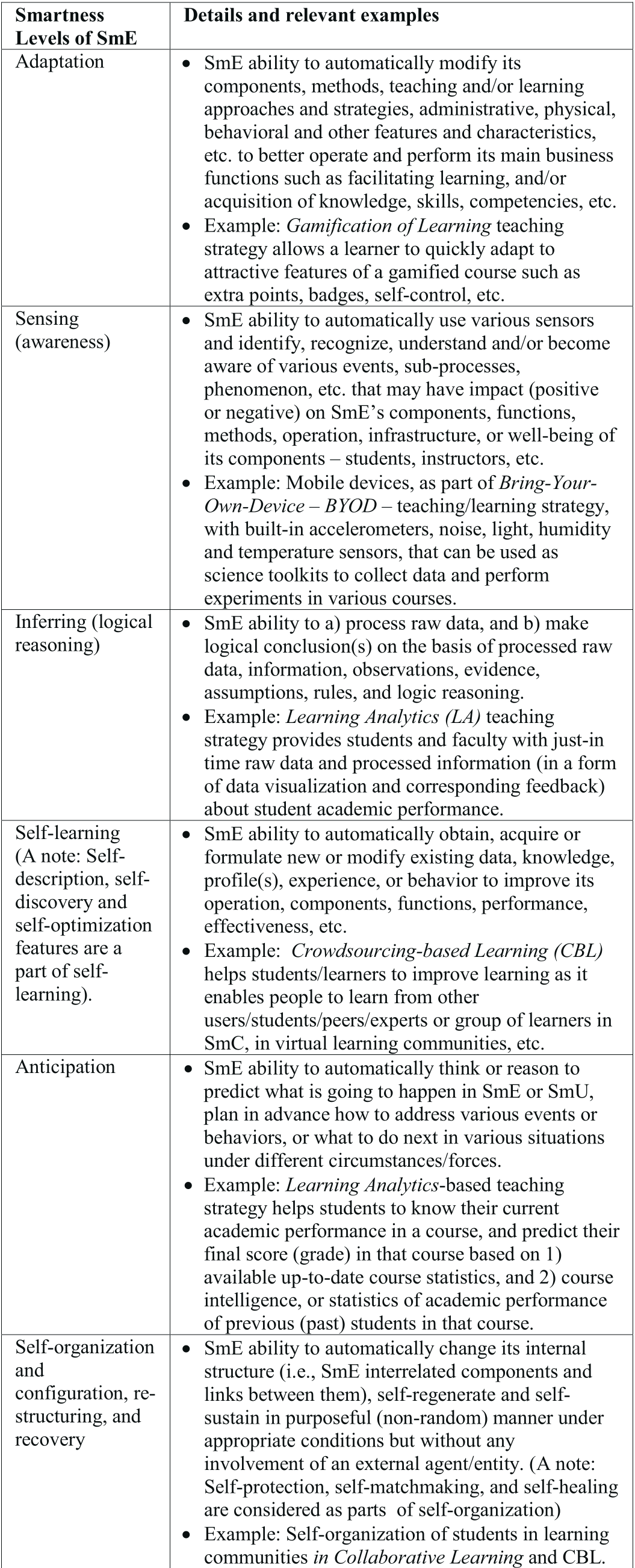
Table 1: The six levels of SmE smartness, from basic adaptation to complex self-restructuring.
The genius of this approach lies in Self-learning and Self-organization. The SmE environment can automatically modify its strategies based on the "Experience" or "Profile" of the learners it serves, effectively becoming a living organism of instruction.
Experimental Evidence: The Student Verdict
How do students actually feel about being part of a "Crowdsourced" classroom? The results are remarkably positive across both Undergraduate (UG) and Graduate (GR) cohorts.
Key Performance Metrics:
- Blended Communication: Students overwhelmingly agreed (Score: 2.75-2.79 out of 3.0) that a balance of face-to-face and electronic communication is essential for success.
- Knowledge Gain: Over 96% of students agreed they gained more information working through CBL than working alone.
- Feedback Loops: The highest rated component was the desire for instructor feedback on intermediate outcomes (Scoring 2.86/3.0), highlighting that smart pedagogy must still be human-guided.
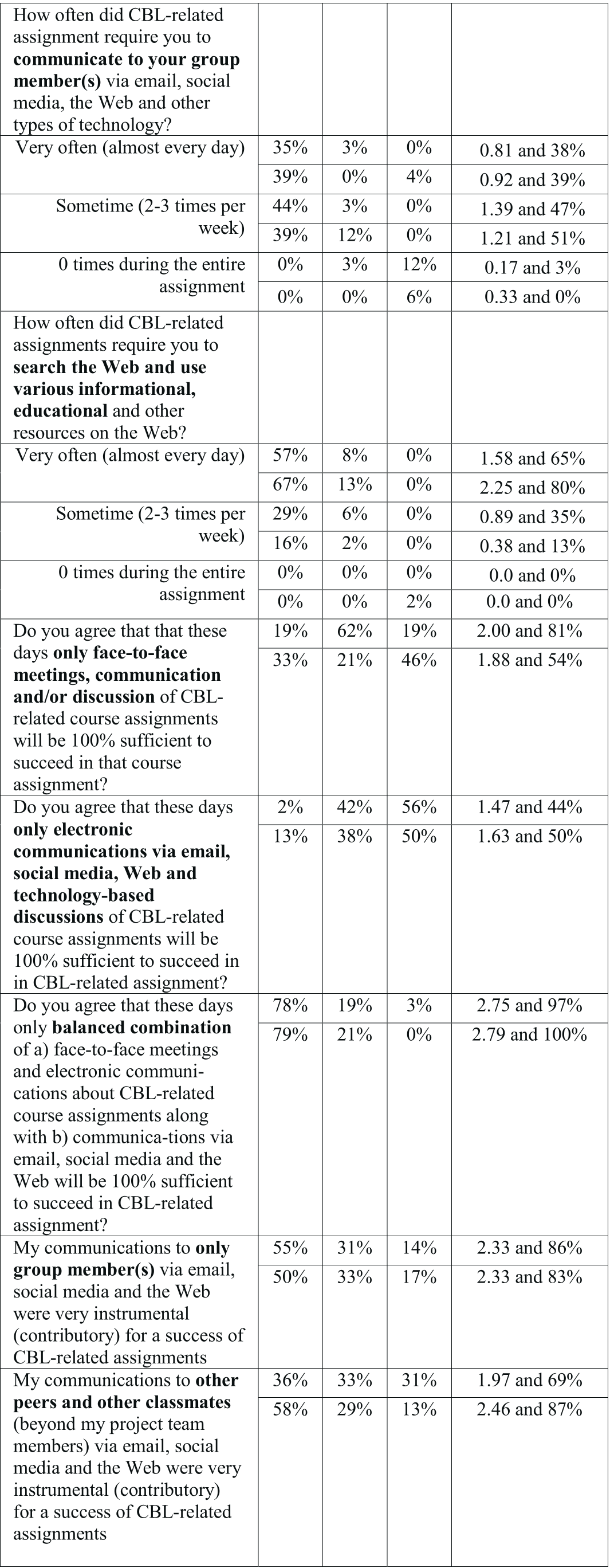
Table 2: High frequency of web-based resource usage and the perceived value of technological communication.
Deep Insight: Beyond Digital Textbooks
The most profound takeaway is the shift in "Smartness." It is not just about the teacher being smart; it is about the system exhibiting "Anticipation." By using Learning Analytics (LA), the system predicts a student's final grade halfway through the semester, allowing for preventative intervention rather than post-mortem failure analysis.
Critical Analysis & Future Outlook
While the paper presents a robust case for CBL and Smart Pedagogy, two challenges remain:
- The Grading Paradox: While 75-79% of students like the idea of group grades, a significant minority remains skeptical. Smart systems must eventually learn to "fairly" attribute individual contributions within a crowd.
- Infrastructure Dependency: This pedagogy relies heavily on high-tech maturity (Sensing, BYOD). Implementing this in resource-constrained environments remains a hurdle for future research.
Conclusion: The future of education is collaborative and predictive. By leveraging crowdsourcing and multifaceted "smartness," we can transform the classroom from a place where knowledge is "given" to a place where knowledge is "generated."