
Consensus in the Crowd: Managing Minority and Noncooperative Minds in LGDM
5223_A Consensus Model to Manage Minority Opinions and Noncooperative Behaviors in Large Group Decision Making With Probabilistic Linguistic Term Sets.
Summary
Problem
Method
Results
Takeaways
Abstract
This paper proposes a consensus management model for Large Group Decision Making (LGDM) using Probabilistic Linguistic Term Sets (PLTS). The core method utilizes the Tanimoto coefficient to measure similarity between subgroup and group opinions, successfully managing minority views and noncooperative behaviors through a novel two-tier adjustment mechanism.
## TL;DR
When 35+ experts sit in a room (or on a server), reaching a consensus isn't just about averaging numbers; it’s about managing the "rebels" and the "outliers." This paper introduces a sophisticated framework using **Probabilistic Linguistic Term Sets (PLTS)** and the **Tanimoto Coefficient** to bridge the gap between individual linguistic preferences and a unified group decision. By treating linguistic choices as binary variables and providing specific "adjustment quantities," the model ensures even noncooperative participants contribute to a stable outcome.
## The Problem: Why Simple Averaging Fails
In Large Group Decision Making (LGDM), experts use fuzzy terms like "Very Good" or "Fairly Poor." Standard models struggle because:
1. **Distance Paradox**: Standard metrics (like Euclidean distance) assume a continuous Cartesian space. But in linguistic selection, you either support a term or you don't—it's **dichotomous**.
2. **Minority Silencing**: Minority opinions are often either ignored or given too much weight, without considering the relative influence (weight) of the groups supporting them.
3. **The Noncooperative Wall**: Some Decision Makers (DMs) simply refuse to budge. How do you mathematically calculate *exactly* how much they need to move to help the group reach a threshold?
## Methodology: The Math of Agreement
The authors pivot from "Distance" to "Similarity" by adopting the **Tanimoto Coefficient**.
### 1. Linguistic Representation (PLTS)
DMs express their views using three adjacent linguistic terms with associated probabilities (e.g., 60% sure "Extremely High," 40% sure "High"). This captures the nuance of human hesitation.
### 2. The Multi-Step Consensus Model
The process follows a rigorous workflow to identify and solve conflicts:
### 3. Handling Noncooperation
This is where the paper shines. It offers two distinct paths:
* **Minor Adjustment**: If a DM is willing to tweak their probability slightly, the model uses **Binary Quadratic Programming** to find the minimal change needed to satisfy the group consensus threshold.
* **Major Adjustment**: If a DM wants to jump ship entirely, the model allows them to recluster into a different subgroup or exit the process entirely.
## Experiments: Forest Fire Emergency
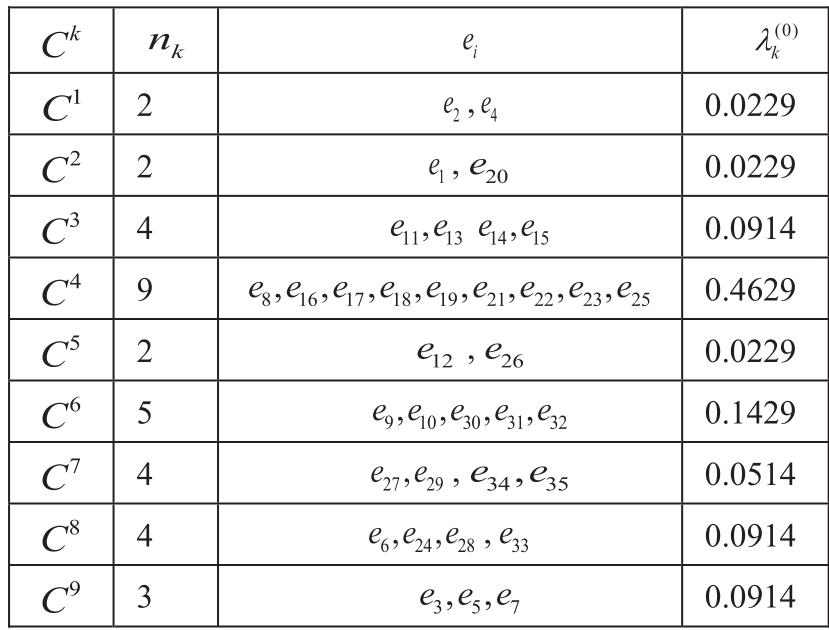
The model was tested on a forest fire rescue scenario (35 experts, 3 alternatives).
* **Initial State**: The group was highly fragmented with an initial consensus level of **0.186**.
* **Iterative Refinement**: Through five rounds of weight adjustments (M1) and behavior management (M2), the system identified a minority group that chose to exit and others that shifted their preferences.
* **Final Result**: The consensus reached **0.799**, meeting the requirement of 0.75, and ultimately selecting the most balanced rescue plan (using small equipment to extinguish fire).
## Critical Insights
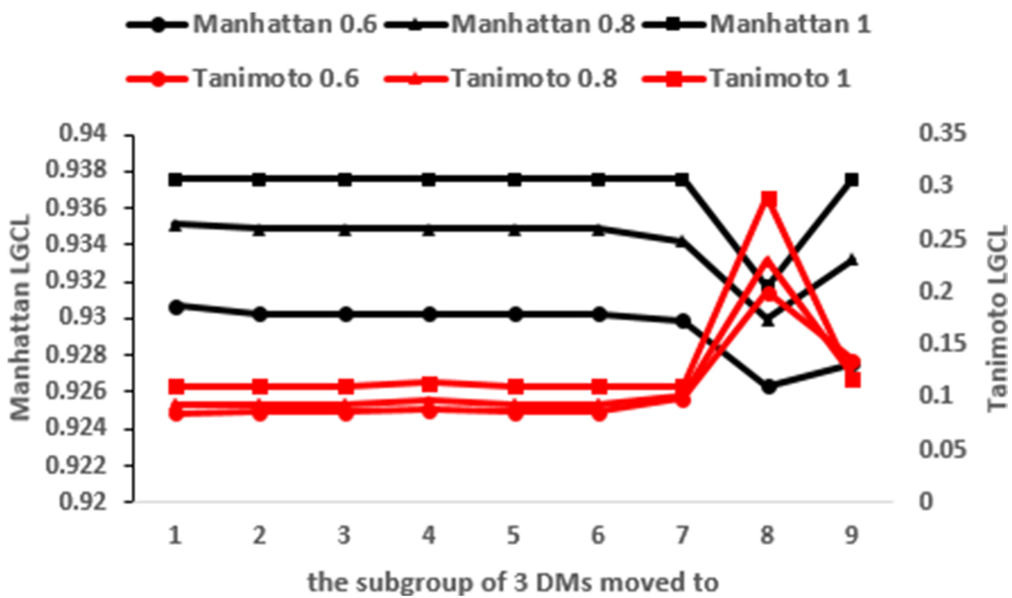
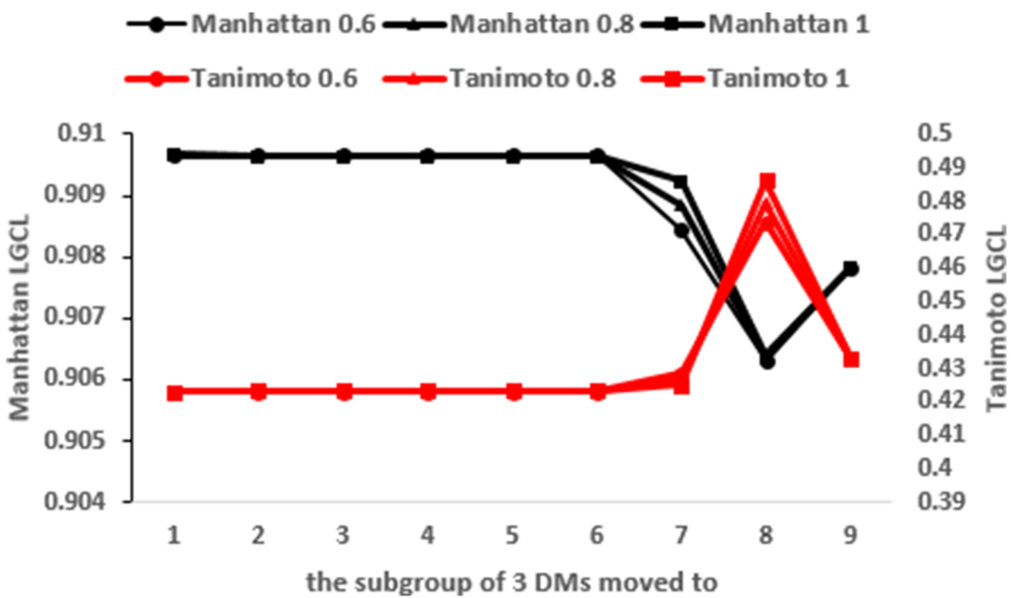
The switch to the Tanimoto Coefficient is statistically significant. As shown in the authors' simulation, Manhattan distance-based results often fluctuate erratically as experts change opinions. In contrast, Tanimoto-based levels show a smooth, monotonic trend that accurately reflects the "Majority Rule."
## Conclusion
This paper provides a robust blueprint for high-stakes decisions where human linguistic nuance must be balanced with mathematical precision. While the process is computationally more complex than simple weighting, its ability to handle "stubborn" experts and preserve "valuable" minority insights makes it superior for emergency management and safety investments.
**Takeaway for Engineers**: When building expert systems, don't just calculate mean squares. Look at the *similarity* of support vectors, especially when the input variables are categorical or linguistic.