
FlipTracer: Practical Parallel Decoding via Transition Probability Tracking
5269_FlipTracer Practical Parallel Decoding for Backscatter Communication.
FlipTracer is a robust parallel decoding system for backscatter communication that enables multiple tags to transmit concurrently. It achieves a 2 Mbps aggregate throughput (a 6x improvement over SOTA) by utilizing a novel graphical model called the One-Flip-Graph (OFG).
TL;DR
FlipTracer is a breakthrough in backscatter communication (RFID) that enables multiple tags to transmit simultaneously even in "hostile" environments. Instead of relying on fragile signal "signatures" like precise IQ coordinates or stable timing, it tracks the transition patterns of signals. This approach allows it to achieve a 2 Mbps throughput—6 times faster than previous State-of-the-Art (SOTA) systems.
The Problem: The Chaos of Realistic Backscatter
Parallel decoding—allowing tags to talk at once—is the "holy grail" of RFID efficiency. However, existing solutions like BiGroup or LF-Backscatter break down in the real world due to two factors:
- IQ Domain Dynamics: Moving objects or tag rotation shift the signal clusters unpredictably.
- Time Domain Chaos: Low-cost tags have massive clock drift (up to 68,000 ppm), making it impossible to predict exactly when a tag will "flip" its state.
When signal edges overlap and clusters shift, traditional readers lose track of which tag sent which bit.
The Insight: Stability in Transitions
The authors discovered a hidden constant: although the positions of signal clusters change, the probability of moving from one cluster to another is highly stable.
Because tag clocks are naturally asynchronous, it is statistically rare for two tags to flip at the exact same microsecond. Therefore, most transitions in a collided signal represent a state change for exactly one tag. FlipTracer maps these "Single-Flips" into a specific structure: the One-Flip-Graph (OFG).
Methodology: Tracking the One-Flip-Graph (OFG)
1. Robust Symbol Clustering
FlipTracer first identifies signal clusters using a customized density-based algorithm (LDBC). To handle "confused" samples in overlapping areas, it incorporates time-continuity metrics, ensuring that samples are assigned to clusters not just by their IQ coordinates, but by where the signal was immediately before and after.
2. Constructing the OFG
The system builds a graph where nodes are signal clusters and edges represent "neighboring" states (states that differ by only one tag's bit).
- Transition Probability: High transition frequency between two clusters = Neighbor relationship.
- Error Correction: The system checks for "abnormal loops" (odd-numbered node cycles) to prune false connections.
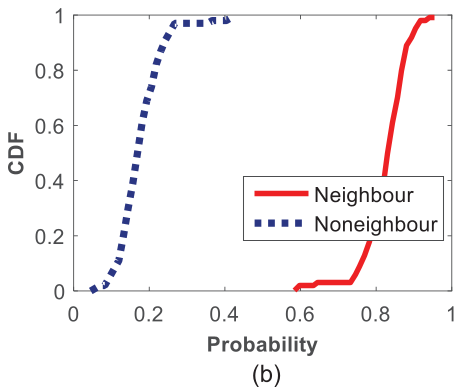 Figure 1: The architecture of the FlipTracer system, from sample clustering to final bit sequence extraction.
3. Layered Cluster Identification
Starting from an "anchor" state (the "All-Low" state when all tags are idle), FlipTracer traverses the OFG layer by layer. By identifying which tag caused a specific transition, it unravels the interleaved message into distinct bitstreams.
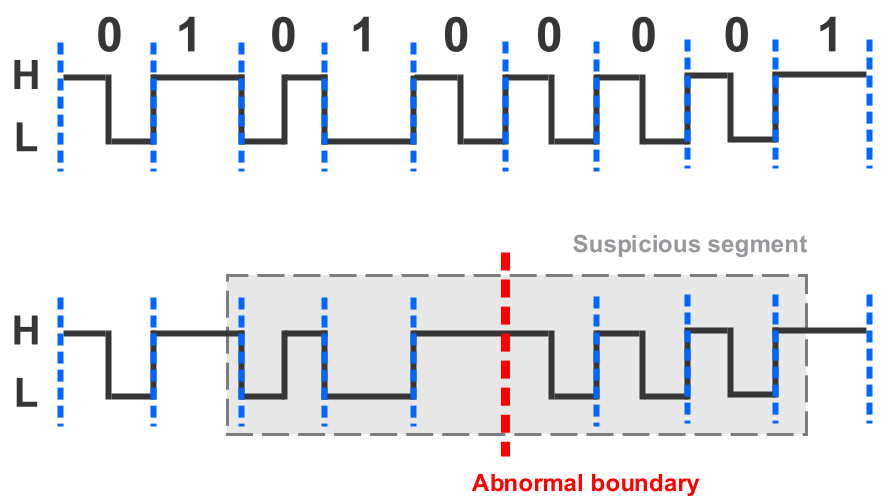 Figure 2: The process of identifying combined states in a 3-tag collision by tracking transitions across layers.
Experimental Results
The authors implemented FlipTracer on USRP N210 readers and programmable WISP tags.
- Throughput: In a 5-tag scenario, FlipTracer reached nearly 2 Mbps, a massive leap over BiGroup ( Mbps).
- Robustness: Even with clock drift exceeding 60,000 ppm, FlipTracer's Bit Error Rate (BER) remained stable, while competing methods failed.
- Dynamics: The system maintained high decoding rates even when obstacles moved at 1 m/s or tags were rotated.
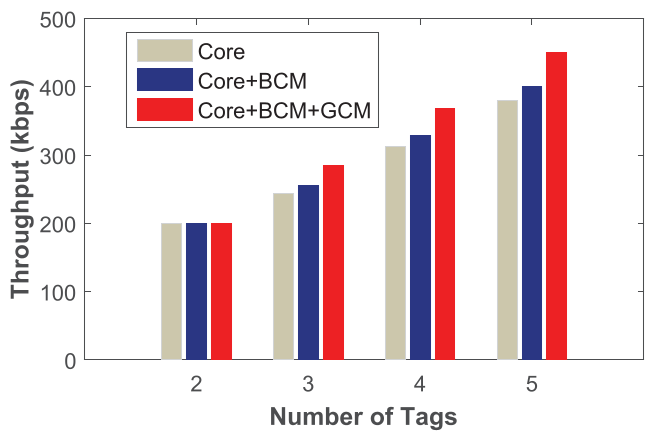 Figure 3: Aggregate throughput comparison showing FlipTracer's scalability as the number of concurrent tags increases.
Critical Analysis & Conclusion
FlipTracer marks a significant shift from feature-based to pattern-based decoding. By modeling the physics of asynchronicity into a graph, it bypasses the need for high-quality oscillators on tags.
Limitations:
- Scaling: As tags increase, the number of clusters () grows exponentially. At or , clusters will overlap so severely that even density-based clustering might fail.
- Anchor Dependency: The system assumes the "All-Low" state is identifiable; in extremely noisy environments, the anchor cluster might shift or be misidentified.
Future Outlook: This approach could be extended to other asynchronous low-power protocols where high-precision synchronization is cost-prohibitive. Hybrid models combining OFG with Machine Learning for cluster classification could potentially push the concurrency limit even higher.