
Decoding the Emotional Spectrum of Arabic Social Media: A Multi-Label Approach
5588_Multi-Label Emotion Classification for Arabic Tweets.
This paper presents a Multi-Label Multi-Target Emotion Analysis (EA) framework specifically designed for Arabic tweets, classifying texts into six basic emotions (Anger, Fear, Disgust, Joy, Sadness, Surprise). Using a custom-annotated dataset, the authors compare traditional machine learning classifiers, achieving peak performance with Random Forest using Label Combination transformation.
TL;DR
Researchers have moved beyond simple "Positive vs. Negative" sentiment analysis to tackle the complexity of Arabic tweets. By developing a specialized multi-label dataset and leveraging the Label Combination (LC) transformation with Random Forest, this study achieves a 66.4% accuracy in identifying six distinct emotions—Anger, Fear, Disgust, Joy, Sadness, and Surprise—simultaneously within a single tweet.
Background & Motivation: Beyond Binary Sentiments
Traditional Sentiment Analysis often categorizes text as a monolithic "Negative" or "Positive" block. However, human expression is rarely that simple. A "negative" tweet could simultaneously express Sadness and Anger.
For the Arabic language, this task is particularly challenging due to its complex morphology and the lack of high-quality, fine-grained annotated datasets. The authors identify a significant gap: most prior work treats emotion as a single-label problem, ignoring the reality that tweets often contain multiple "targets" with varying intensities.
Methodology: The Multi-Label Pipeline
The authors constructed a pipeline designed to transform raw, noisy Twitter data into structured emotional insights.
1. Data Collection and Arabic-Specific Preprocessing
The team crawled nearly 100,000 tweets, filtering them down to 11,503 high-quality samples. Preprocessing was critical:
- Normalization: Converting different shapes of Arabic letters (like Alif or Haa) into a unified form.
- Letter Elimination: Modern Standard Arabic and dialects on Twitter often use repeated letters for emphasis (e.g., "Amennnn"); these were reduced to single instances to standardize the vocabulary.
- Hashtag Handling: Instead of deleting tags, they were converted to plain text to retain semantic meaning.
2. The Transformation Strategy
Standard classifiers like Decision Trees aren't inherently "multi-label." To solve this, the authors used:
- Binary Relevance (BR): Treating each emotion as an independent "Yes/No" question.
- Label Combination (LC): Treating each unique set of labels found in the training data as a single class, which preserves the correlation between emotions (e.g., the high likelihood of Disgust and Anger appearing together).
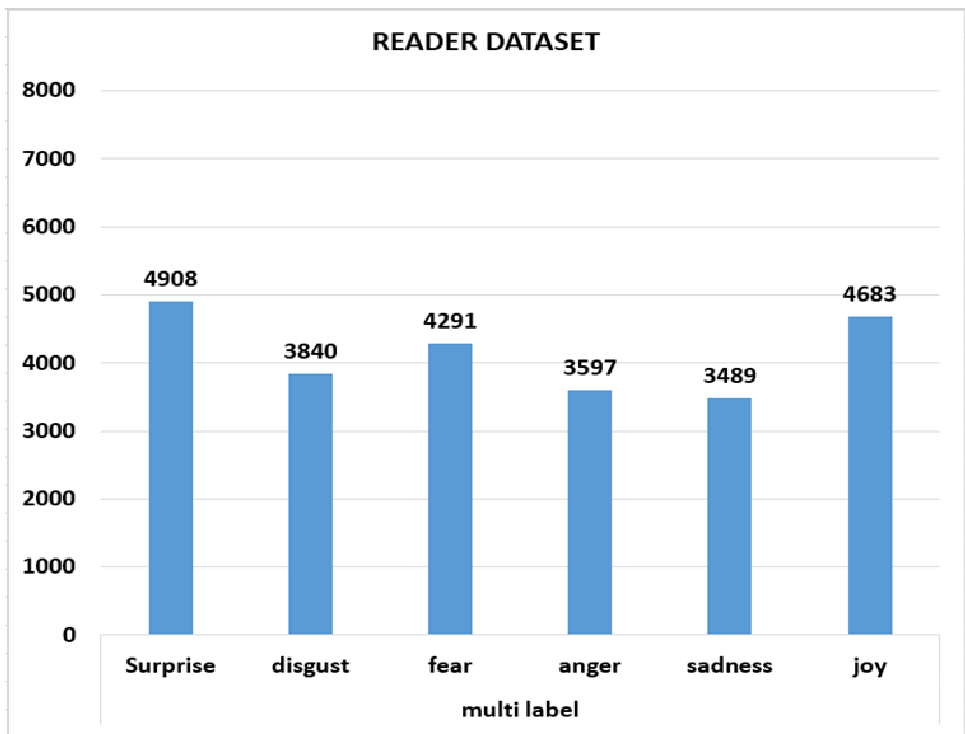 Figure 1: The distribution of emotional labels across the dataset, showing a prevalence of Sadness and Joy.
Experimental Results: Random Forest Rules the Day
The study compared three primary algorithms: k-Nearest Neighbor (KNN), J48 (Decision Tree), and Random Forest (RF) using the MEKA tool.
| Metric | RF (LC) | J48 (LC) | KNN (LC) |
|---|---|---|---|
| Accuracy | 0.664 | 0.615 | 0.574 |
| F1-Measure | 0.826 | 0.790 | 0.746 |
| Hamming Loss | 0.357 | 0.371 | 0.390 |
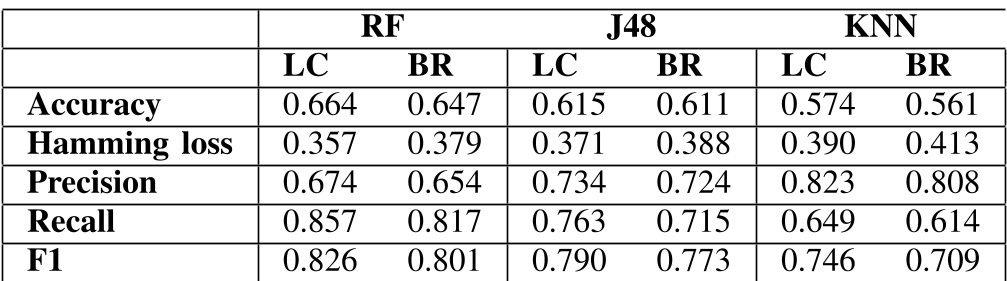 Table 1: Comparative performance metrics across different models and transformation methods.
Key Insights from the Data:
- Label Influence: Random Forest achieved the best overall performance. Its ensemble nature allowed it to handle the variance in Arabic dialectical expressions better than single decision trees or distance-based KNN.
- The Superiority of LC: Label Combination consistently outperformed Binary Relevance. This confirms that emotions in social media are interdependent—predicting one emotion helps the model more accurately predict related emotions.
- Precision vs. Recall: While KNN showed high precision (82.3%), its recall was low (64.9%). Conversely, Random Forest showed a much higher recall (85.7%), making it better at "finding" all relevant emotions in a tweet, even if it was slightly less conservative than KNN.
Critical Analysis & Conclusion
While this work provides a solid foundation for Arabic Emotion Analysis, there are notable limitations:
- Feature Engineering: The study relies on BOW and TF-IDF. Modern NLP has largely shifted toward Deep Learning and Embeddings (like BERT), which could likely push the 66.4% accuracy significantly higher by capturing context better than word counts.
- Class Imbalance: Figure 1 shows that "Surprise" and "Fear" are less frequent than "Sadness," which often leads to models that are biased toward more common emotions.
Future Outlook: The shift toward multi-label, multi-target analysis is a vital step for Arabic NLP. By treating emotions as a spectrum rather than a binary choice, developers can build more empathetic AI, from customer service bots to public health monitoring tools.