
MCNet: Crowdsourcing Wireless Performance Through the Eyes of Mobile Devices
5705_MCNet Crowdsourcing wireless performance measurements through the eyes of mobile devices.
This paper introduces MCNet, a Mobile Crowdsourcing Network system designed to monitor and manage large-scale enterprise WLANs. By leveraging unmodified consumer smartphones as distributed sensors, MCNet provides a "client-side" view of network performance, achieving significant improvements in latency (38%) and throughput (37%) in real-world deployments.
TL;DR
Existing WiFi management tools focus on the Access Point (AP), but users care about the device in their hands. MCNet is a crowdsourcing framework that turns regular smartphones into a distributed network of diagnostic sensors. By intelligently scheduling measurements based on user movement and battery levels, it uncovers "hidden" network blind spots that traditional infrastructure-based monitoring simply cannot see.
The Blind Spot in Modern WLAN Management
Why is it that your IT dashboard says the WiFi is "Green," but your Zoom call is lagging?
The problem lies in the vantage point. Traditional WLAN management relies on:
- AP-side metrics: Measuring performance from the ceiling looking down.
- Manual Surveys: Technicians walking around with expensive gear (expensive and infrequent).
These methods ignore the "client-side" reality—signal interference at desk level, "ping-ponging" (rapidly switching between APs), and the impact of a device's specific hardware. MCNet argues that to fix the network, you must see it through the eyes of the mobile device.
Methodology: Balancing Quality and Battery
The core challenge of mobile crowdsensing is the Energy-Utility Trade-off. Active throughput tests are battery killers. MCNet solves this through an Intelligent Measurement Scheduler.
1. Context-Aware Scheduling
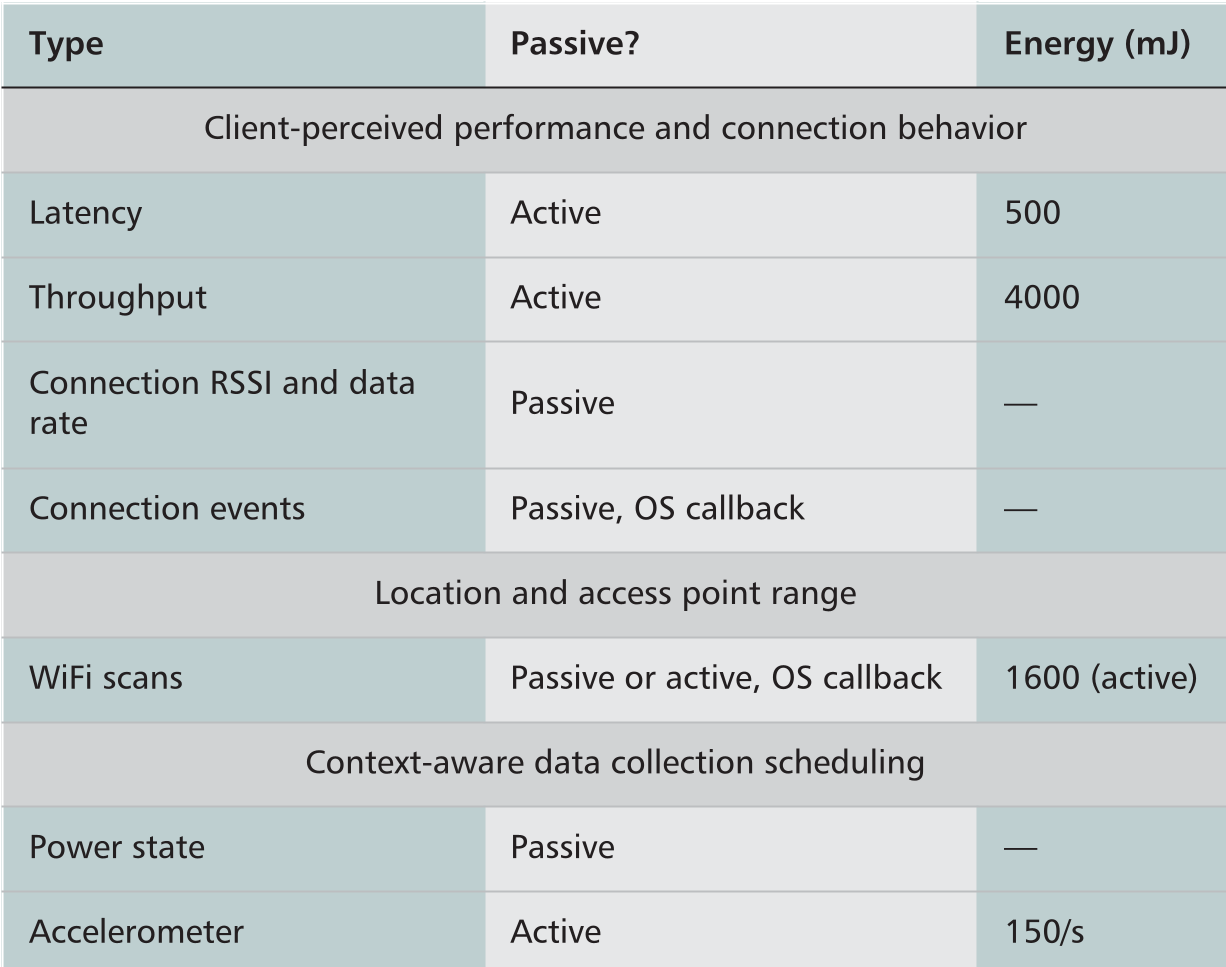
Instead of constant polling, MCNet uses "hints" from the device's sensors:
- Accelerometer: When a user is walking, the system enters "Aggressive Mode" to capture handover performance and spatial transitions.
- Power State: Tests are throttled when the battery is low and boosted when the device is plugged in.
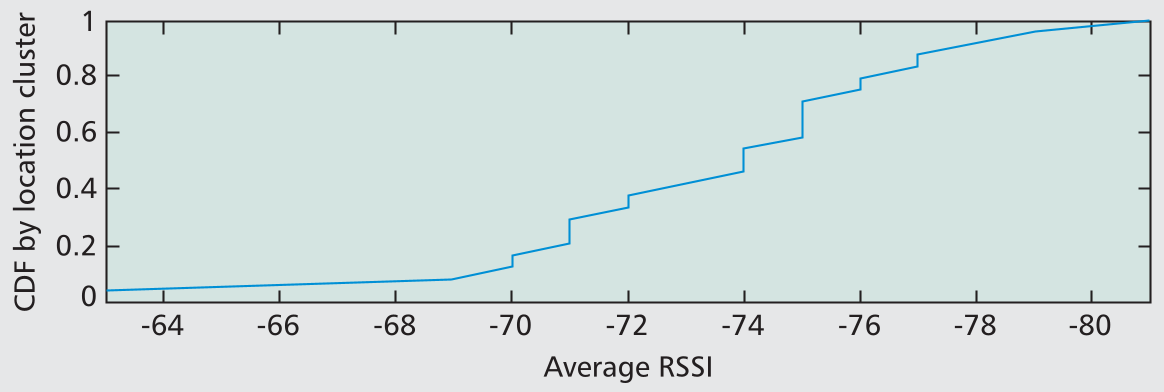
- Location Signatures: It uses a fingerprinting technique (Relative Signal Strength) to map measurements to specific rooms without requiring GPS, which is often unavailable indoors.
2. Dual-Mode Data Collection
MCNet splits data into two categories:
- Passive (Always On): RSSI, BSSID scans, and connection events. These have zero-to-negligible energy impact.
- Active (Scheduled): Pings for latency and small file downloads for throughput.
Real-World Impact: Corporate and University Deployments
The authors deployed MCNet in a large corporation and a university building. The results were immediate and actionable.
Case Study: The Corporate Floor
By analyzing client-side data, MCNet detected an AP that performed poorly regardless of client proximity—something the AP's own internal health check had missed.
- The Fix: IT engineers reconfigured channel assignments based on MCNet's interference map.
- The Result: 38% improvement in latency and 37% increase in throughput in problem areas.
Critical Analysis
MCNet’s strength is its simplicity and pragmatism. It doesn't require "root" access or custom firmware, making it deployable on stock Android devices.
However, there are limitations:
- Localization Accuracy: The current method places measurements within ~10 meters. While sufficient for room-level diagnostics, it might struggle in high-density "open office" environments.
- Privacy: While the paper mentions aggregating data to preserve privacy, the collection of BSSID fingerprints could theoretically be used to de-anonymize user movements in smaller datasets.
Conclusion and Future Outlook
MCNet proves that the most powerful network diagnostic tool is already in the user's pocket. As we move toward WiFi-7 and more complex 5G indoor networks, the "Mobile Crowdsensing" model will likely become a standard feature of enterprise MDM (Mobile Device Management) solutions. The future of networking isn't just about faster routers; it's about smarter, client-centric observation.
Senior Editor's Note: This paper provides a foundational look at how "Sensor Hints" (accelerometers/power states) can be used to make network protocol research more efficient and battery-friendly.