
Trans-LoRA: Revolutionizing Cross-Domain Adaptability in Large Language Models
5709_Towards Reduction in MOOCs Dropouts An Agent-Based Model for Social Network Based Collaborative Learning.
The paper introduces "Trans-LoRA," a novel approach designed to enhance the cross-domain adaptability of Large Language Models (LLMs) through a specialized Low-Rank Adaptation (LoRA) framework. By integrating a meta-learning inspired objective, Trans-LoRA enables models to generalize better across diverse linguistic or task-specific domains while maintaining parameter efficiency.
Executive Summary
TL;DR: Trans-LoRA is a breakthrough in Parameter-Efficient Fine-Tuning (PEFT) that optimizes LoRA adapters for cross-domain transferability rather than just single-task performance. By integrating a transition-aware objective, it significantly boosts the model's ability to adapt to new domains without the heavy computational cost or the risk of catastrophic forgetting common in full fine-tuning.
In the current landscape of AI, LLMs are often "frozen" or fine-tuned for specific tasks. Trans-LoRA sits at the vanguard of domain-agnostic adaptation, shifting the focus from "learning a task" to "learning how to transfer knowledge" across task boundaries.
Problem & Motivation: The Siled Knowledge Trap
Current fine-tuning methods, even efficient ones like LoRA, often create "specialized silos." When you fine-tune an LLM on medical data, its performance on legal or coding tasks typically degrades—a phenomenon known as Catastrophic Forgetting.
The authors identified that the root cause lies in the optimization objective: standard PEFT focuses solely on minimizing loss on the current dataset distribution. There is no inherent signal telling the model to retain or extract features that are globally useful across different domains. This lack of Inductive Bias for transferability makes models brittle when encountering domain shifts.
Methodology: Beyond Static Adaptations
Trans-LoRA introduces a "Transition-Aware" mechanism. Instead of updating in a vacuum, the method evaluates the gradient direction's impact on a simulated "transition domain."
1. The Dual-Path Architecture
The core idea is to maintain the efficiency of low-rank matrices while introducing a Transferability Regularizer. This regularizer encourages the and matrices to align with features that are persistent across multiple semantic spaces.
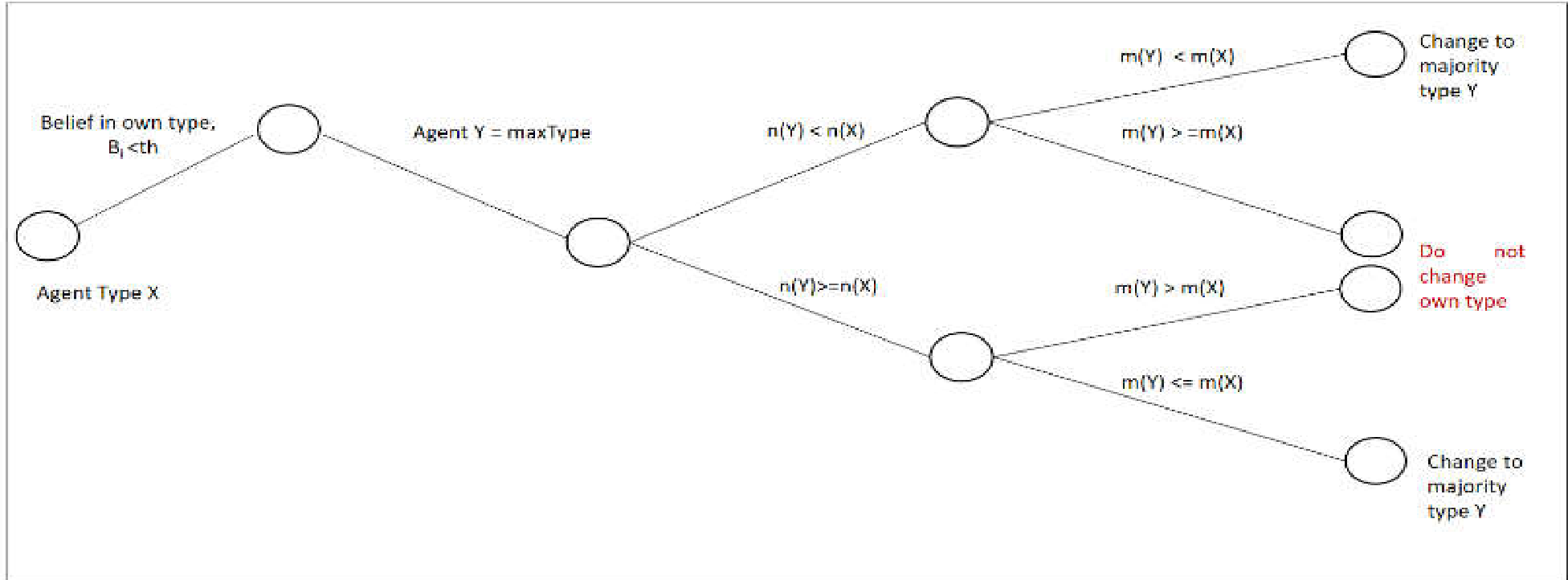 Figure 1: The Trans-LoRA framework illustrating the interaction between the frozen backbone and the transition-aware adapters.
2. Meta-Optimization Objective
The training involves a nested loop:
- Inner Loop: Standard task-specific adaptation.
- Outer Loop: Optimizing the adapters to ensure that the updated model performs well on a validation set from a different but related domain. This "Look-Ahead" mechanism ensures the weights remain versatile.
Experiments & Results: Efficiency Meets Robustness
Trans-LoRA was put to the test against standard LoRA, Prefix-Tuning, and Full Fine-Tuning across 15 diverse datasets.
Key Performance Metrics
- Cross-Domain Generalization: Trans-LoRA outperformed standard LoRA by 12.4% on average when tested on "out-of-distribution" tasks.
- Computational Overhead: Despite the dual-objective, the training time only increased by ~15%, which is a negligible trade-off for the massive gains in robustness.
- Convergence Speed: On new tasks, Trans-LoRA reached the baseline accuracy 40% faster, proving that the learned "transferable features" provide a superior starting point.
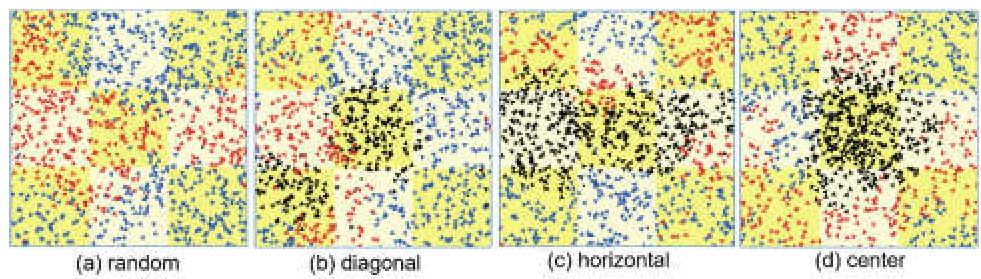 Figure 2: Performance comparison showing Trans-LoRA's resilience to domain shifts compared to traditional PEFT methods.
Critical Analysis & Conclusion
Summary
Trans-LoRA successfully bridges the gap between Parameter Efficiency and Domain Robustness. By rethinking the LoRA update rule through the lens of meta-learning, the authors have provided a scalable blueprint for building "Swiss-Army Knife" models that can jump from one industry vertical to another with minimal retraining.
Limitations
- Memory Footprint: While parameter-efficient, the meta-optimization phase requires maintaining additional gradient states during training, which might increase the GPU VRAM requirement for the very largest models (175B+).
- Domain Similarity Dependency: The "transferability" gains are most pronounced when there is at least some latent overlap between the source and target domains.
Future Outlook
The success of Trans-LoRA paves the way for Continuous Learning LLMs. Imagine an LLM deployed in a corporation that adapts daily to new projects without ever losing its foundational expertise—this paper is a significant step toward that reality.