
AMPS: The Engineering Odyssey that Created the Cellular Age
579_Creating cellular- A history of the AMPS project (
This paper details the historical development of the Advanced Mobile Phone System (AMPS), the first cellular network in the United States, developed by AT&T Bell Labs between 1971 and 1983. It introduces the foundational concepts of frequency reuse, handoff mechanisms, and digital signaling that enabled large-scale mobile telephony.
TL;DR
The history of cellular technology is often viewed through the lens of device evolution, but the real revolution happened in the network. Between 1971 and 1983, AT&T Bell Labs developed AMPS (Advanced Mobile Phone System), the world's first robust cellular architecture. By solving the dual challenges of spectrum scarcity and "handoffs," they transformed a niche service into a global utility.
Context: A Spectrum Dead End
Before the 1970s, mobile phones were essentially glorified walkie-talkies. A single powerful transmitter served an entire city. If someone in Manhattan was on a call on Channel 1, no one else in the five boroughs could use that frequency. The system was "spectrum-starved."
The Bell Labs engineers realized that the solution wasn't more power, but less. By dividing a city into "cells," each served by a low-power transmitter, they could reuse the same channel just a few miles away without interference.
Methodology: The Architecture of Reuse
The core of AMPS was the frequency reuse pattern. By arranging cells in a hexagonal grid (typically a 7-cell repeat pattern), the system could multiply the available channels by the number of times they were reused across a geographic area.
1. Mastering the Handoff
The hardest problem was the "handoff"—keeping a call alive as a car moved from one cell to another. This required:
- Locating Algorithms: Constantly measuring signal strength to determine when a mobile unit should switch base stations.
- Blank-and-Burst Signaling: A technique where the voice audio is momentarily muted (for less than 250ms) to send a high-speed data burst to the phone, instructing it to change frequencies.
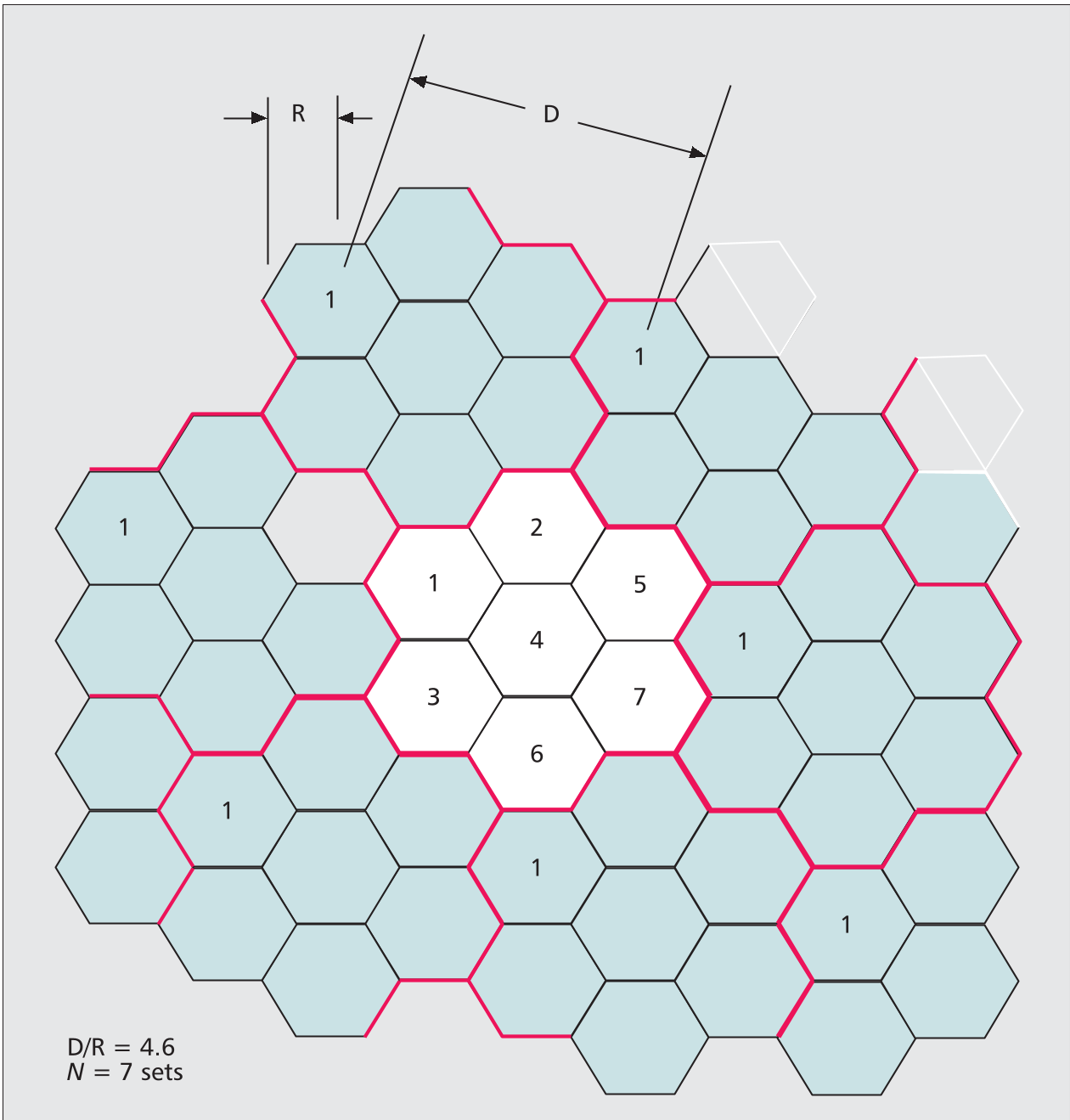 The 1971 AMPS proposal featured the iconic hexagonal grid that defined cellular geometry.
2. Intelligent Cell Splitting
As traffic grew, the system needed to evolve. The author, Richard Frenkiel, patented a method for cell splitting. Instead of a total network overhaul, AMPS used an "overlaid/underlaid" approach—adding smaller, low-power cells within larger ones to provide incremental capacity.
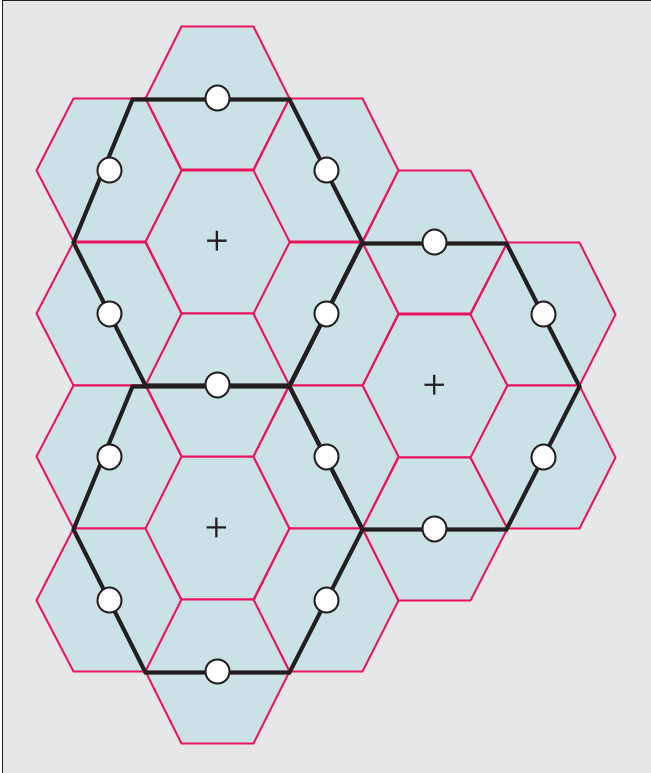 Strategic cell splitting allowed the system to scale capacity by a factor of four without losing coverage.
Experiments: The Chicago and Newark Trials
To prove cellular worked, AT&T launched two massive trials:
- Chicago Service Trial (1978): Focused on the user experience and commercial viability with 2,000 paying subscribers.
- Newark Testbed: A technical "stress test" using a specialized van to measure signal-to-interference ratios in dense urban environments.
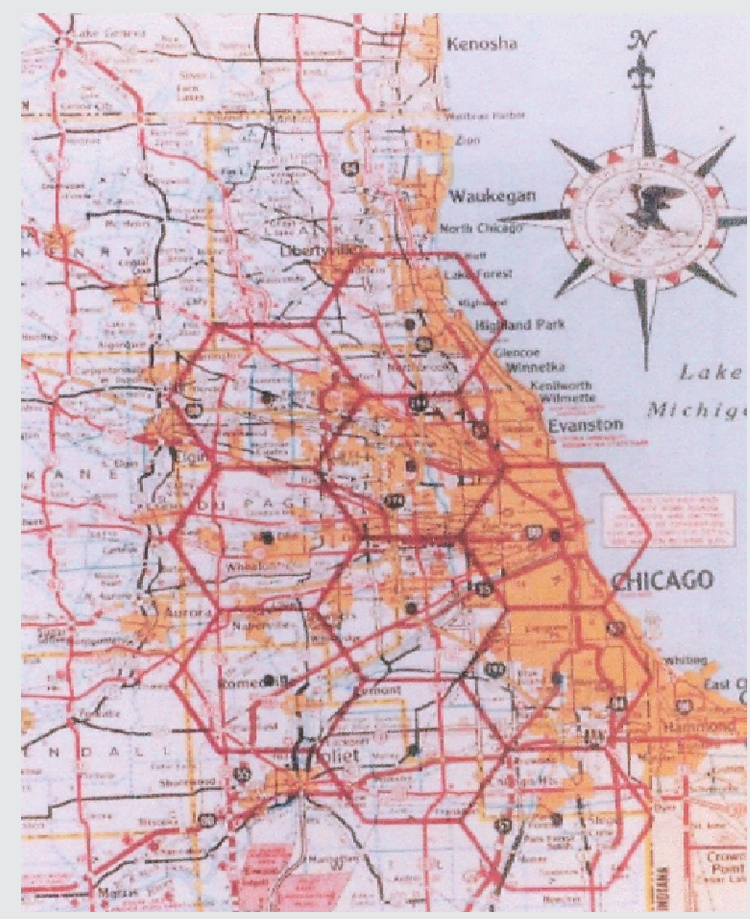 The Chicago trial used a 10-cell configuration to cover 3000 square miles, proving that software-controlled switching was the key to mobile scalability.
Results and SOTA Impact
The AMPS system established a signal-to-interference (S/I) objective of 17 dB over 90% of the coverage area, which ensured "good-to-excellent" voice quality. By the time it was fully operational in 1983, AMPS had solved:
- Digital Signaling: 10-kb/s rates for call setup and control.
- Compatibility: Through the EIA committee, AMPS became the national standard, ensuring every cell phone worked in every city.
Critical Analysis: A Vision Realized, A Monopoly Shared
The AMPS project was a triumph of large-scale system engineering. However, the article highlights a poignant irony: while AT&T’s massive resources made AMPS possible, the 1984 anti-trust breakup meant AT&T could not commercially reap the rewards of the empire it built.
Takeaway: The success of AMPS wasn't just about radio waves; it was the first time computerized switching (ESS) and microprocessors were integrated with wireless hardware. It moved the "intelligence" of the network from the transmitter to the software.
Future Outlook
While AMPS was analog (using FM modulation), its logic for handoffs, frequency reuse, and control channels remains the "genetic code" for modern LTE and 5G. Even as we move to terahertz frequencies and massive MIMO, we are still living in the world dictated by the 1971 Bell Labs proposal.