
Breaking the 3D Barrier: High-Precision Materials Segmentation via Homomorphic Propagation
5892_3D Materials Image Segmentation by 2D Propagation A Graph-Cut Approach Considering Homomorphism.
This paper introduces a Graph-Cut based propagation framework for 3D materials image segmentation by transferring 2D segmentations across serial-sectioned slices. The method leverages homomorphic constraints—preserving region adjacency graphs (RAG)—and incorporates specific material priors like shape and appearance consistency to achieve high-accuracy tracking of hundreds of contiguous substructures.
TL;DR
Segmenting 3D material microstructures is traditionally a choice between high-cost 3D voxel processing and inconsistent 2D slice-by-slice analysis. This paper proposes a "best of both worlds" approach: a 2D propagation framework using the Graph-Cut algorithm that enforces homomorphism—the preservation of structural relationships—while handling the biological/physical reality of appearing and disappearing grains.
The Challenge: Why 3D Voxel Segmentation is Failing Materials Science
In materials science, understanding the 3D relationships between "grains" (in metals) or "cells" (in biomaterials) is critical for predicting properties like strength or conductivity. However, segmenting these volumes is a nightmare for several reasons:
- Imaging Artifacts: Serial-sectioned images often have inconsistent brightness from slice to slice.
- Complexity: A single slice can contain hundreds of touching objects.
- Topology: Objects change shape, merge, or disappear, yet their neighboring relationships (who touches whom) remain largely consistent.
Current methods like Normalized Cut or Watershed struggle here. Watershed often over-segments, while Normalized Cut fails to respect the strict boundaries required for scientific analysis.
Methodology: Topology as a Constraint
The authors' core "Insight" is that the 3D volume is a sequence of 2D slices where the Region Adjacency Graph (RAG)—a map of which segments are neighbors—should remain homomorphic.
1. The Homomorphic Constraint
The propagation is framed as an energy minimization problem (Markov Random Field). In the energy function, the Binary Term () is set to infinity if two segments that were not adjacent in the previous slice try to become adjacent in the new one. This prevents "topology jumping" and stabilizes the segmentation of hundreds of objects.
2. Preserving Shape and Intensity
Simple dilation isn't enough for complex shapes. The authors introduce two specific priors:
- Skeleton-based Shape Preservation: By extracting the "skeleton" of an object in slice and projecting it onto slice , the model maintains the geometric essence of the structure even through noise.
- Gaussian Appearance Modeling: Each substructure's intensity is modeled as a unique distribution, allowing the Graph-Cut to "recognize" the grain in the next slice even if its boundary has shifted.
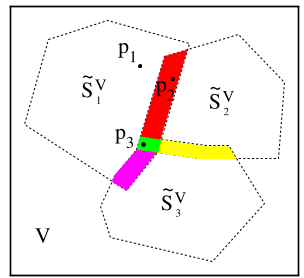 Figure 1: Illustration of how unary costs are distributed around dilated regions and how seed points ensure segment continuity.
3. Handling Change: Local Non-Homomorphism
While topology is mostly consistent, it isn't perfect—grains do appear and disappear. The authors propose a Local Non-Homomorphism strategy. At specific "triple junctions" (where three grains meet), the algorithm looks for candidate regions where new grains might be emerging. It relaxes the infinite penalty locally, allowing for structural birth and death without destabilizing the global map.
Experimental Results: SOTA Performance
The framework was tested on four diverse datasets ranging from Ti-21S Metal Grains to Plant Embryo (Cotyledon) cells.
- Accuracy: On Dataset 1 (120 grains), the proposed method vastly outperformed Propagated Watershed, maintaining stable F-measures even as the distance from the initial ground-truth slice increased.
- Efficiency: Despite the complexity, segmenting a slice with ~700 cells took only ~1 minute, making it significantly faster than manual segmentation which takes 40 minutes per slice.
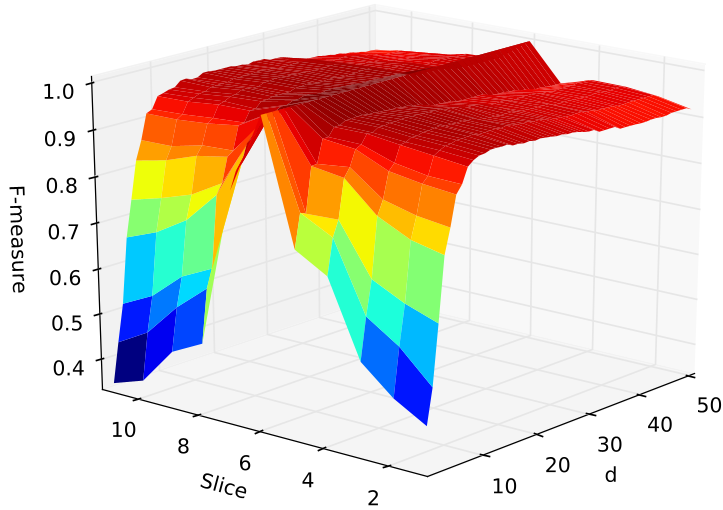 Figure 2: Visual comparison of the proposed method (sharp boundaries, consistent topology) against the "blocky" results of Normalized Cut and the noisy boundaries of Watershed.
Critical Analysis & Conclusion
The real value of this work is the explicit modeling of domain constraints. By baking "Materials Science Intuition" (like RAG consistency and triple-junction emergence) directly into the optimization algorithm, the authors achieved a level of robustness that purely data-driven or "blind" 2D methods cannot match.
Takeaway for Researchers:
- Topology Matters: In dense multi-object environments, knowing who can't be a neighbor is as powerful as knowing who is.
- Hybrid Approach: The combination of a global homomorphic pass followed by a local non-homomorphic refinement is an elegant solution to the stability-vs-flexibility trade-off.
Limitations: The primary bottleneck remains the need for at least one manually segmented "seed" slice. Future work using Unsupervised or Self-Supervised pre-segmentation could bridge this gap.
Keywords: Materials Image Segmentation, Graph-Cut, Homomorphism, MRF, 3D Reconstruction.