
Emotions on the Go: Transforming Smartphones into Affect-Aware Companions
5895_Emotions on the Go Mobile Emotion Assessment in Real-Time using Facial Expressions.
The paper introduces a real-time mobile emotion assessment system that utilizes front-facing smartphone cameras and app usage data. By deploying a modified version of OpenFace on Android, the authors developed person-dependent classifiers to detect six basic emotions (happiness, sadness, surprise, fear, disgust, anger) in-the-wild, achieving SOTA-level contextual awareness for mobile affective computing.
TL;DR
Researchers from LMU Munich and the University of the Bundeswehr have developed a system that tracks your emotions in real-time using only your phone's front camera and your app history. By moving beyond the sterile environment of the lab, they've proven that your "digital context" (what app you are using) is the missing piece of the puzzle, boosting emotion detection accuracy by a staggering 33%.
Background: Why the Lab is Not Enough
Historically, affective computing—the study of systems that recognize human emotion—has been a "lab-only" science. Users were hooked up to bulky sensors or sat under perfect studio lighting. In the real world, we tilt our phones, walk through shadows, and rarely show "textbook" facial expressions. This paper tackles the "in-the-wild" challenge, transforming the smartphone from a passive tool into an emotionally intelligent observer.
The Problem: The Ambiguity of the Human Face
The core issue is that facial landmarks are often ambiguous. Is that slight squint a sign of focus or frustration? Previous SOTA methods using just the camera struggled because they lacked context.
The authors' insight was simple yet profound: What you are doing on your phone provides the semantic background for how you feel. A smile while on a "Messaging" app means something different than a smile while playing a "Game."
Methodology: Fusing Vision with Digital Context
The researchers built an Android application using OpenFace, an open-source facial behavior analysis toolkit.
- Facial Reconstruction: The app captures 10 frames per second via the front camera, calculating an "attention score" to ensure the user is actually looking at the screen.
- Contextual Logging: Simultaneously, the system logs the "Activity" (the specific app category).
- The Classifier: Instead of a "one-size-fits-all" model, they trained person-dependent Random Forest classifiers. This respects the fact that everyone expresses happiness or sadness differently (High Inductive Bias).
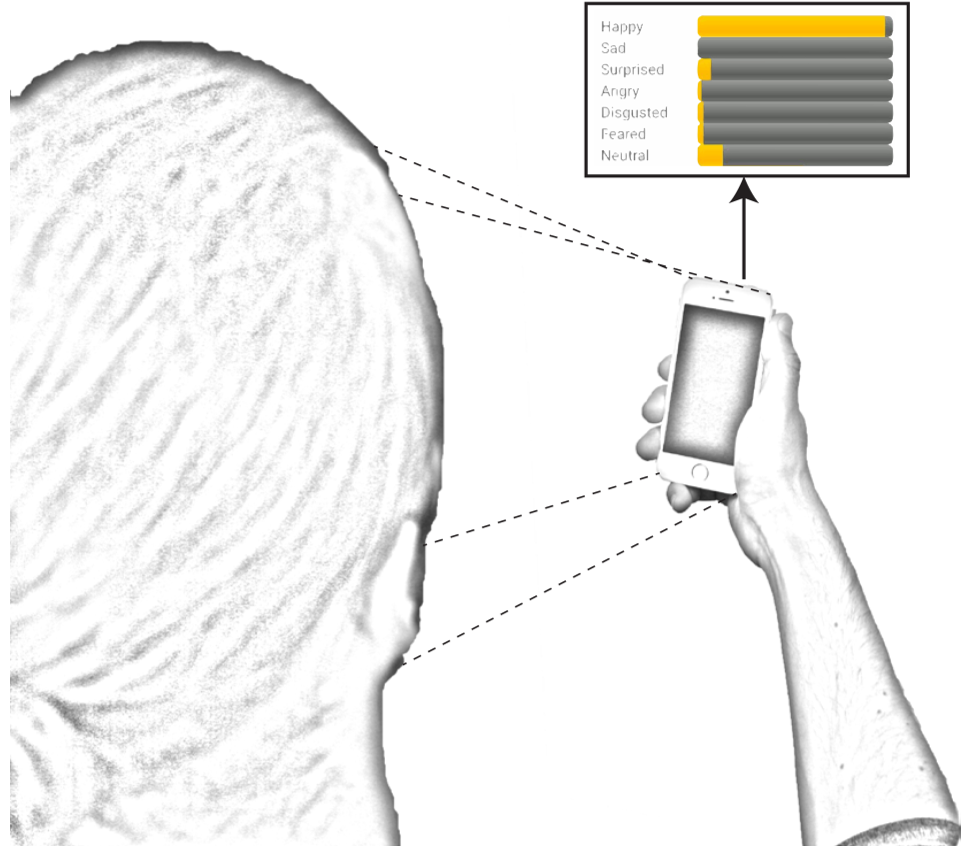 Figure 1: The system captures facial landmarks while the user interacts naturally with their apps.
Experiments & Results: The Power of Context
In a two-week field study, the team collected over 100,000 facial samples and 864 ground-truth emotion labels via Experience Sampling (ESM).
- The 33% Boost: The "Vision + App Context" model significantly outperformed the "Vision-Only" model.
- F1 Score: The average F1 score jumped from 0.70 to 0.79 when app usage were added as features.
- App Correlations: Findings showed that Happiness and Sadness were most frequently elicited by Social Media and Messaging apps, confirming the "social reward loop" theory.
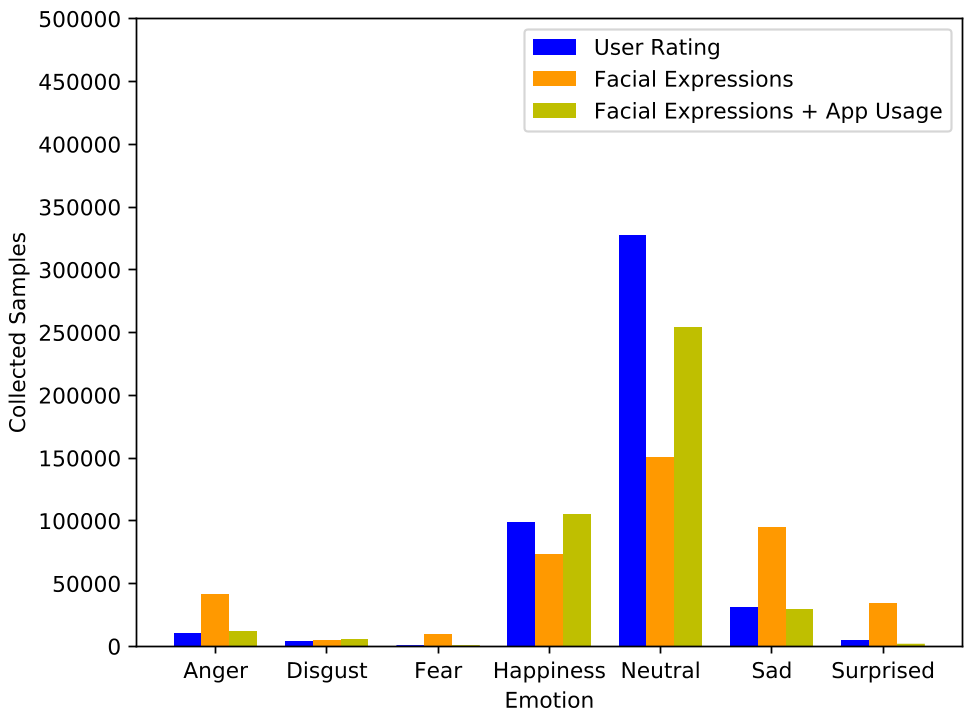 Table 1: Comparison between User Ratings and Classifier Predictions, showing a close approximation when context is included.
Critical Insight & Future Outlook
This work signals a shift toward Emotional Prosthetics. Imagine a phone that suggests a meditation app when it detects rising anger during news browsing, or a "Social Diary" that helps you reflect on which apps are actually making you miserable.
Limitations: The study noted that high-arousal emotions like "Fear" and "Disgust" remain difficult to capture because they rarely occur naturally during daily smartphone use. Future iterations may include Deep Neural Networks and Eye Tracking (pupil dilation) to capture even more subtle physiological shifts.
Conclusion
By proving that real-time, on-device emotion recognition is feasible without cloud-side processing, this paper paves the way for a more empathetic mobile future. Your smartphone no longer just sees your face—it finally understands how you feel.