
INSiGHT: Decoding Radicalization Trajectories through Dynamic Graph Pattern Matching
6091_Finding Emergent Patterns of Behaviors in Dynamic Heterogeneous Social Networks.
The paper introduces an enhanced version of INSiGHT (Investigative Search for Graph Trajectories), a vectorized graph pattern matching technique designed to identify emergent latent behaviors in dynamic, heterogeneous social networks. It specifically targets the detection of radicalization pathways by tracing how entities match complex behavioral patterns over time.
TL;DR
Researchers have developed an advanced version of INSiGHT (Investigative Search for Graph Trajectories), a tool that uses matrix algebra to find "hidden" patterns of behavior in social networks. Unlike standard search, it accounts for how often a person repeats an action (frequency), how long ago it happened (recency), and whether their friends are also exhibiting suspicious signs (neighborhood matching), proving highly effective in identifying radicalization pathways.
Problem & Motivation: The Challenge of "Latent" Behavior
In fields like homeland security or cybersecurity, wait-and-see is not an option. Analysts look for latent behaviors—activities that are not overtly illegal but, when combined over time, signal a specific trajectory (e.g., radicalization).
Existing graph search tools face three major hurdles:
- Rigidity: They look for exact matches, ignoring "partial" matches that signal someone is halfway through a radicalization process.
- Temporal Blindness: They treat a suspicious event from five years ago the same as one from five minutes ago.
- Individual Bias: They often miss "conspiratorial plots" where indicators are strategically spread across a small group of people to avoid individual detection.
Methodology: The Math of Investigation
The core of the paper lies in transforming visual graph structures into Class Adjacency Matrices. Instead of traversing edges one by one (which is computationally expensive), the authors use matrix dot products to compute similarity at scale.
1. Weighing the "Red Flags"
The system introduces two critical mathematical modifications to the adjacency matrix:
- Frequency Score: Uses an exponential function to designate that while one "suspicious post" is an outlier, five posts significantly increase the "match" score.
- Time Dampening: Employs a hyperbolic tangent () decay. A behavior retains its significance shortly after occurring but gradually "fades" over time, reflecting a lower threat level for those who have desisted.
2. Neighborhood Matching
To catch conspiracies, the authors propose (l, k)-Neighbor Matching. This allows the "Query Focus" (the person of interest) to "inherit" scores from their social neighborhood.
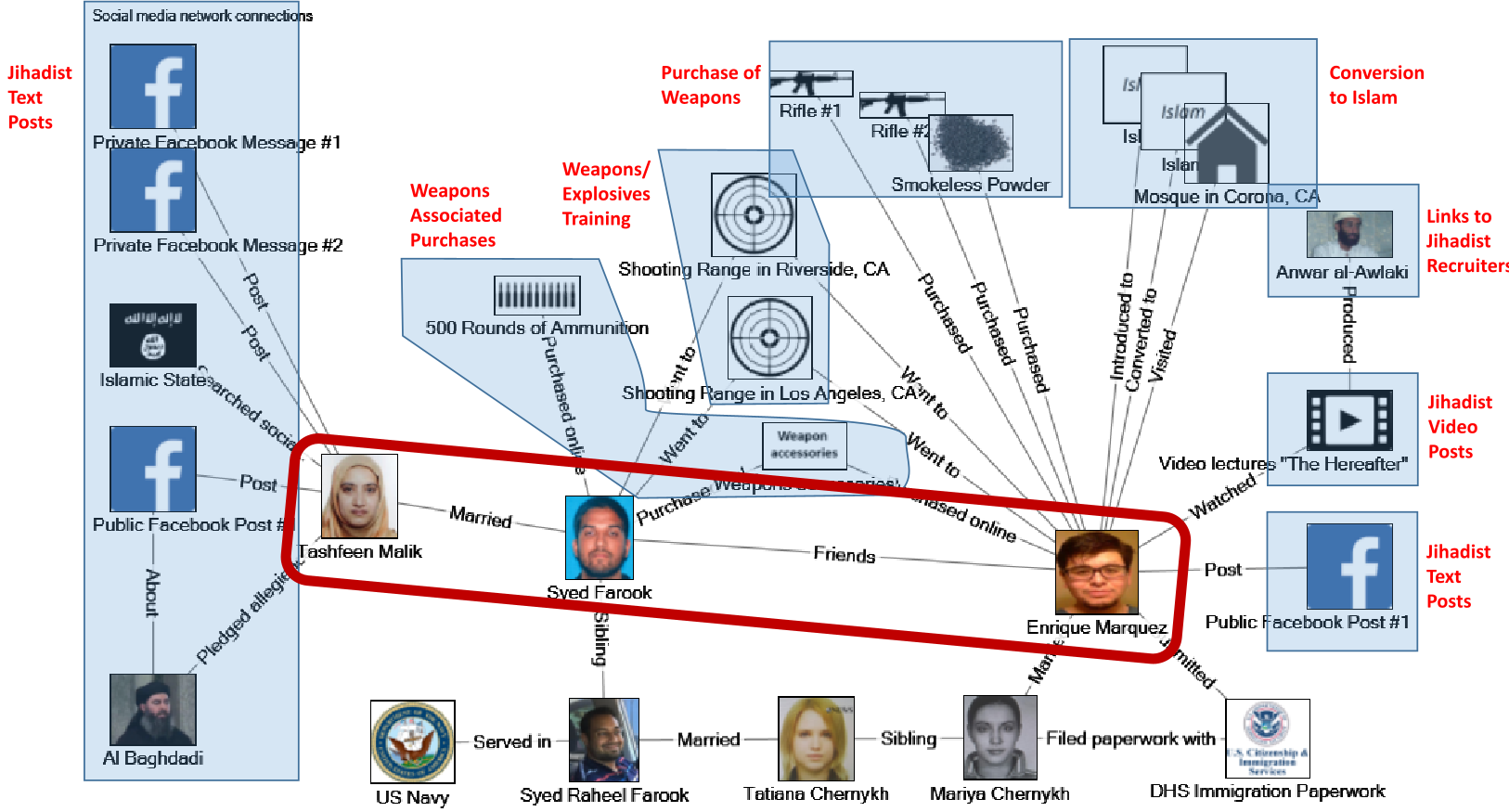 Fig 1. Conceptual spread of indicators across a social cluster (e.g., the San Bernardino case).
Experiments and Insights
The authors validated their approach on a synthetic dataset and the BlogCatalog real-world social network.
The Synthetic Test
In a simulated radicalization scenario, the system could distinguish between a "former" extremist (whose score decayed) and an "active" threat (whose score spiked with recent purchases and travel).
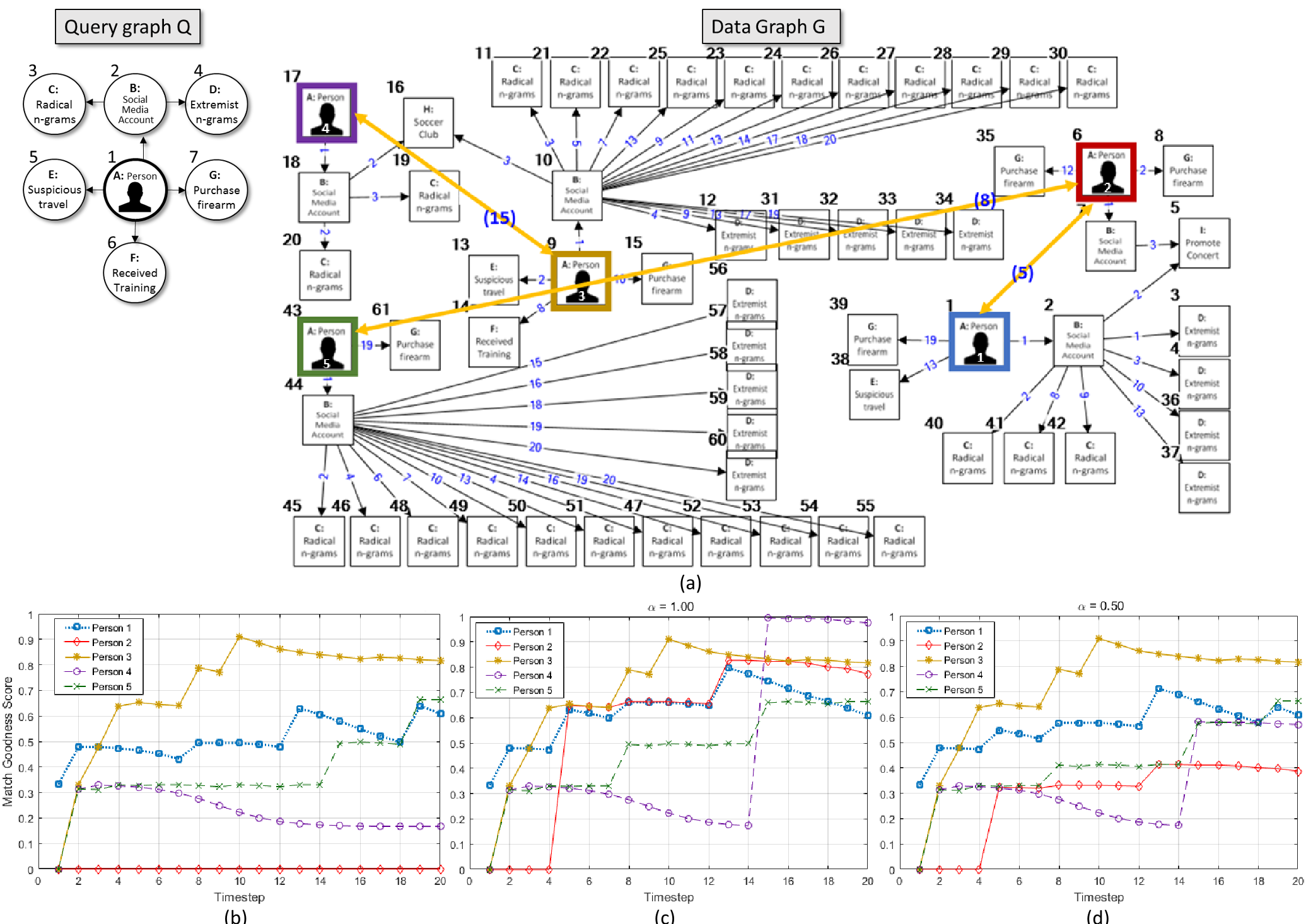 Fig 2. Comparison of match trajectories for different behavioral profiles.
Real-World Scaling (BlogCatalog)
Using a proxy query (tracking users moving from Windows XP/Vista to Windows 7), the authors showed that INSiGHT could filter a massive graph of 4 million edges down to a handful of relevant "User IDs." Importantly, they found that setting the neighbor weight () to 0.5 provided the best balance—highlighting people who were suspicious themselves but also factoring in their peer influence.
Critical Analysis & Conclusion
The true value of this work is its non-combinatorial nature. It avoids the "exponential explosion" of traditional group-finding algorithms, making it feasible for real-time "Big Data" streams.
Limitations:
- The model currently treats all "intermediary" people in a path equally.
- It assumes a known "Query Pattern" provided by an expert; it does not "discover" new threat patterns on its own.
Future Work: The authors aim to implement "incremental updates," allowing the system to update risk scores the millisecond a new edge (behavior) is added to the database.