
From Stocks to Flows: How KM Capabilities Unlock the DNA of Intellectual Capital
6092_From Intellectual Capital to Firm Performance The Mediating Role of Knowledge Management Capabilities.
This study presents a structural equation model investigating how Intellectual Capital (IC) influences firm performance. It introduces Knowledge Management (KM) capabilities—enhancement and utilization—as critical mediators that transform IC stocks into product innovation and subsequent financial success.
TL;DR
Owning "Intellectual Capital" (IC) is like having a library full of books; it doesn't matter unless you have the "Knowledge Management" (KM) capability to read and apply the information. This paper demonstrates that IC does not directly lead to financial success; instead, it must be metabolized through Enhancement and Utilization processes to fuel Innovation, which then drives Firm Performance.
The Missing Link: Why Talent Isn't Enough
In the hyper-competitive tech landscape, the "Knowledge-Based View" (KBV) has long argued that what you know is your competitive edge. However, practitioners often face a frustrating paradox: why do firms with brilliant individuals (Human Capital) and vast patent portfolios (Organizational Capital) often fail to innovate?
The authors argue that the industry has confused Knowledge Stocks (what we have) with Knowledge Flows (what we do). By neglecting the mediating role of KM capabilities, previous models failed to account for the actual "work" knowledge does within an organization.
Methodology: The Architecture of Mediated Success
The researchers proposed a sophisticated causal map testing 510 public-listed companies in Taiwan. They broke down knowledge into three "Capitals" and KM into two "Capabilities":
- The Resource Base (IC): Human Capital (skills), Social Capital (relationships), and Organizational Capital (manuals/databases).
- The Transmission Engine (KM):
- Knowledge Enhancement: Generating, acquiring, and absorbing new ideas.
- Knowledge Utilization: Applying and reusing knowledge for efficiency and problem-solving.
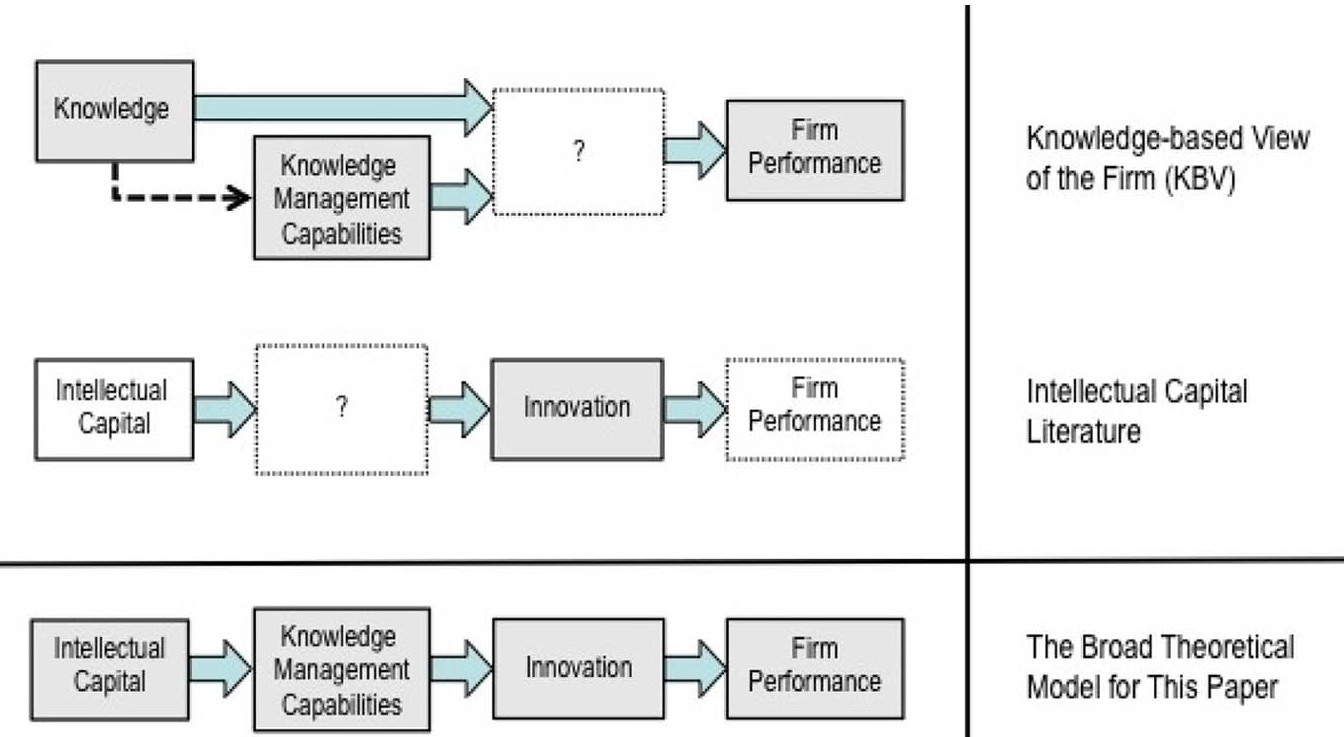 Figure 1: The theoretical framework linking IC, KM, and Performance.
Key Insights: The Surprise and the Standard
The Structural Equation Modeling (SEM) yielded several high-intensity insights:
- The Human Capital Exception: While most IC effects were fully mediated by KM, Human Capital exerted a direct effect on innovation. This suggests that pure creative brilliance can sometimes bypass formal company processes to deliver breakthroughs.
- The Path to Capital: Human and Social capital are the "parents" of Organizational capital. In other words, individual knowledge and team interactions eventually harden into the systems and culture of the firm.
- Utilization as an Innovation Driver: Interestingly, simply reusing knowledge (utilization) was found to be just as critical for innovation as creating new knowledge (enhancement). Routine and efficiency provide the stable platform from which flexibility emerges.
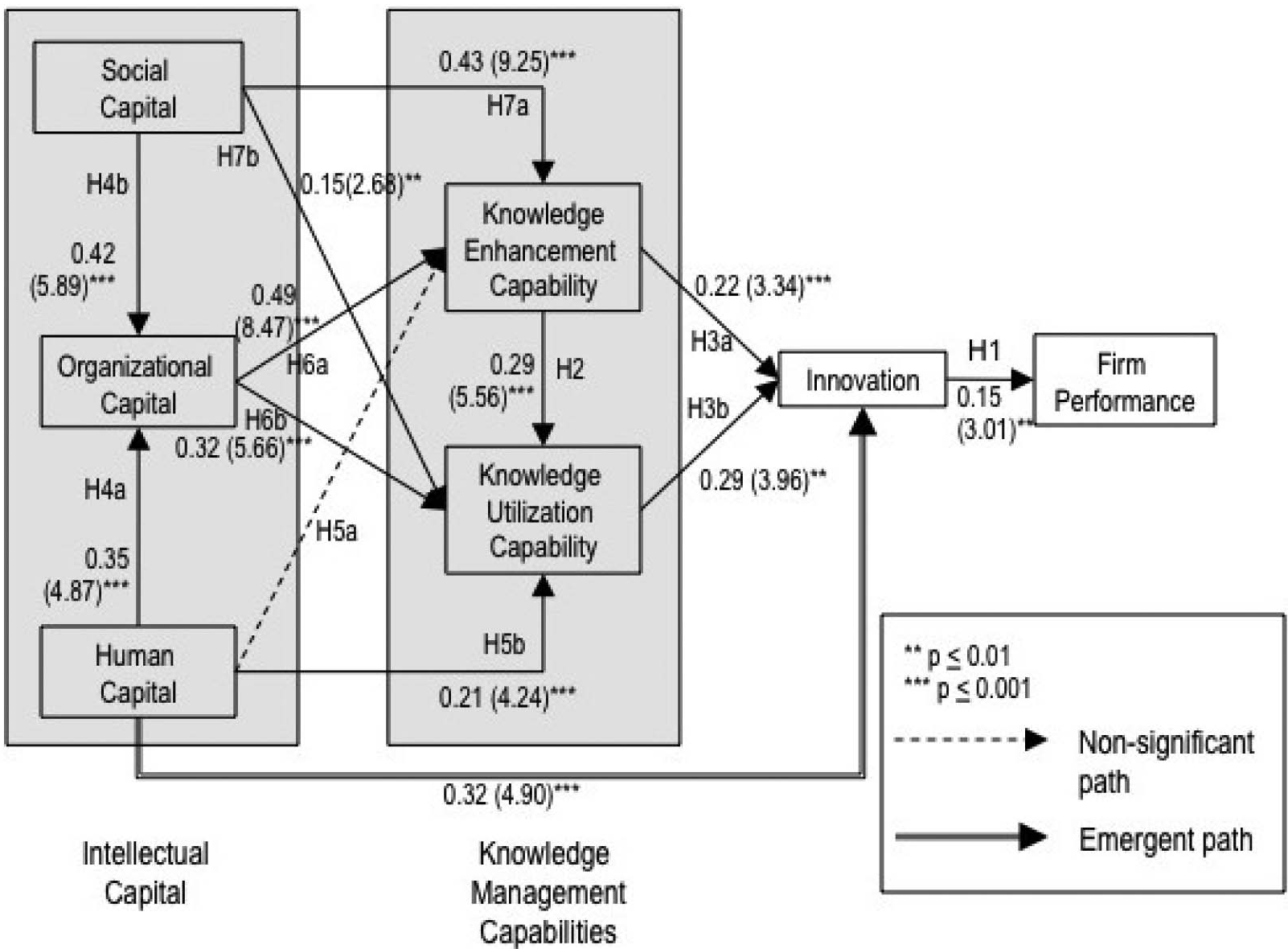 Figure 2: The final SEM results showing significant paths and standardized coefficients.
Experimental Validation
Using a combination of survey data (for the latent constructs) and secondary financial data (ROA and EPS), the study confirmed that Innovation is the ultimate bottleneck. If KM efforts do not result in new products or improved services, the signal never reaches the financial bottom line.
| Hypothesis | Result |
|---|---|
| H1: Innovation → Firm Performance | Supported |
| H5a: Human Capital → KM Enhancement | Not Supported |
| H7a: Social Capital → KM Enhancement | Supported |
The failure of H5a (Human Capital to Knowledge Enhancement) is particularly telling: it suggests that brilliant individuals cannot enhance organizational knowledge unless they interact (Social Capital) or document their findings (Organizational Capital).
Critical Analysis & Strategic Takeaway
This study shifts the focus from acquisition to integration.
Strategic Insight for Leaders:
- Don't just hire; institutionalize: High Human Capital is a liability if it isn't captured in Organizational Capital.
- Social Capital is the Glue: Social networks within the firm are the primary drivers of Knowledge Enhancement. If your teams don't talk, your knowledge enhancement engine is stalled.
- Innovation is the Only Bridge: KM for the sake of KM is a cost center. To drive performance, KM must be ruthlessly oriented toward the "creation of something new."
Limitations: The study is cross-sectional (a "snapshot" in time). Future work should look at the feedback loop: how does improved performance and innovation eventually grow the firm's Intellectual Capital in a virtuous cycle?
Conclusion
The road from intellectual capital to profit is not a straight line—it is a transformation process. By mastering Knowledge Management capabilities, firms can ensure that their intellectual "assets" aren't just sitting on the books, but are actively fueling the innovations that drive market dominance.