
SHS Orcas: Transforming Healthcare Through Goal-Directed Design
6264_SHS Orcas the first integrated information system for long-term healthcare facility management.
The paper presents "SHS Orcas," the first integrated information system designed for long-term healthcare facility management. Utilizing Alan Cooper's Goal-Directed Design methodology, the system replaces fragmented paper-based workflows with a role-based, persona-driven suite of clinical and financial tools.
TL;DR
In the early 2000s, long-term healthcare was a chaotic landscape of paper logs and disconnected billing software. "SHS Orcas" emerged as the first integrated solution to bridge this gap. By moving away from generic software design and moving toward Goal-Directed Design, the team created a suite of role-based interfaces that allowed nurses, financial managers, and case workers to collaborate through a single source of truth—without the "clunky" overhead of traditional enterprise software.
The Motivation: A System Drowning in Paper
Before Orcas, information management in nursing homes was fundamentally broken. Researchers observed that:
- Data Redundancy: Information about a single resident was often copied manually four or five times (from logs to charts to Medicare forms).
- Reactive Management: Because data entry happened days after care was provided, managers only saw "disasters" after they occurred, rather than spotting trends early.
- The "Shadow" Worker: Facilities had to hire clerks specifically to audit the gaps and omissions in paper records.
The core insight of the Cooper design team was that a single "Swiss Army Knife" interface would fail. Instead, the software needed to empathize with the specific mental models of different staff members.
Methodology: The Power of Personas
The Orcas project is a landmark case study in the use of Personas. The team didn't just interview users; they conducted "deep ethnography," following nurses on rounds and observing the physical chaos of the facility environment.
From this research, they distilled 17 personas, with three primary targets:
- Rhonda (Clinical): A Unit Coordinator who is "drowning in paper" and needs to spot health trends at a glance.
- Georgia (Financial): A Business Manager who needs to ensure billing is accurate and on time.
- Sandra (Case Management): A registered nurse focused on the admission of cost-effective care plans.
 Figure 1: The Clinical Interface for "Rhonda," featuring a visual "Trend Tool" that provides a dashboard of resident health indicators.
Role-Based Architecture
The methodology's genius lay in its "Single Database, Multiple Views" approach. While the underlying data (resident history, insurance, vitals) was unified, the interface for the Financial Manager focused on "Search Statements" and "Account Status," while the Nurse's interface focused on "Care Plans" and "Trend Analysis."
Key Innovations
1. The Trend Tool
Moving beyond list-based data, Orcas introduced a graphical trend tool. It allowed nurses to see a "rolling" view of facility health—spotting an outbreak of infections or a pattern of falls before they became systemic crises.
2. Natural Language Querying
For the financial users, the team bypassed complex SQL-like filters and replaced them with a "Natural Language Search Tool." Users could build a sentence like "Show residents by level of care" using simple dropdowns, making powerful database queries accessible to non-technical staff.
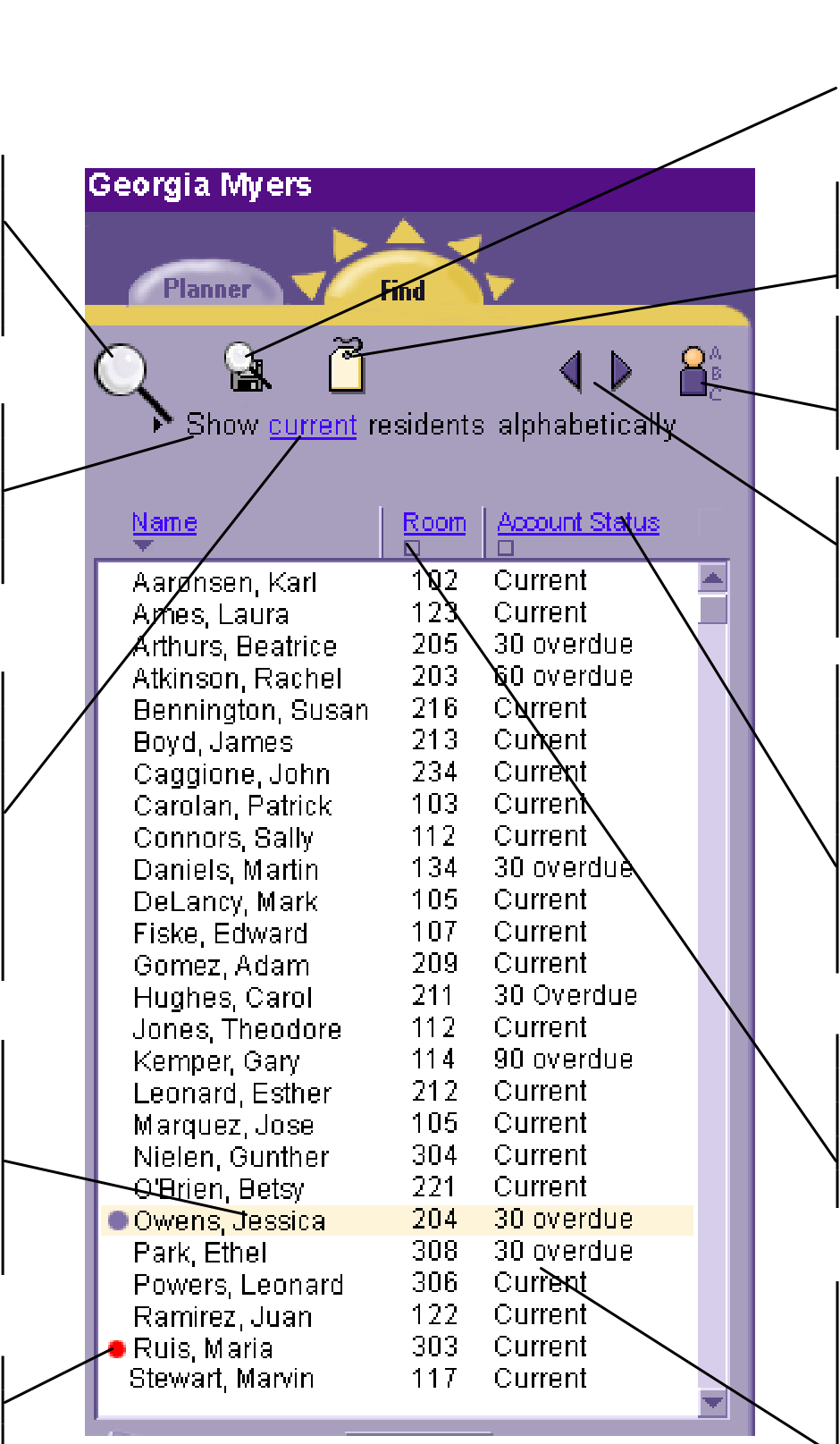 Figure 2: The innovative Search Tool that uses a natural language sentence structure to filter complex resident data.
Results & Impact
The success of Orcas was quantified not just by sales, but by user adoption:
- Over 400 facilities adopted the system immediately.
- Zero Training Mentality: Beta sites found the interface so intuitive (following the "Principle of Least Astonishment") that they actually declined the training hours offered by the company.
- Organizational Alignment: The development team at SHS was so inspired by the designs that they reorganized their entire engineering department around the Personas (the "Rhonda Team," the "Georgia Team") rather than technical layers like "Database" or "Logic."
Critical Analysis & Conclusion
The SHS Orcas project proves that in high-stakes domains like healthcare, empathy is a functional requirement. By focusing on the specific goals of the human being (e.g., Rhonda wanting to get home for dinner) rather than just the tasks (e.g., "Complete Form 302"), the designers created a product that felt "alive" and helpful.
Limitations: While Orcas revolutionized the back office, the paper notes that "Point-of-Care" data entry (at the resident's bedside) remained a challenge due to the limitations of mobile technology in 2002. Modern iterations would likely move these interfaces from desktops to tablets or wearables.
Conclusion: This paper remains a cornerstone for UI/UX professionals. It demonstrates that a rigorous, narrative-driven design process (Research -> Model -> Envision -> Refine) can turn a fragmented, paper-heavy industry into a streamlined, data-driven ecosystem.