
Impression Analysis: Beyond Binary Sentiments in Crisis Response
6331_Impression analysis of trending topics in Twitter with classification algorithms.
The paper introduces "Impression Analysis," a specialized sentiment analysis framework designed for disaster events. Using supervised machine learning (Logistic Regression, C4.5, Naive Bayes, Random Forest), it classifies tweets from the 2017 Mexican earthquake into eleven distinct categories, moving beyond simple binary polarity to capture nuanced social reactions.
TL;DR
Researchers have developed a more nuanced way to track the "pulse" of social media during disasters. By moving from simple Positive/Negative labels to an 11-category "Impression Analysis," this study of the 2017 Mexican Earthquake demonstrates how machine learning can transform Twitter noise into actionable data for emergency responders.
Background: Why Polarity Fails in Disasters
In the wake of a catastrophe, a tweet saying "We need water in Jojutla" isn't just "negative" because it expresses a lack—it is a functional request for aid. Traditional sentiment analysis tools often flatten these nuances, missing the critical difference between a citizen expressing grief and a victim requesting a rescue team. The authors of this paper argue that we need a "context-aware" framework that recognizes the specific social and psychological impressions unique to crisis events.
The Core Innovation: Eleven Impressions
The authors identified that while emotions (preconscious) and sentiments (conscious) are internal, impressions are the externalized reactions to an event. They proposed a taxonomy of 11 impressions:
- Actionable: Help Needed, Searching for Someone, Support Offered, Suggestions.
- Informational: Information Provided, Bad News.
- Social/Critical: Demand, Negative, Positive, Memes/Reflections.
- Noise: Irrelevant.
The Methodology Pipeline
The study processed over 272,000 tweets. Because datasets for specific hashtags were often unbalanced (e.g., a "Demand" hashtag having few "Help" tweets), they used SMOTE to balance the classes before training four types of supervised classifiers.
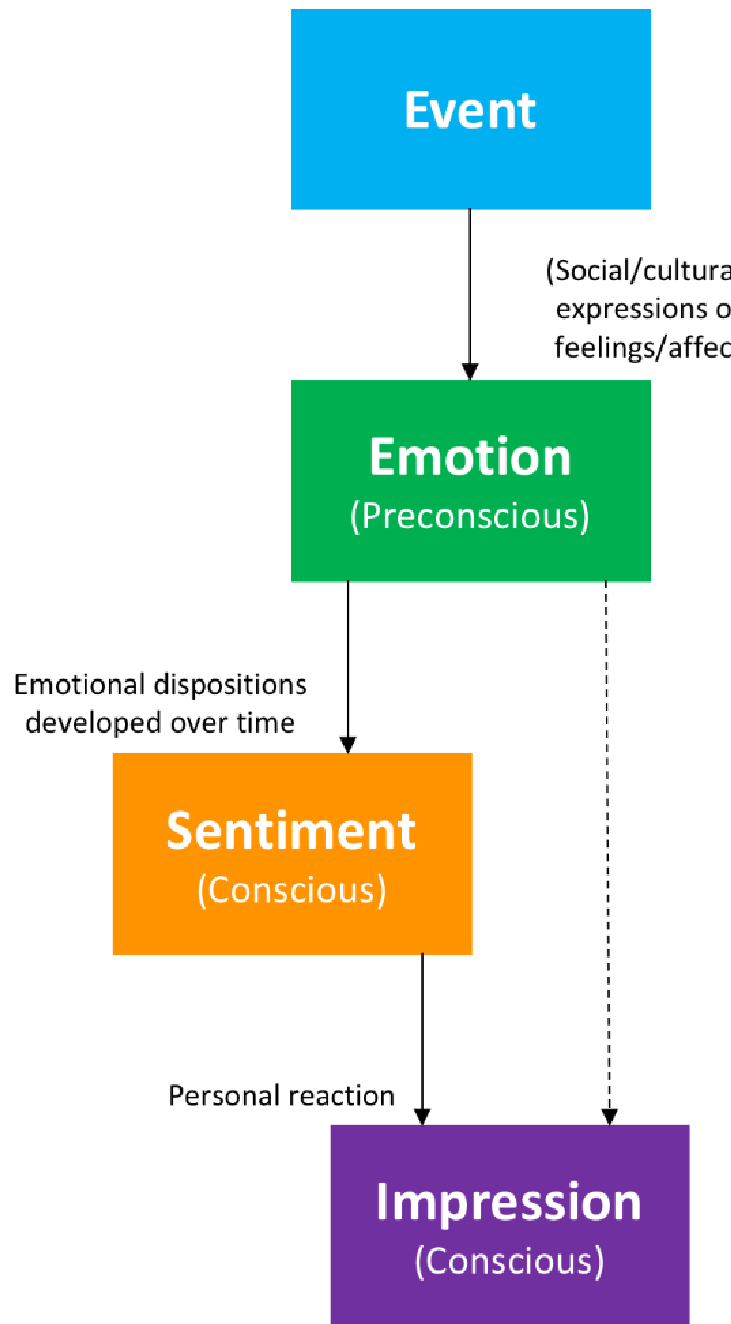 Figure 1: The theoretical framework showing how events transition from preconscious emotions to externalized impressions.
Key Findings: Twitter as a Media Watchdog
One of the most profound insights was Twitter's role in verifying truth. During the "Rebsamen school" incident (where mass media reported a trapped girl who didn't exist), the Impression Analysis shows that Twitter users were actively disproving mass media narratives in real-time.
Performance Metrics
The researchers tested Logistic Regression, C4.5, Naive Bayes, and Random Forest. Logistic Regression and Random Forest consistently outperformed others, particularly when the hashtag context was well-defined.
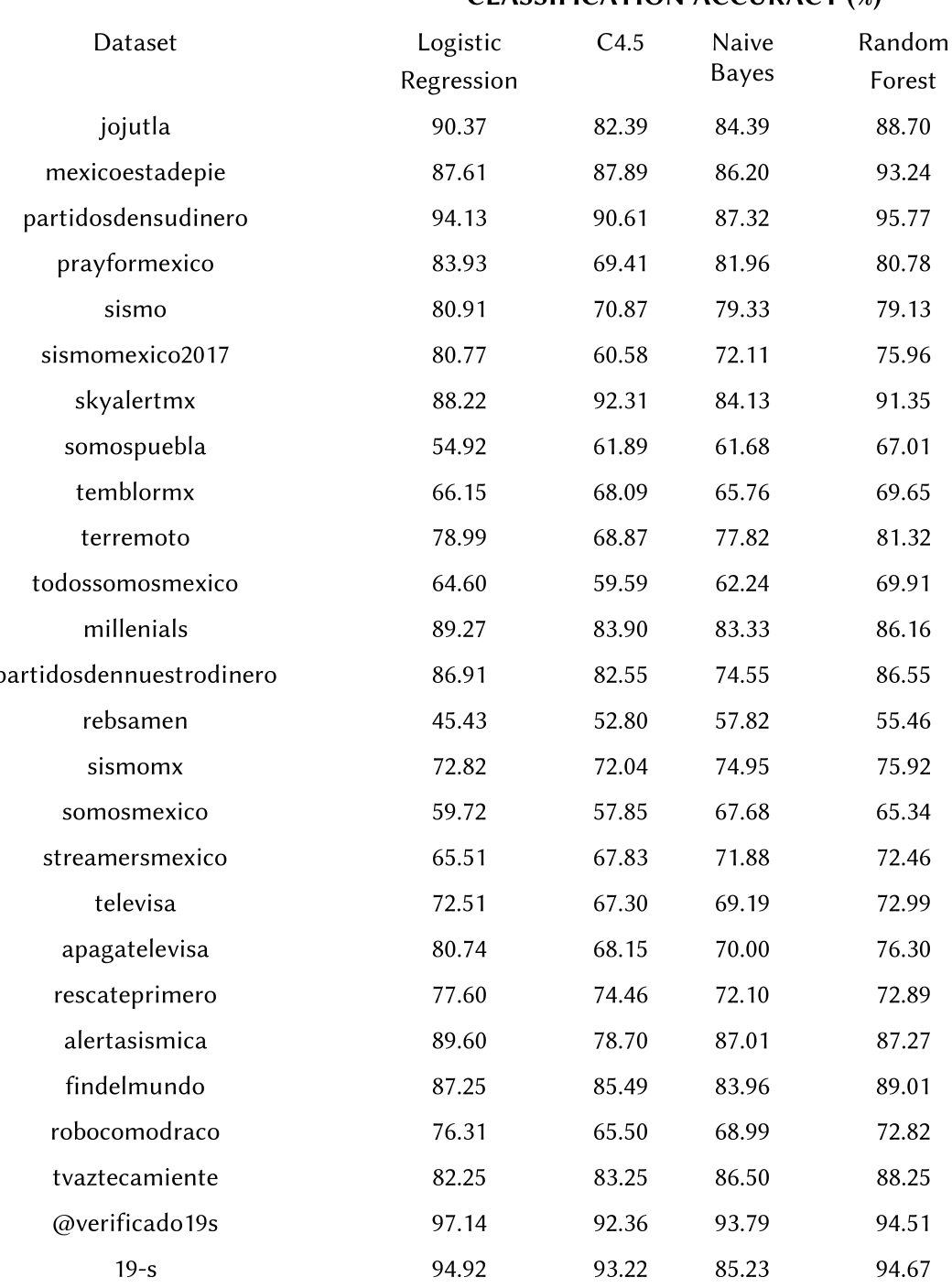 Table 1: Accuracy across different trending topics. Note the exceptionally high accuracy (97.14%) on the @verificado19s account, which was used specifically for verified aid.
Critical Analysis & Conclusion
While this study provides a robust framework, it was conducted retrospectively. The true value of Impression Analysis lies in its real-time application.
Takeaway for the Future: By integrating this 11-category classifier into emergency dashboards, government agencies can filter out "Memes" and "Demands" to focus immediately on "Help Needed" and "Searching for Someone" clusters.
Limitations:
- Language Specificity: The current model is optimized for Spanish (Mexican context).
- Evolution of Slang: Sarcasm and evolving internet slang (memes) still pose a challenge for traditional supervised models.
Ultimately, this work moves us closer to a "Semantic Emergency Response" where AI helps us hear the most vulnerable voices in the middle of the noise.