
Beyond the Drink Counter: Leveraging Peer Networks to Moderate Binge Drinking
6663_Designing a Mobile Social Tool that Moderates Drinking.
This paper presents a novel mobile social tool designed to moderate binge drinking among young women by leveraging peer support and real-time monitoring. The tool features a private "trusted circle," an event timeline, and intuitive drink tracking to encourage responsible behavior during social drinking sessions.
TL;DR
Binge drinking remains a critical public health challenge, especially among young women who are disproportionately vulnerable to its physical and social harms. This paper introduces a mobile social tool that moves away from clinical "drink counting" toward a peer-support model. By creating a private "trusted circle" and a shared event timeline, the tool transforms alcohol moderation from a solitary chore into a collective safety practice.
Background & Motivation: The Failure of "Solo" Interventions
Most existing alcohol-reduction apps act like digital scolds—they count drinks and offer warnings. However, the authors identify a core "Insight Gap": young people drink in social contexts. Current apps fail because they ignore the social pressure and group dynamics of a night out. Furthermore, young women expressed a "stigma barrier," fearing that using a clinical intervention app would be embarrassing or socially isolating.
Methodology: Designing for Social Dynamics
The researchers grounded their design in the Theory of Planned Behavior, focusing on "Subjective Norms"—the idea that if your peers value moderation, you are more likely to moderate.
1. The Trusted Circle
To solve the privacy dilemma, the tool avoids public APIs. Users form a temporary, private group for a specific event. This "confined social circle" ensures that posts about meeting "hot guys" or feeling tipsy stay between friends and off the radar of parents or employers.
2. The Intuitive Drink Table
Instead of entering data into a spreadsheet, users tap a virtual table to "order" a drink, using an analogy of real-world behavior. This provides immediate visual feedback: seeing digital bottles pile up on a virtual table makes the volume of consumption tangible.
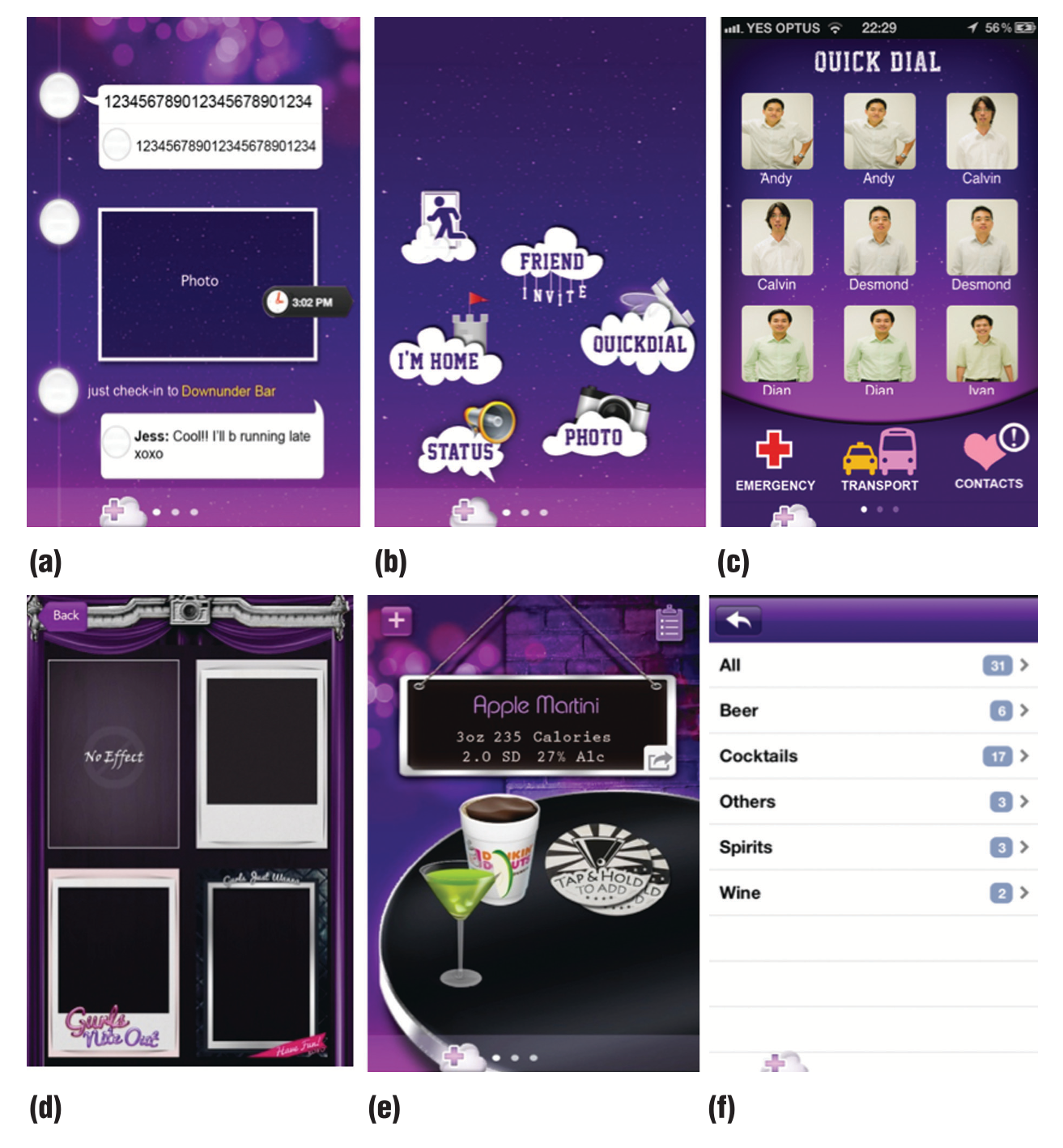 Figure 1: The user interface highlights: (c) Quick Dial for safety, (e) Virtual Drink Table for tracking, and (f) intuitive Drink Menu.
3. The Shared Timeline
Inspired by Facebook and Path, the timeline acts as the "command center." It broadcasts when a friend registers a drink or, crucially, when they post an "I'm Home" status. This transforms the app from a monitor into a safety tool.
Experimental Insights: What Users Actually Want
Through focus groups and field trials, the authors discovered several counter-intuitive findings that challenge standard app design:
- Privacy > Reach: Users specifically requested that the app not sync with Facebook. The fear of "bad photos" being seen by the wrong audience is a primary driver for app rejection.
- Utility in Safety: The "I'm home" button was the most praised feature. It reduced the cognitive load of checking in on every friend individually after a night out.
- Reflective over Reactive: Users preferred using the logs the next morning to identify "blackout points" rather than receiving intrusive alerts while drinking.
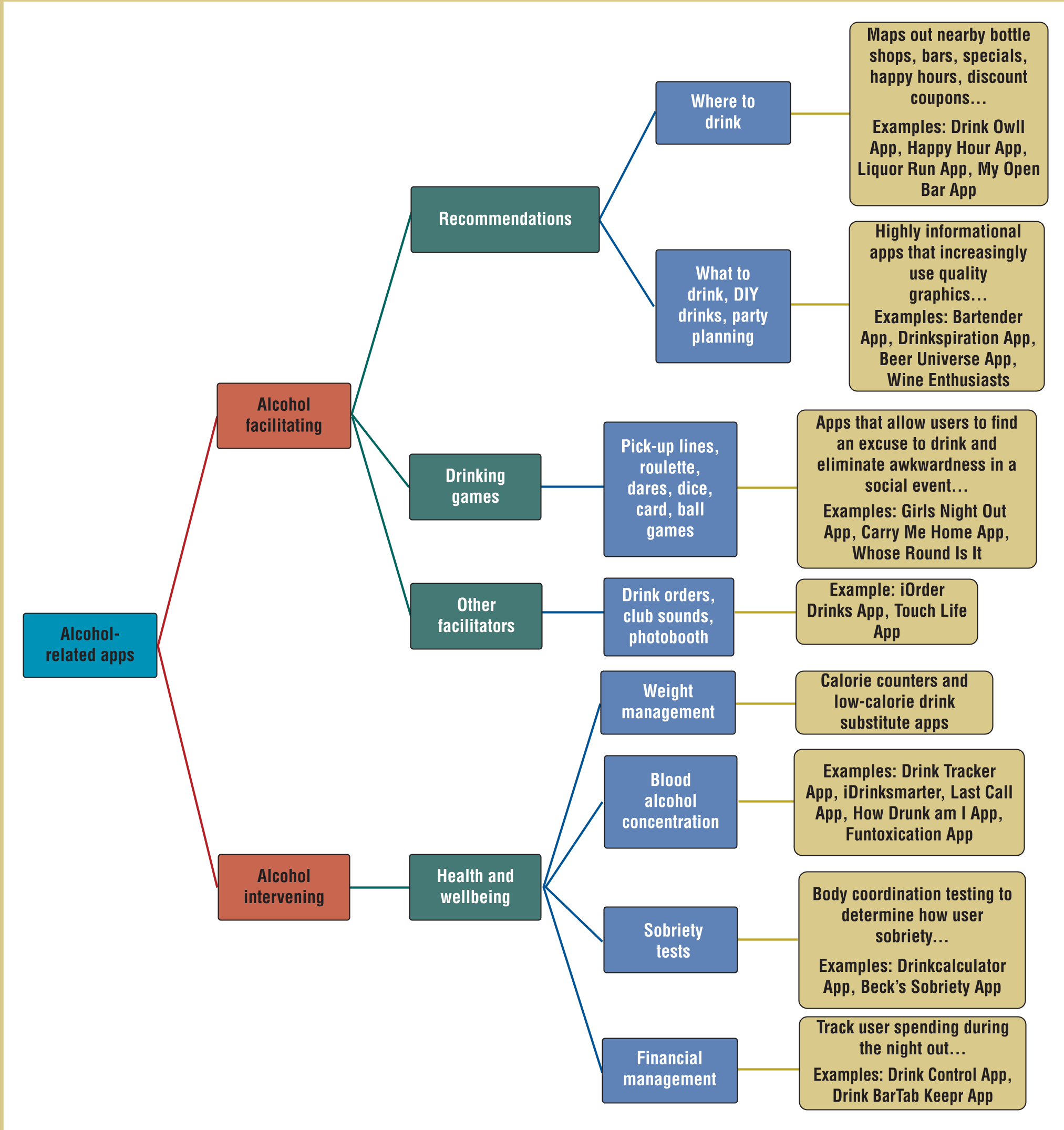 Figure 2: The design process involved iterative feedback from focus groups of university students to refine functionality.
Critical Analysis & Conclusion
Takeaway
The genius of this work lies in its Inductive Bias toward social connection rather than medical monitoring. It recognizes that for young adults, "Safety" is a more powerful motivator than "Health."
Limitations
- Manual Entry Fatigue: Participants noted that forgetting to log drinks when distracted (e.g., dancing) remains a hurdle.
- BAC Estimation Risks: The authors wisely excluded Blood Alcohol Content (BAC) calculators, noting that inaccurate estimations could give users a false sense of security for dangerous activities like driving.
Future Outlook
The next frontier for such tools lies in Passive Sensing. Integrating wearables (to detect the "toasting" motion) or location awareness (to auto-alert when a friend leaves a venue) could solve the "forgetting" problem, making peer support seamless and invisible.
Ultimately, this paper serves as a blueprint for mHealth: if you want to change behavior, don't just track the user—build a community around them.