
The New Realities of AI: Beyond the Hype into Professional Maturity
6678_IT Professional 20th Anniversary Panel.
This report outlines the "The New Realities of AI" panel discussion from the IT Professional 20th Anniversary, featuring experts like San Murugesan and Wo Chang. It explores AI's transition from science fiction to a practical, disruptive force across industries, driven by algorithmic advances and big data.
TL;DR
Artificial Intelligence has officially transitioned from a science-fiction trope to a fundamental pillar of modern industry. In this landmark 20th-anniversary panel for IT Professional, industry titans discuss the shift from theoretical AI to practical, disruptive applications, emphasizing that successful AI adoption now hinges on governance, standardization, and a clear understanding of the "new normal."
The "Renaissance" vs. The Reality
The current AI "renaissance" isn't just about better code; it's a convergence of three critical factors:
- Major Advances in AI Arenas: Deep learning and high-performance computing have finally met.
- Realistic Expectations: Moving away from "magic box" thinking to "problem-solving" utility.
- Success in Applications: Proven ROI in sectors like cloud computing and IoT.
However, the panel identifies a significant friction point: the gap between AI's potential and its "perceived vs. real" risks.
Methodology: A Multi-Dimensional Framework
To navigate this new reality, the panelists propose a framework focused on three pillars:
1. Standardization and Governance
Wo Chang (NIST) highlights that AI cannot scale without Big Data Governance. Before an organization can deploy deep learning, it must master metadata management and digital preservation protocols.
2. Software Reliability
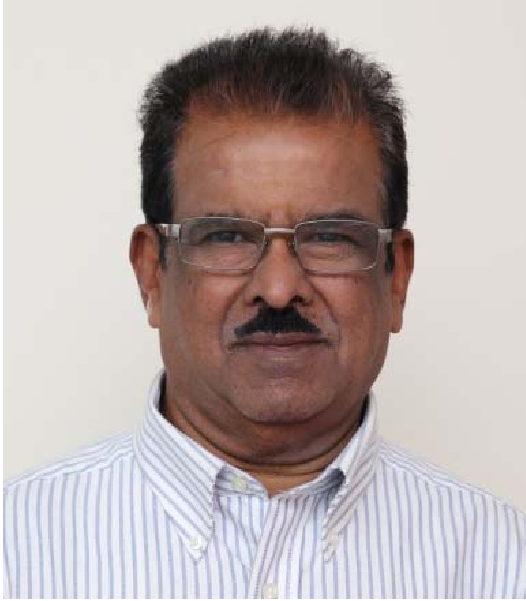
William Chu emphasizes that AI is essentially a software engineering challenge. If AI models are not "reliable" in the traditional sense of TRel (Transactions on Reliability), they cannot be deployed in critical infrastructure.
3. Human-Robot Ontologies
Takahira Yamaguchi introduces the necessity of Linked Open Data and ontologies. For AI to be useful in "Smarter World" applications like human-robot interaction, the AI must share a unified knowledge base with its human counterparts.
Critical Analysis: Where Is AI Headed?
The panel concludes that we are entering an era of Disruptive Innovation. This isn't just about automating tasks; it’s about reshaping the "IT Professional" identity.
- The Problem with Prior Work: Earlier AI implementations focused too heavily on the model and ignored the "Data Lifecycle."
- The Proposed Solution: A holistic approach integrating cloud computing, green IT, and Big Data metadata descriptions to ensure AI is sustainable and ethical.
Conclusion: Getting Prepared
To stay relevant in the new AI age, professionals must transition from being "users" to "stewards" of AI. This involves:
- Developing expertise in AI Standardization.
- Focusing on Interoperability (Multimedia synchronization and Internet protocols).
- Prioritizing Ethics and Risk Mitigation as core technical requirements, not afterthoughts.
The "New Reality" is that AI is no longer a choice; it is a foundational infrastructure that requires a new breed of tech professional to manage its complexity.