
Cyber-Guerrilla Warfare: How Social Media Toppled PIPA/SOPA
7080_Computer-Based Political Action The Battle and Internet Blackout over PIPA.
This paper investigates the 2012 legislative battle over PIPA and SOPA, characterizing the opposition's victory as a landmark shift toward computer-based political action. It specifically analyzes how social media, primarily Twitter and Facebook, mobilized millions and allowed legislators to bypass traditional media to communicate stances directly.
TL;DR
The 2012 battle over the Protect IP Act (PIPA) and the Stop Online Piracy Act (SOPA) was a watershed moment for digital activism. While traditional corporate powers (Hollywood, NFL, Publishers) used "old-school" lobbying, a coalition of tech giants and internet users utilized computer-based political action to stall the bills. This paper reveals that social media wasn't just a megaphone—it was a strategic weapon that fundamentally changed how legislators behave.
Background: The Clash of Titans
The legislative goal of PIPA/SOPA seemed straightforward: crack down on "rogue websites" selling pirated goods. However, the methods proposed—DNS filtering and "blacklisting"—raised alarms among civil liberties groups and tech innovators who feared it would "break the internet."
The conflict wasn't just about policy; it was a showdown between Content Companies (who benefit from IP protection) and Hosting/Delivery Companies (who fear liability and technical instability).
Methodology: Mapping the Digital Pulse
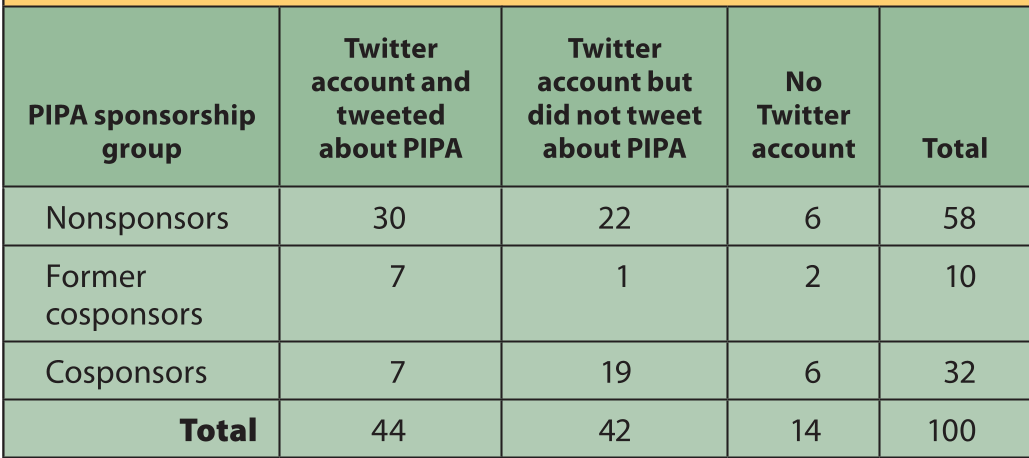
The study analyzes the behavior of US Senators on Twitter and Facebook during the peak of the protest. By categorizing Senators into "Cosponsors," "Nonsponsors," and "Former Cosponsors," the author tracked how political stances shifted in real-time as the "Internet Blackout" unfolded.
Key Insights: Why Digital Activism Prevailed
1. The Power of the Blackout
On January 18, 2012, over 115,000 websites, including Wikipedia and Google, "went dark." This wasn't just a symbolic gesture; it was a massive coordination of user action. Wikipedia alone drove 8 million people to look up their representatives.
2. Social Media as a Real-Time Signaling Tool
Legislators used Twitter to bypass media gatekeepers. Interestingly, the study found a "day of the week" effect and a clear correlation between major events and tweet volume.
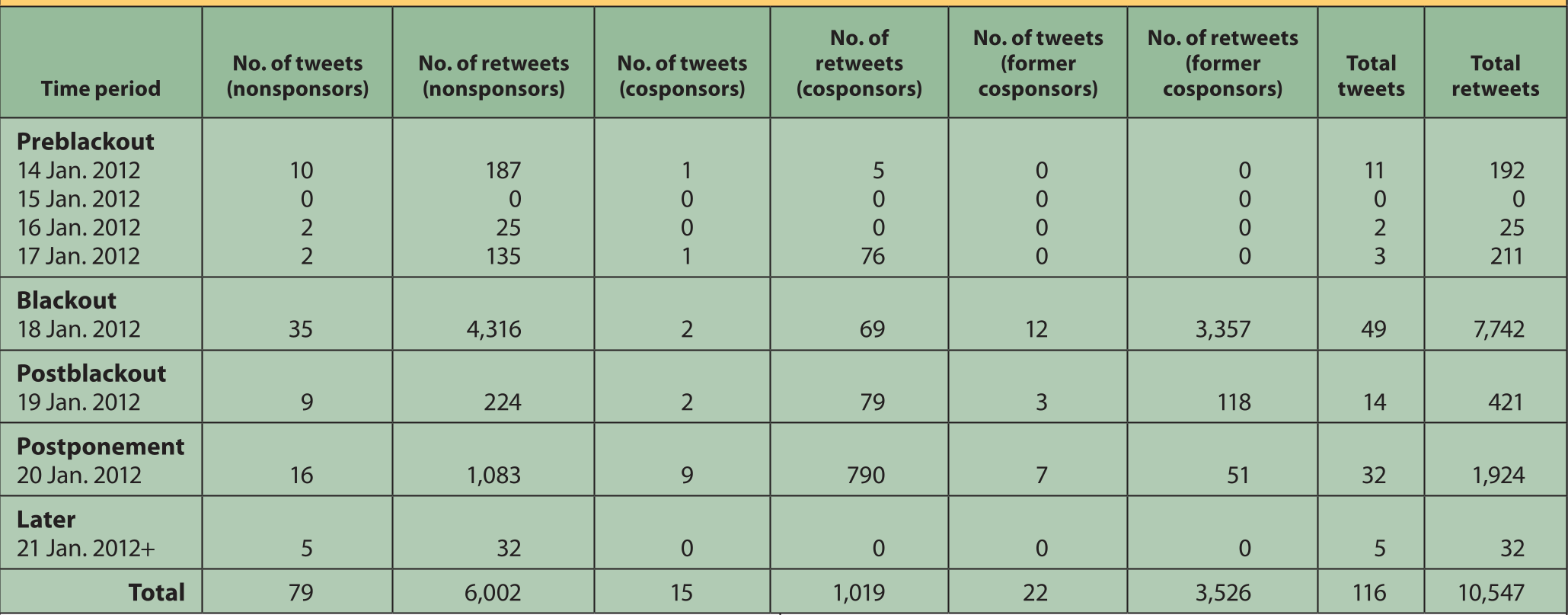
- Nonsponsors and defectors (Former Cosponsors) peaked during the blackout, using the groundswell of public anger to clarify their opposition.
- Cosponsors remained quiet during the blackout, only tweeting after the bill was postponed—a classic "wait and see" political tactic.
3. Twitter-to-Facebook Integration
Senators used Twitter for "pings" and Facebook for "depth." The study found that longer, more detailed Facebook posts (up to 1,500 characters) often received higher engagement (likes/shares), proving that while the internet values speed, it also consumes detailed political justification.

Conclusion: A Shift in the Power Grid
The PIPA/SOPA saga proved that traditional companies no longer have a monopoly on political influence. The success of "cyber-guerrilla warfare" suggests that:
- Inductive Bias of the Internet: The web is built for decentralization; efforts to centralize control via DNS filtering are naturally met with high technical and social resistance.
- Direct Communication: Social media allows a "real-time poll" of constituent sentiment, forcing legislators to pivot much faster than in the era of paper letters.
While the battle for IP protection continues, the way it is fought has been permanently altered by the digital tools we use every day.