
Deciphering Network Heterogeneity: A Bayesian Approach to Multi-view Community Detection
7386_Multi-level Hypothesis Testing for Populations of Heterogeneous Networks.
The paper introduces a Bayesian framework for Multi-view Network Analysis aimed at detecting differential community structures across multiple groups. It utilizes a Dirichlet-Multinomial mixture model combined with latent block models to identify whether different groups share a global network topology or possess group-specific connectivity patterns.
TL;DR
This research tackles a fundamental question in network science: Do different groups of networks share the same underlying "DNA," or are their structures fundamentally different? By leveraging a Bayesian hierarchical model, the authors provide a rigorous way to test for structural differences across multiple adjacency matrices, offering a mathematical bridge between simple clustering and complex hypothesis testing.
Problem & Motivation: The "Shared Architecture" Fallacy
In many real-world scenarios, we observe networks across different groups—such as social interactions in different cities or protein interactions in different species. Most current algorithms either:
- Pool all data, ignoring potential group-specific nuances.
- Analyze groups separately, making it impossible to quantify what is actually "shared."
The authors argue that we need a principled way to detect Differential Community Structure. The difficulty lies in the high dimensionality of network data; how do we know if a missing edge is just noise or a signal of a different organizational principle?
Methodology: The Bayesian Machinery
The heart of the paper lies in a hierarchical model that models how nodes fall into clusters (communities).
1. Latent Block Modeling
The model assumes that for any group , the probability of an edge existing between nodes is determined by their community assignments . This formula represents the latent space embedding that generates the observed network topology.
2. The Hypothesis Test
The core innovation is the formalization of the (Shared Structure) vs (Differential Structure) test. Using a Dirichlet-Multinomial conjugate prior, the authors derive a beautiful closed-form posterior: where is the Multivariate Beta function. This allows the model to "decide" if the distribution of nodes into communities () is consistent across groups.
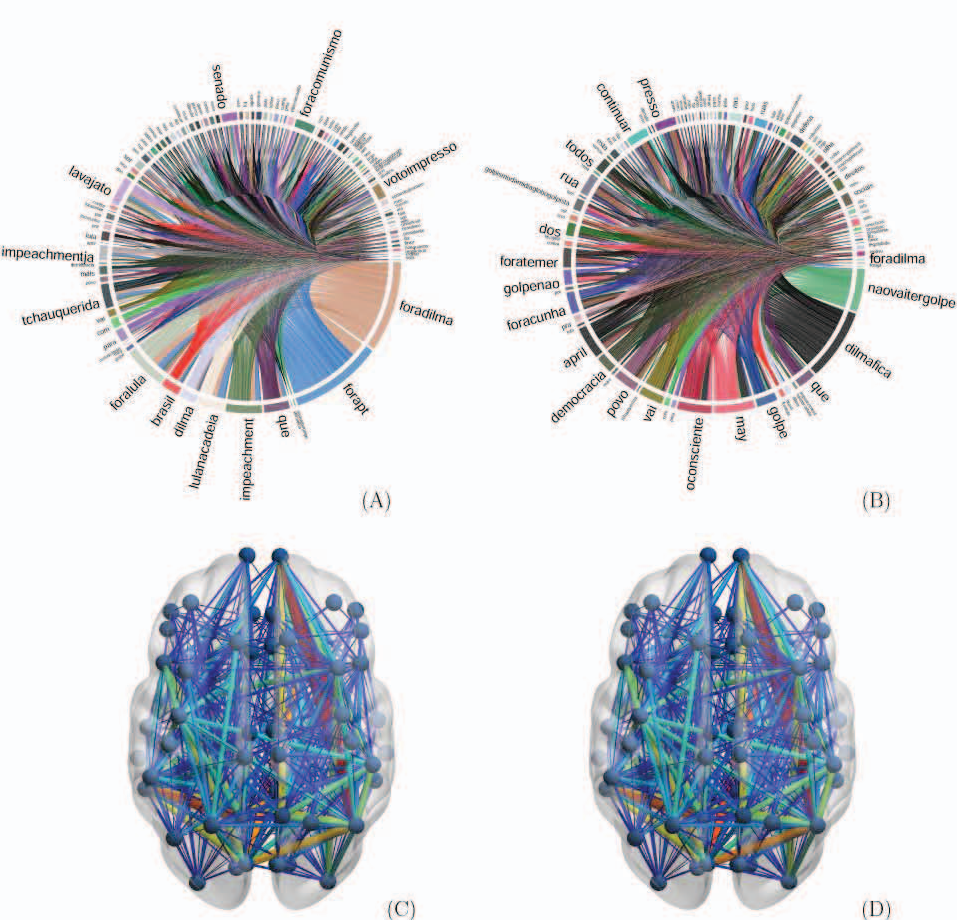 Figure 1: Conceptual visualization of the latent community structures and the probabilistic framework.
Experiments: Word Co-occurrence and Beyond
The authors validated their model on word co-occurrence networks, where nodes are words and edges represent how often they appear together.
- Insight: The model could distinguish between different semantic contexts by identifying which "blocks" of words changed their connectivity density across different document subsets.
- Metric: The co-occurrence calculation was optimized using a min-count normalization:
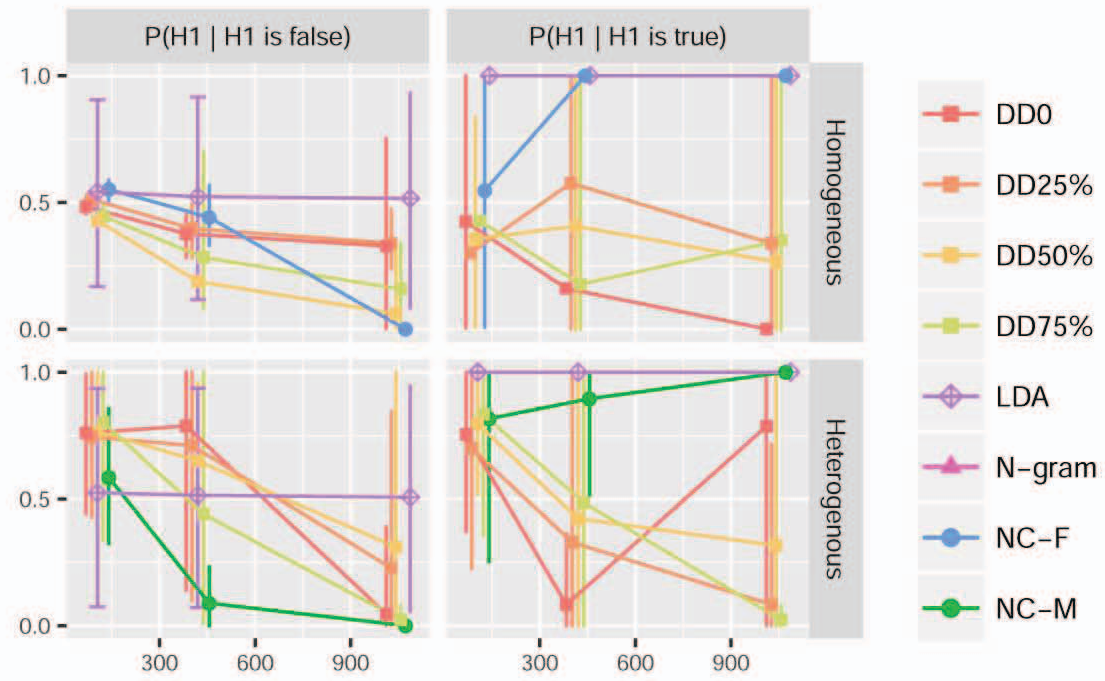 Figure 2: Visualization of the detected communities showing distinct separation and group-specific clusters.
Critical Analysis & Conclusion
Takeaway
This paper moves the needle from "finding communities" to "comparing communities." Its Bayesian formulation provides a natural way to handle uncertainty—a critical requirement when dealing with sparse network data where frequentist methods often fail.
Limitations
While the analytical solution for the posterior is elegant, the complexity still scales with the number of latent communities (). For extremely large networks (millions of nodes), the Dirichlet-Multinomial updates might require further approximation (e.g., Variational Inference).
Future Work
The logic applied here to static multi-view networks is ripe for extension into Dynamic Networks. Imagine testing if a social network undergoes a "structural phase transition" at a specific point in time using this exact Bayesian hypothesis framework.