
TEC-O: Bridging the Social Gap for Children with Autism via Fuzzy Logic Robotics
7416_Fuzzy Logic Type 1 and 2 for Social Robots and Apps for Children with Autism.
This paper presents a fuzzy logic-based robotic and tablet therapy system designed for children with Autism Spectrum Disorder (ASD). The system integrates a social robot (TEC-O) with a tablet interface to facilitate facial expression recognition and social interaction through adaptive feedback loops.
Executive Summary
TL;DR: This research introduces a hybrid therapeutic platform combining the TEC-O social robot and a specialized tablet application. By leveraging Fuzzy Logic, the system interprets a child's physical touch and visual attention to generate appropriate social responses, successfully boosting engagement and facial expression recognition in preliminary trials.
Background: Situated at the intersection of Assistive Robotics and Special Education, this work addresses the "Predictability vs. Adaptability" paradox in autism therapy—providing a consistent yet responsive social partner for children who find human interaction overwhelming.
The Challenge: Why Robots Need "Soft" Logic
Autism therapy requires extreme patience and specific tactile boundaries. Human therapists, while empathetic, cannot always provide the perfectly repeatable stimuli that children with ASD often crave. However, hard-coded robots are too rigid.
The authors identified that the key to engagement lies in responsive feedback. If a child touches the robot's nose or chest, the robot must respond in a way that is neither scary nor indifferent. The challenge is quantifying "strength of touch" and "quality of attention" into meaningful robotic actions.
Methodology: The Fuzzy Brain of TEC-O
The core innovation is the TEC-O Fuzzy Logic Controller. Unlike binary systems (0 or 1), Fuzzy Logic allows for degrees of truth (e.g., "Moderate Strength" or "High Attention").
1. Multi-modal Inputs
The system monitors four primary tactile zones and one visual metric:
- Tactile: Nose, Chest, Left Hand, and Right Hand sensors (measuring voltage/force).
- Visual: Average elapsed time for face detection (measuring sustained attention).
2. The Actuation Loop
Based on these inputs, the controller calculates the angles for four servo-driven facial features:
- Eyelid (h0), Mouth (h1), Eyebrows (h2), and Cheeks (h3).
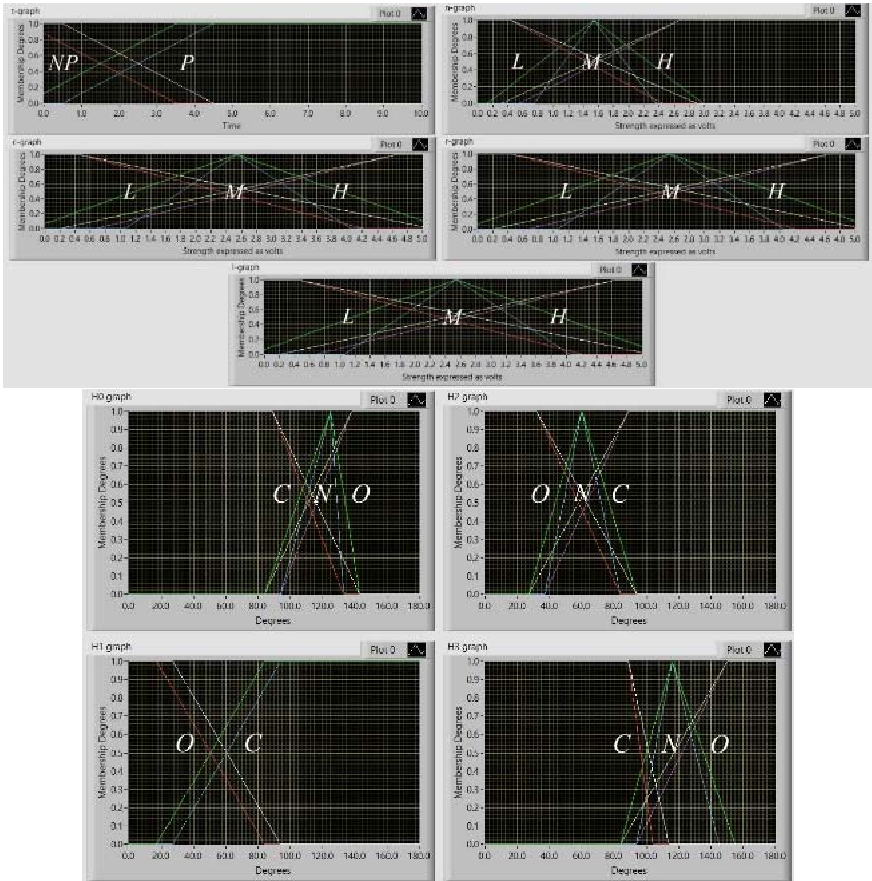 Figure 1: The Fuzzy Logic architecture showing the flow from sensory input to robotic facial expression.
3. Mathematical Intuition
The authors use membership functions (triangular and trapezoidal) to map input voltages and times to linguistic variables like "Low," "Moderate," and "High." This allows the robot to transition smoothly between expressions, avoiding jerky or unsettling movements.
Experimental Insights: High Engagement
The system was tested using a localized tablet game that challenges children to recognize facial expressions on the robot.
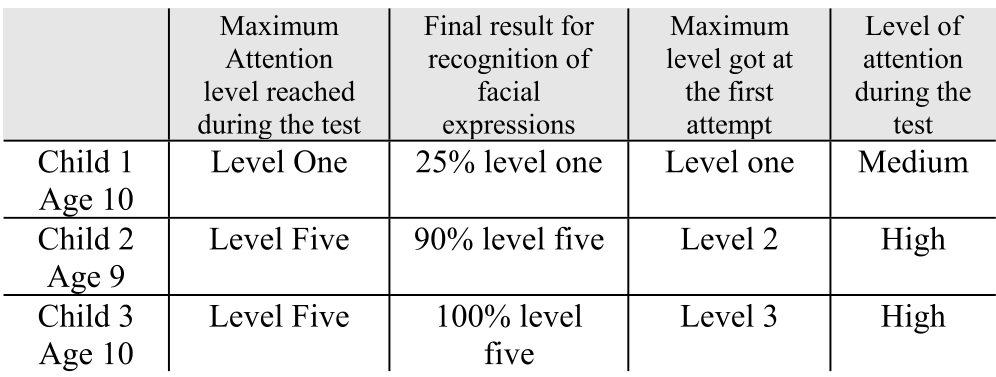 Figure 2: Preliminary results showing child performance and attention levels.
Key Findings:
- Accuracy: "Child 3" achieved 100% recognition of facial expressions at the highest level (Level 5).
- Acceptance: Children did not just observe; they initiated physical contact (e.g., touching the robot's nose), suggesting high levels of comfort and trust.
- Adaptability: The robot could even "wear the clothes of the child" to lower social barriers, a simple yet effective strategy for improving interaction.
Critical Analysis & Conclusion
The strength of this work lies in its holistic approach. By combining a physical robot (tactile/visual) with a tablet (cognitive/gamified), the system covers multiple therapeutic bases.
Limitations:
- The sample size (n=3) is small, typical for pilot studies in this field but requiring larger validation.
- The system's reliance on facial detection time as a proxy for attention might miss "stimming" behaviors or peripheral gazes often common in children with ASD.
Future Outlook: This research paves the way for "Emotional IoT" in therapy. Future iterations could incorporate heart-rate variability or voice-tone analysis into the fuzzy controller, making the robot an even more nuanced social mediator.
Takeaway for Researchers
The use of Fuzzy Logic is a masterstroke for pediatric robotics. It provides a mathematical bridge between the unpredictable nature of human behavior and the precise requirements of robotic control.