
Social Persona Analysis: Decoding User Preferences Through Interaction Complexity
7446_Social persona preference analysis on social networks.
This paper introduces a "Social Persona Preference Analysis" framework designed to extract individual user interests from social media interactions (Facebook). By combining operational complexity weights with Concept Space semantic analysis and PageRank-based keyword extraction, the system enables highly personalized product and article recommendations.
TL;DR
Researchers from the Institute for Information Industry have developed a sophisticated social preference analysis framework that moves beyond simple "clicks." By analyzing Facebook interaction data from 30,000 users—including graffiti wall messages and fan page joins—the system creates a semantic "Concept Space" to map user personas. The result? A 43% increase in Click-Through Rate (CTR) and a significant boost in user engagement metrics.
The Core Motivation: Moving Beyond Static Rules
In the modern digital landscape, knowing that a user clicked a link is not enough. The authors argue that existing "Rule of Thumb" (ROT) recommendations are too blunt. The real insight lies in why and how a user interacts. For instance, joining a fan page requires more intent and effort than a casual "Like" on a post. The challenge is converting these diverse social signals into a structured, actionable persona.
Methodology: The Science of Social Weighting
The system architecture is built on three pillars: data collection, semantic analysis, and persona mapping.
1. Behavior Complexity Analysis
One of the most intuitive contributions of this work is the Operational Complexity Weighting. Instead of treating all interactions equally, the authors assigned weights based on the effort required:
- Join Fan Page (0.35): Highest commitment.
- Press Like Fan Page (0.30): High interest.
- Share Article (0.25): Peer-validated interest.
- Press Like Article (0.10): Low-friction interaction.
2. Concept Space & Keyword Extraction
To understand the topics behind the interactions, the paper utilizes a Concept Space built with Directed Acyclic Graphs (DAG). It employs Conditional Random Fields (CRF) for anchor detection in text and a bilingually-motivated PageRank algorithm to extract keywords from social posts.
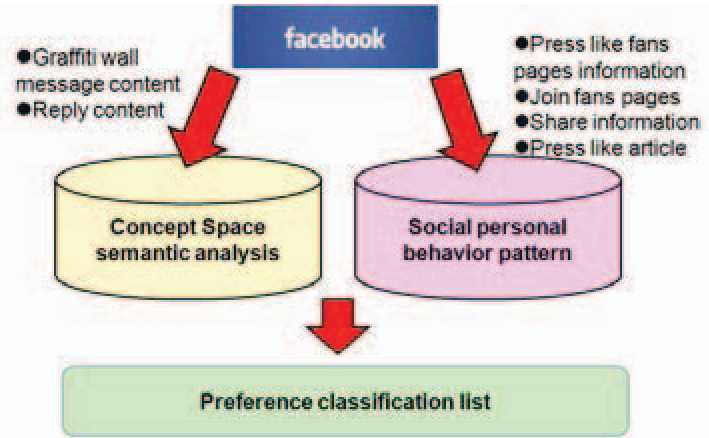 Fig. 1: The Personal Preference Extraction and Analysis Flow.
3. The Personal Favor Graph
By mapping users against 320 preference categories, the system constructs a "Personal Favor Graph." Using Dijkstra’s Algorithm, it identifies the shortest path—effectively the strongest associations—between a user and specific interest categories (e.g., Photography, Finance, Fashion).
Experimental Results: Real-World Business Impact
The system was tested over a one-month period (June 2015) across seven different recommendation fields (like "You might also like" and "Extended reading").
| Metric | Improvement vs. Traditional (ROT) |
|---|---|
| Page Views (PV) | +11% |
| Time on Site | +15% |
| Bounce Rate | -13.8% |
| Click-Through Rate (CTR) | +43% |
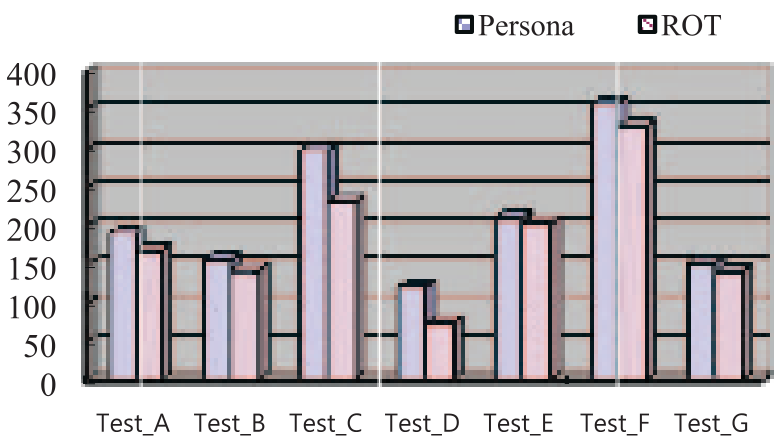 Fig. 2: Comparison of Time on Site between Persona Analysis and Rule of Thumb (ROT).
Critical Insight & Future Outlook
The success of this framework lies in its Inductive Bias: the assumption that user effort correlates with interest depth. While the study relied on Facebook data (with 30,000 authorized users), the methodology is highly transferable to other platforms like LinkedIn or Weibo.
One limitation is the reliance on authorized API access, which is increasingly restricted under modern privacy laws (GDPR/CCPA). Future research will likely need to focus on achieving similar accuracy using "privacy-preserving" or "zero-party" data models. However, this paper remains a cornerstone for understanding how semantic graphs can transform social noise into commercial intelligence.