
Selective Crowdsourcing: Can Expert Citizens Fix Public Administration?
759_Selective crowdsourcing for open process innovation in the public sector are expert citizens really willing to participate
This paper investigates "Selective Crowdsourcing" as a mechanism for open process innovation in the public sector, specifically focusing on the willingness of "expert citizens" to participate. Through a quantitative survey of German citizens (n=128), it demonstrates that experts are significantly more motivated to engage in complex administrative problem-solving than non-experts, challenging the notion that complex tasks are too burdensome for the public.
TL;DR
Public administrations are traditionally ivory towers of bureaucracy, but the "Open Innovation" paradigm is forcing them to look outward. This paper proves that expert citizens (those with professional backgrounds in management or administration) are not just capable but highly willing to help redesign complex public processes. Surprisingly, while financial incentives work for the young, they fail to move older experts, suggesting that "contribution to the public good" or "intellectual challenge" might be stronger drivers for the most experienced demographics.
The Motivation Dilemma: From Customers to Partners
For decades, New Public Management treated citizens as "customers"—passive recipients of services. However, as budgets shrink and societal challenges grow, this model is failing. The shift toward New Public Governance views citizens as partners.
The core friction? Most "citizensourcing" projects focus on simple tasks (e.g., reporting a pothole). These are Integrative Crowdsourcing tasks. But the real meat of innovation lies in Selective Crowdsourcing: solving complex problems like redesigning the workflow of a municipal office. The researchers asked: Are experts actually willing to do this heavy lifting for the government?
Methodology: Identifying the "Lead User" Citizen
The study surveyed 128 citizens in a mid-sized German city. The researchers isolated two key variables:
- Expert Status: Defined by professional experience in public administration or business process management (BPM).
- Task Complexity: Differentiated between simple feedback (integrative) and active co-creation/implementation (selective).
The Analytical Framework
The researchers used the following taxonomy to categorize the crowdsourcing landscape:
| Feature | Integrative Crowdsourcing | Selective Crowdsourcing |
|---|---|---|
| Target Crowd | Indiscriminate (The Mass) | Discriminate (The Experts) |
| Complexity | Simple / Routine | Complex / Intellectual |
| Output | Accumulation of results | Selection of best solution |
| Time Effort | Low | High |
Deep Dive: Why Experts Step Up
The study's results (visualized in the paper's boxplots) confirm a strong Expert Effect.
- Intrinsic Reward: Experts find sophisticated tasks inherently more interesting. The challenge of the task acts as a motivator in itself.
- Willingness Gap: In complex tasks, the mean willingness for experts was 3.68, while non-experts lagged at 2.43.
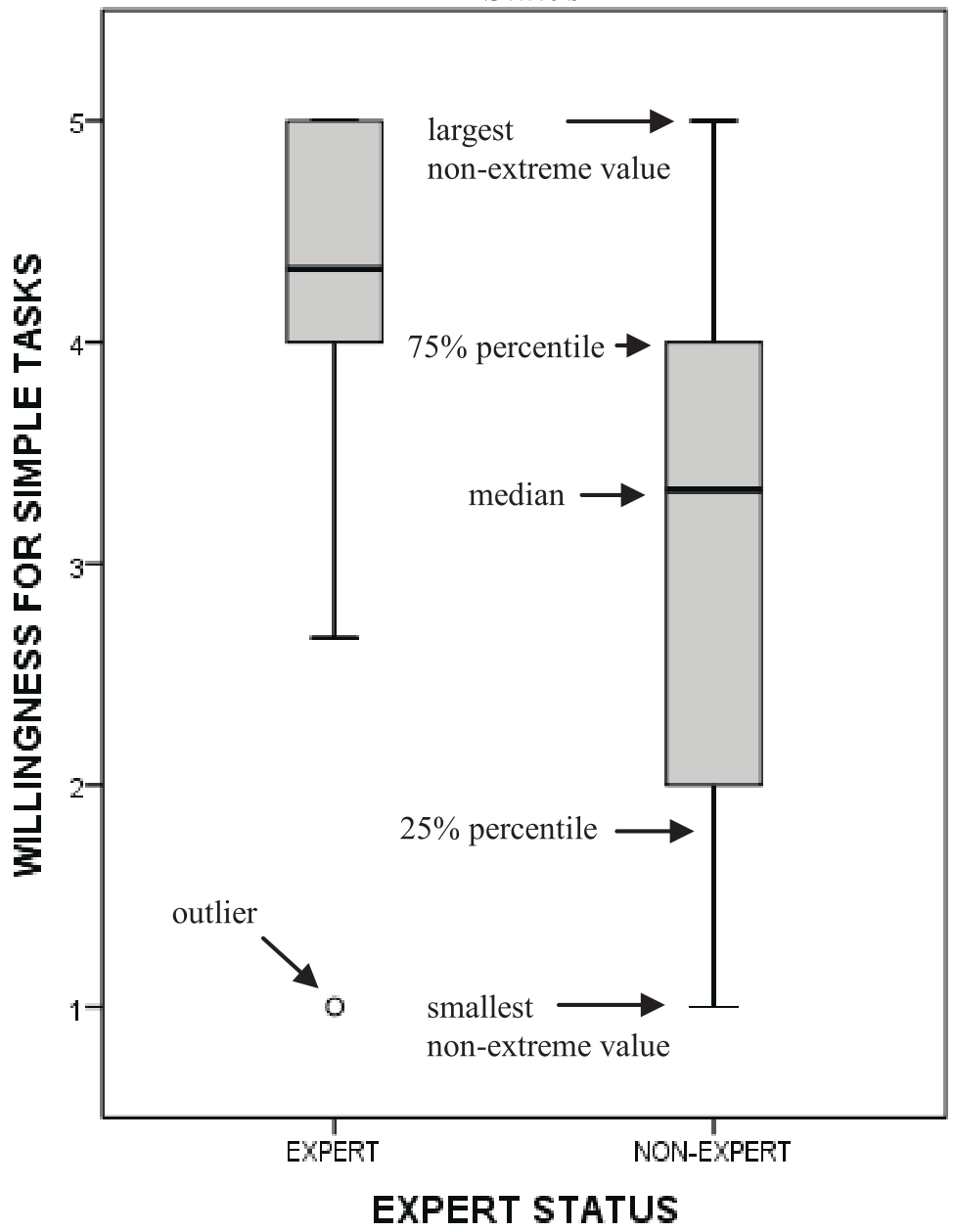 Figure: Experts show a markedly tighter and higher distribution of willingness to engage in complex process design.
The Age & Money Paradox
One of the most striking findings was the role of age.
- Younger citizens are significantly more likely to participate if offered money.
- Older citizens show a "negative correlation" with financial incentives. They aren't doing it for the paycheck.
- The Digital Divide: There is a general decline in willingness as age increases, likely due to the web-based nature of these crowdsourcing platforms.
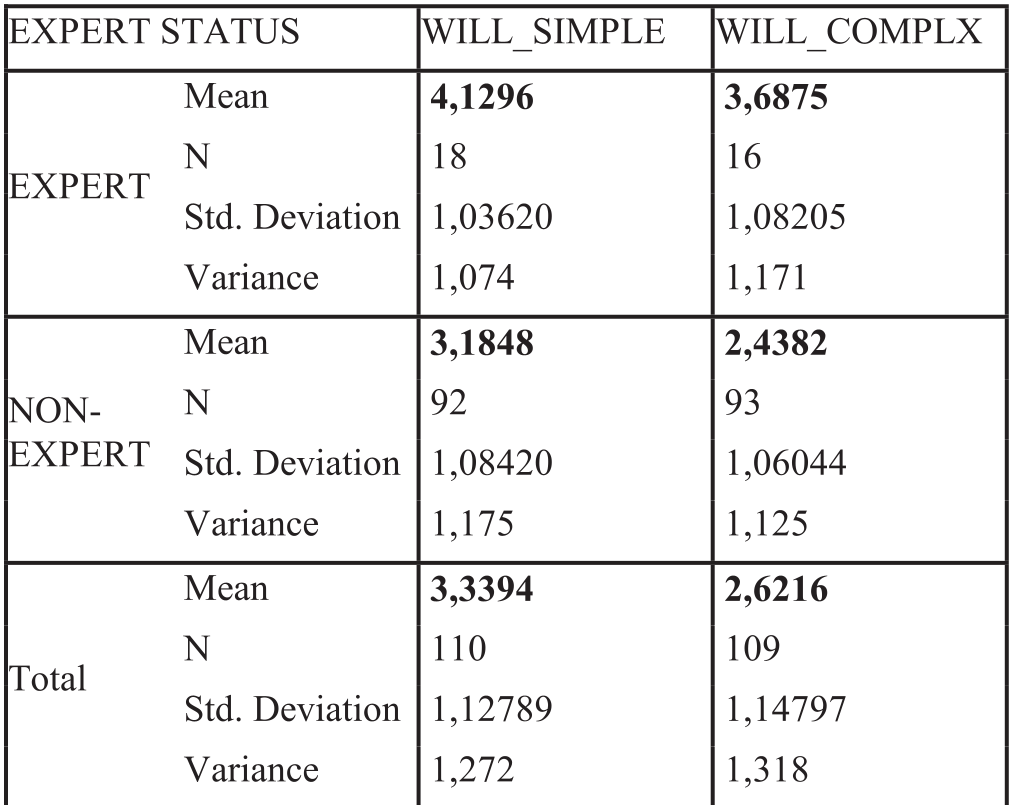 Table: Statistical breakdown showing experts outperform non-experts in willingness across both simple and complex domains.
Critical Analysis & Conclusion
The "Senior" Opportunity
The paper highlights an untapped goldmine: the elderly. Senior citizens have a "lifetime of experience" and more "disposable time," yet they are the hardest to reach via current digital crowdsourcing methods. If public administrations want the best "selective" input, they must move beyond 19-year-olds looking for a small reward and find ways to bridge the digital gap for retired professionals.
Practical Takeaways
- Design for the Crowd: Don't use financial incentives as a catch-all. For experts, emphasize the impact of their solution on the community.
- Quality over Quantity: Selective crowdsourcing allows for a manageable number of high-quality participants, reducing the "noise" that public officials often fear when opening processes to the public.
Future Outlook: As we face global demographic shifts, "Public Sector Selective Crowdsourcing" could be the key to reducing red tape and building legitimacy. The crowd is smart—but the "expert crowd" is ready to work.