
Beyond Constant Limits: Nonlinear Dynamics of the Neuronal Action Potential Threshold
7592_Nonlinear Dynamic Modeling of Neuron Action Potential Threshold During Synaptically Driven Broadband Intracellular Activity.
This paper presents a third-order Volterra-based nonlinear dynamical model designed to quantify activity-dependent variation in neuronal action potential (AP) thresholds. Validated on rat hippocampal CA1 pyramidal cells, the method integrates a novel third-order derivative AP detection technique with a data-driven modeling framework, achieving a significant state-of-the-art improvement in spike prediction.
TL;DR
Researchers have moved past the "constant threshold" simplification in neuron modeling. By applying third-order Volterra modeling to intracellular recordings of CA1 pyramidal cells, this work demonstrates that the firing threshold is a dynamic, history-dependent variable. Integrating this dynamic threshold into spike-prediction models yields a massive 33% improvement in accuracy, providing a more precise map of how neurons transform input into information-carrying spikes.
The Flaw in the "Constant" Assumption
In classical neurophysiology and computational models (like Leaky Integrate-and-Fire), we often assume a neuron fires whenever its membrane potential hits a fixed "magic number." However, biological reality is messier. A neuron that just fired is "tired"—its sodium channels are partially inactivated, requiring a stronger push to fire again.
The authors argue that threshold variation is a key determinant of temporal-pattern transformations. If your model ignores the history of previous spikes, it will inevitably fail to predict precisely when the next spike occurs during complex, broadband activity.
Methodology: Capturing the "Turning Point"
To model threshold dynamics, you first have to measure them. The authors developed a consistent methodology using the third-order derivative of the membrane potential ().
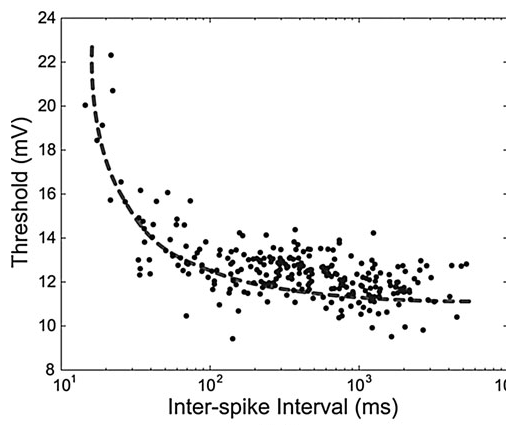
Fig 1. The first peak of the third-order derivative (dashed line) identifies the "turning point" where the AP initiation enters its positive-feedback phase.
However, the "turning point" isn't exactly the "threshold." Through various stimulation paradigms, the team discovered a constant offset between these two values. By optimizing this offset, they could translate physical measurements into a mathematically robust threshold predictor.
The Core: Third-Order Volterra Model
The researchers used a data-driven Volterra series to describe the threshold as a function of the firing history ().
This approach uses Laguerre basis functions to capture the "memory" of the neuron. The kernels provide a window into the neuron's behavior:
- 1st Order: The baseline threshold with no recent activity.
- 2nd Order: How a single previous spike raises the current threshold (showing decay over time).
- 3rd Order: Complex interactions between sequences of past spikes.
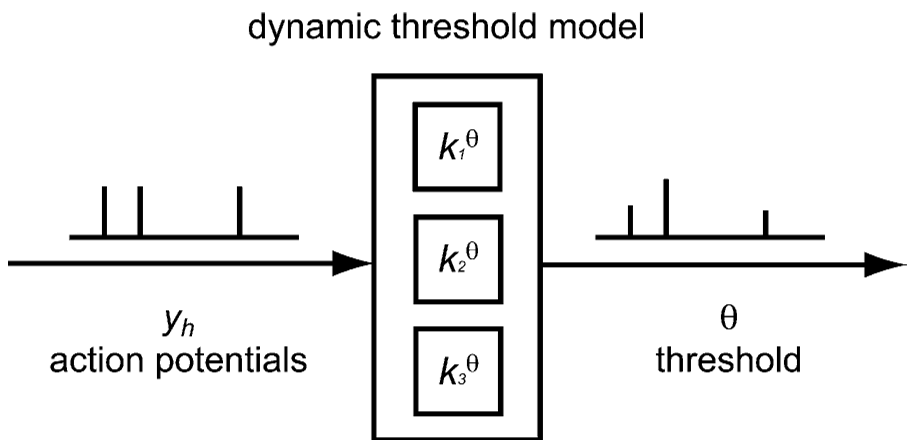 Fig 2. The integrated model architecture showing how synaptic inputs and feedback from past spikes collectively determine the dynamic threshold.
Experimental Results: A 33% Leap
The impact of including threshold dynamics is stark. In out-of-sample tests:
- Constant Threshold SPER: 24.8% error rate.
- Dynamic Threshold SPER: 14.7% error rate.
This represents a 33% improvement. The dynamic model effectively eliminated many "False Positives" where a constant threshold model would have incorrectly predicted a spike because it didn't realize the neuron's threshold had temporarily risen.
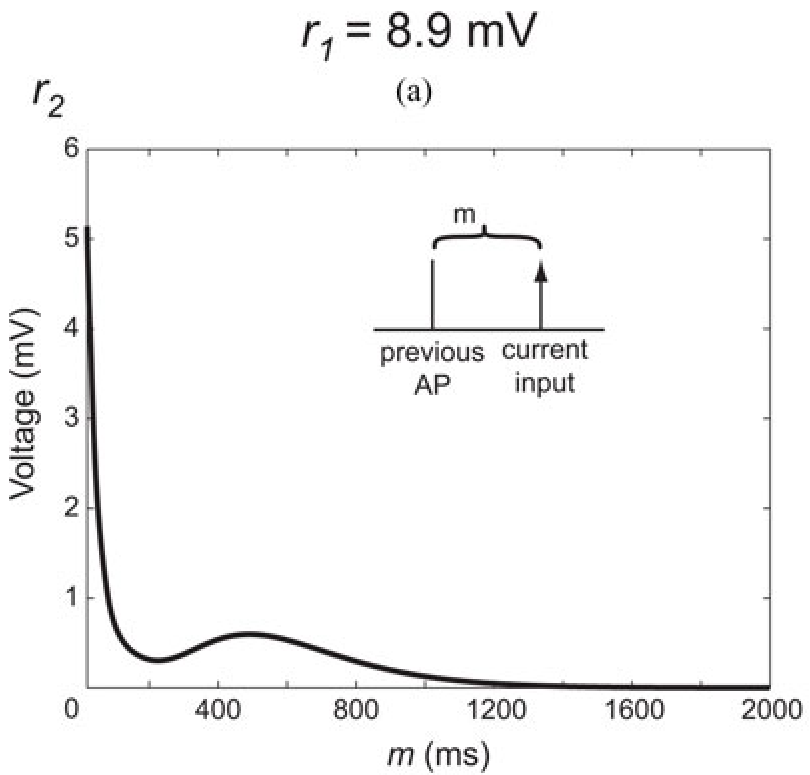 Fig 3. ROC curve comparison showing the superior sensitivity and specificity of the dynamic threshold model (Solid Line) vs. the constant threshold (Dashed Line).
Critical Insight & Future Outlook
While the Volterra kernels are phenomenological (they describe what happens, not why in a chemical sense), the authors correlate the results with voltage-dependent sodium channel inactivation.
Takeaway: For the field of Neural Prosthetics, this is a game-changer. If we want to replace damaged brain tissue (like the hippocampus) with silicon chips, those chips must mimic these nonlinear dynamics to truly participate in the brain's information processing.
Limitations: The model currently relies on intracellular data, which is difficult to obtain in chronic human implants. The next challenge is translating these dynamic insights into extracellular "spike-only" models.