
Intelligent Irrigation: Leveraging EM Algorithms and RBF Networks for Precise ETo Estimation
8400_Maximum Expectation algorithm and neuronal network base radial applied to the estimate of an environmental variable, evapotranspiration in a greenhous
This paper explores the estimation of Reference Evapotranspiration (ETo) in greenhouses using the Maximum Expectation (EM) algorithm and Radial Basis Function (RBF) neural networks. By leveraging sensor data like temperature and humidity, these machine learning methods achieved approximately 90% accuracy compared to the gold-standard FAO Penman-Monteith physical model.
TL;DR
To combat the inefficient use of water and fertilizers in agriculture, this study proposes a machine learning-driven approach to estimate Evapotranspiration (ETo). By comparing the traditional FAO Penman-Monteith model with Maximum Expectation (EM) algorithms and Radial Basis Function (RBF) neural networks, the researchers achieved ~90% accuracy, providing a path toward automated, sensor-efficient greenhouse management.
Background & Motivation: The Water Waste Crisis
In modern agriculture, water demand is dynamic, shifting with leaf area and fluctuating weather conditions. Most greenhouses currently suffer from "over-irrigation" because their control systems lack precise timing. While the Penman-Monteith model is the industry standard for calculating water loss, it is mathematically heavy and requires data (like specific solar radiation) that standard sensors often miss.
The authors' insight was to move from deterministic physics to probabilistic estimation. If we can treat historical temperature and humidity data as a distribution, can machine learning "fill in the gaps" where specialized sensors are missing?
Methodology: Physics vs. Data Mining
The study contrasts three distinct methodologies:
- FAO Penman-Monteith (The Baseline): A complex physics-based formula involving energy balance and mass transfer. It requires net radiation, soil heat flux, and vapor pressure—variables that are often derived through secondary, error-prone formulas if sensors aren't present.
- Maximum Expectation (EM) Algorithm: An iterative process used to find maximum likelihood estimates. In this context, it treats ETo as a latent variable influenced by observed temperature and humidity, refining its "hypothesis" through E-steps and M-steps.
- Radial Basis Function (RBF) Neural Networks: A specialized neural network that uses Gaussian functions to determine outputs based on "distance" to learned centers. This is particularly effective for modeling the non-linear relationship between midday heat spikes and plant water stress.
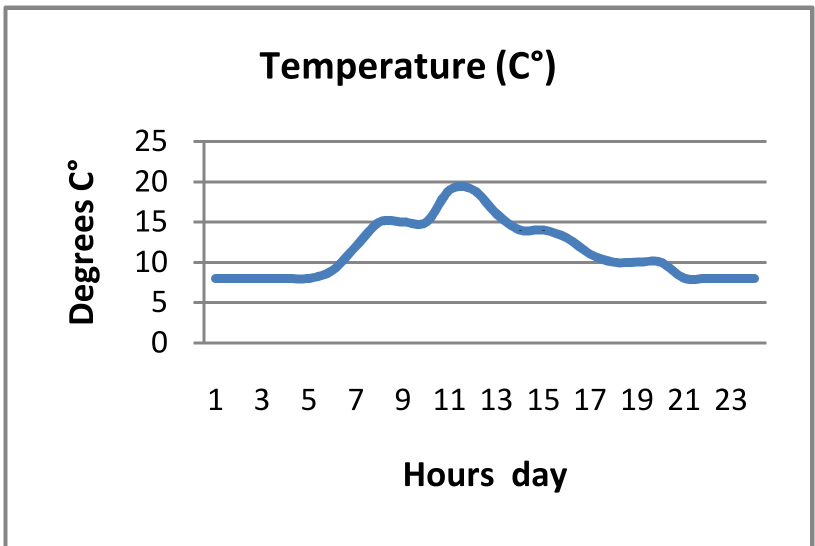 Figure: The calculated ETo behavior over a 70-hour window showing clear diurnal patterns.
Experimental Insights
The research was conducted at the Instituto Tecnológico del Altiplano de Tlaxcala, Mexico.
Key Findings:
- Proportionality: Temperature and humidity showed a strict inverse relationship (as temp rises, humidity drops, increasing "water stress").
- Peak Irrigation Windows: The models successfully identified that ETo peaks consistently between 10:00 AM and 3:00 PM, providing a clear actionable window for automated irrigation.
- Model Accuracy: The RBF network proved slightly more accurate than the EM algorithm, as its Gaussian centers could more tightly "hug" the histogram of actual ETo values.
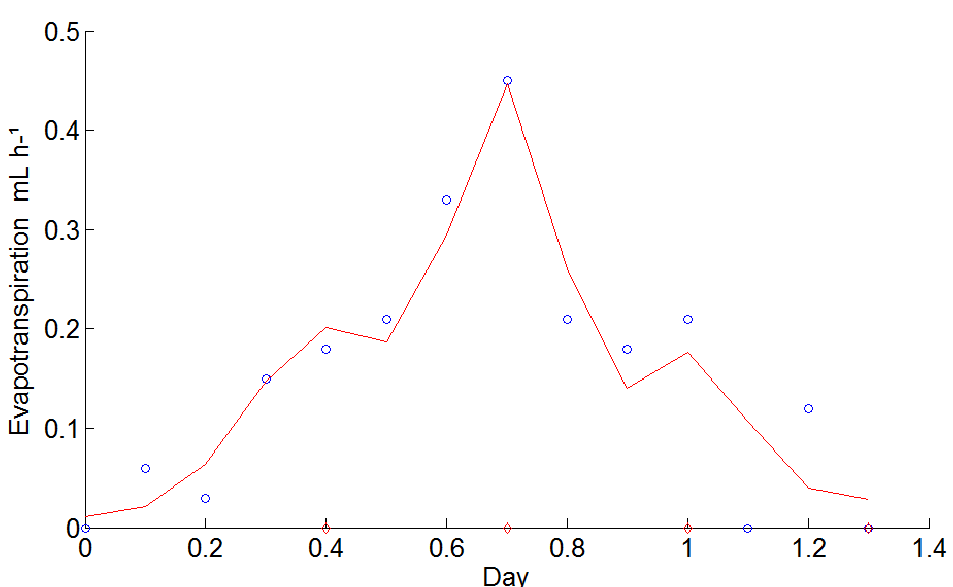 Figure: RBF neural network training results showing the approximation of ETo distributions.
Critical Analysis & Conclusion
This work validates that we don't always need expensive radiation sensors to achieve precision in agriculture. By using RBF neural networks, a system can achieve 90% reliability compared to complex scientific models.
Limitations: The study primarily focused on a specific timeframe (October highlights). Future work should address the model's robustness during extreme weather anomalies or the "water stress" shifts caused by different crop types (e.g., tomatoes vs. roses).
Future Outlook: The integration of these algorithms into low-cost microcontrollers (like ESP32 or Arduino) could democratize precision irrigation for small-scale farmers, significantly reducing the global agricultural environmental footprint.
Takeaway: Data mining isn't just for Big Tech; in the greenhouse, it’s a tool for sustainability that turns raw sensor noise into life-saving water for crops.