
Identifying the Phantom: A Deep Dive into the State of IP Traceback
8900_On IP traceback.
This paper provides a comprehensive taxonomic survey of IP traceback techniques designed to identify the true source of spoofed IP packets. It evaluates six major methodologies—including Probabilistic Packet Marking (PPM), ICMP Traceback (iTrace), and Hash-based logging—categorizing them based on their deployment feasibility and effectiveness against DDoS attacks.
TL;DR
The Internet, by design, trusts the source address in an IP header—a flaw exploited by DDoS attackers via "IP Spoofing." This paper systematically evaluates the "Who did it?" of network security, comparing techniques from probabilistic packet marking to high-performance hash logging, while highlighting the friction between technical capability and legal privacy.
The Core Motivation: Why the Internet is "Blind"
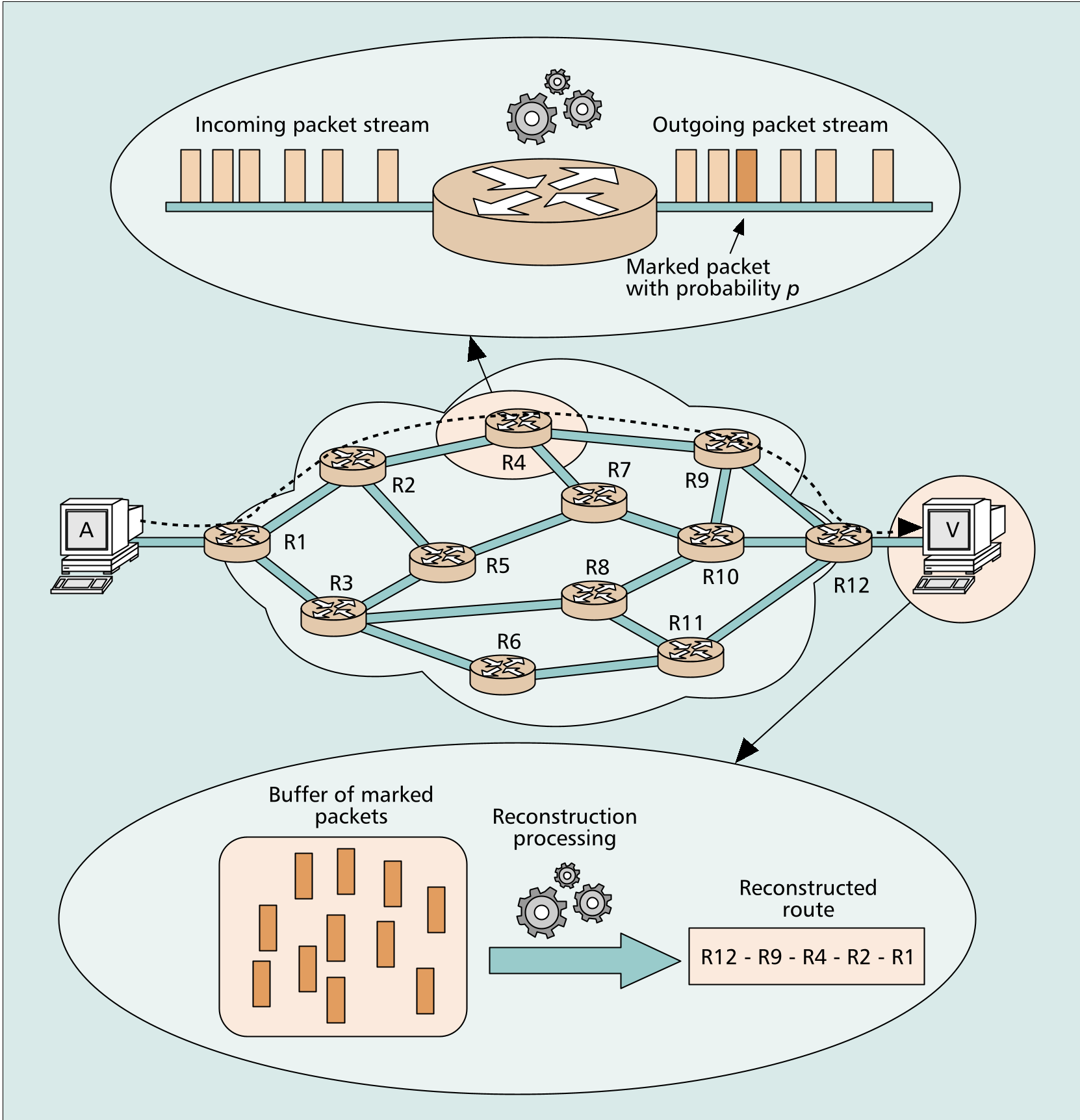
When a server is bombarded by a Distributed Denial of Service (DDoS) attack, the incoming packets often carry fake (spoofed) source addresses. Tools like traceroute rely on the integrity of the source to send back ICMP errors; if the source is fake, the "return path" is a dead end.
The authors argue that we need a mechanism that doesn't rely on the sender's truthfulness but rather on the router's evidence.
Methodology: The Taxonomy of Attribution
The paper categorizes traceback into four tactical families:
- Probabilistic Packet Marking (PPM): Routers "pencil in" their identity into the unused bits of the IP header of a small percentage of packets (e.g., 4%). Over time, the victim collects these fragments to solve the "puzzle" of the attack path.
- ICMP Traceback (iTrace): Instead of modifying packets, routers occasionally generate a separate "out-of-band" ICMP message to the destination, providing evidence of the path.
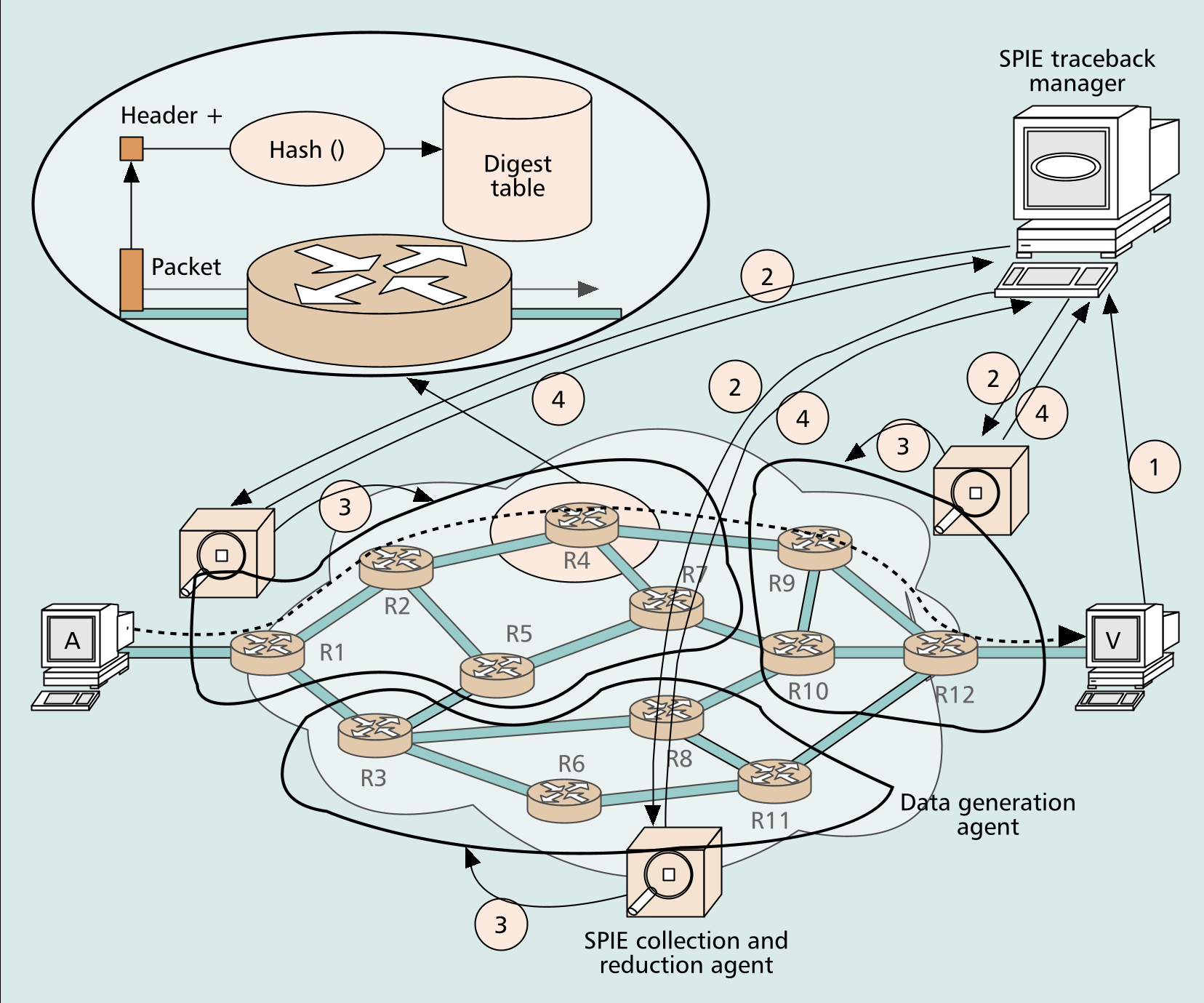
- Hash-based Traceback (SPIE): Routers store a digest (hash) of every packet in a high-speed Bloom filter. If an attack is detected, the victim "queries" routers to see if they've seen a specific packet fingerprint.
- Specialized Routing (Overlays/IPSec): Forcing traffic through authenticated tunnels to ensure the ingress point is always known.
Technical Deep Dive: The Efficiency of the Bloom Filter
The most technically sophisticated approach discussed is Hash-based Traceback. To avoid the impossible task of storing gigabytes of raw traffic, it uses Bloom Filters.
- The Logic: A packet header (plus the first 8 bytes of payload) is hashed multiple times. The resulting bits are set in a bit-array.
- The Benefit: It can prove a packet passed through a router with a very low false-positive rate while using only ~0.5% of the link's total bandwidth in memory.
- The Catch: Because Bloom filters are eventually overwritten, the traceback must occur in "near real-time" before the evidence vanishes.
Comparison: No Silver Bullet
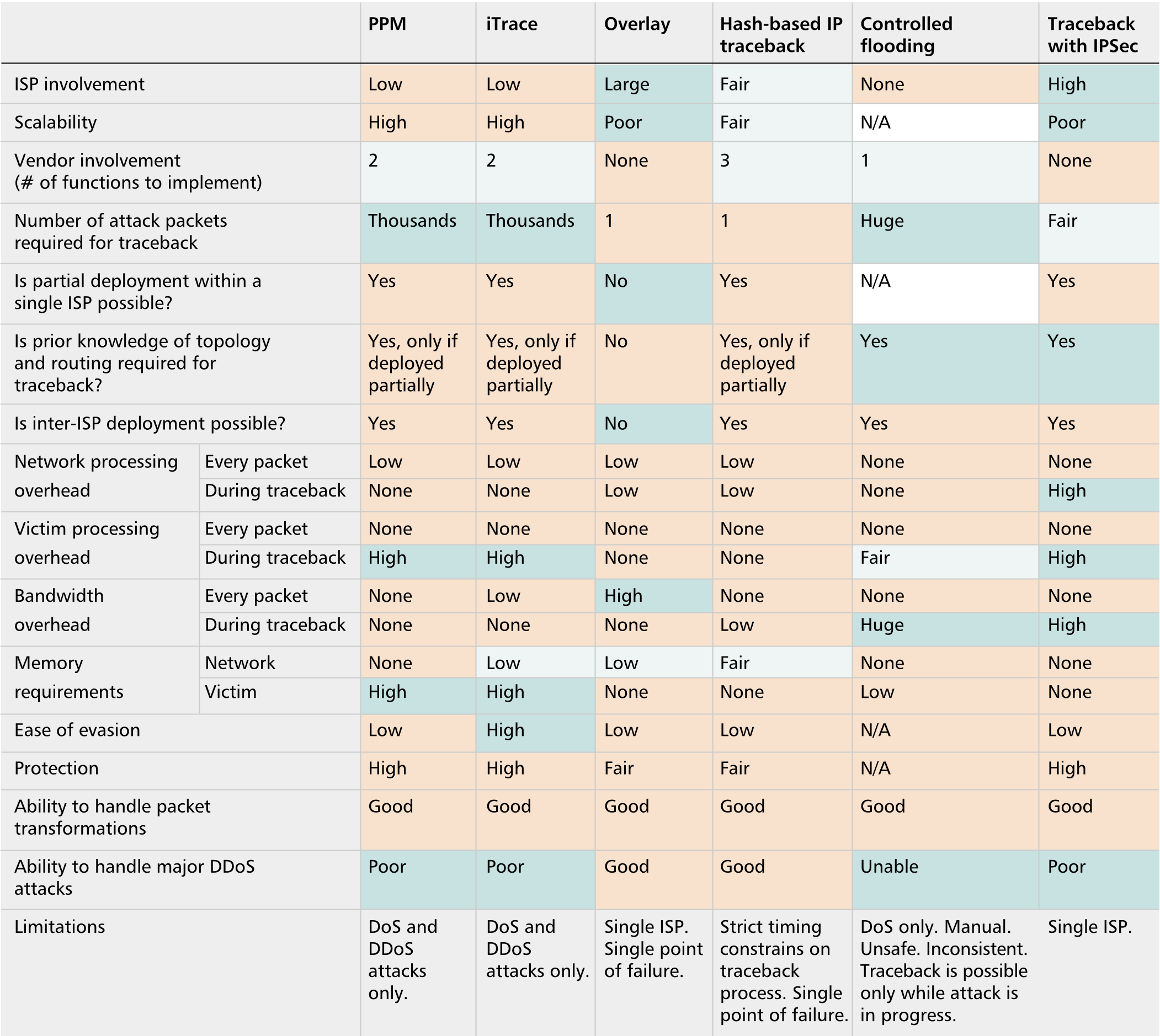
The paper’s climax is a comparative analysis (Table 1) that reveals a classic engineering trade-off:
- PPM/iTrace: Low overhead, but they need thousands of packets to work. They are useless against "hit-and-run" single-packet attacks.
- SPIE: Can trace a single packet, but requires heavy ISP investment and complex management.
- Controlled Flooding: The "brute force" method—intentionally flooding links to see if the attack traffic drops. The authors rightly flag this as "unsafe" and highly manual.
Critical Analysis & Conclusion
While the technical solutions are robust, the authors provide a sobering reality check on the Legal Implications.
- Privacy vs. Prosecution: Is a packet digest "private data"? If a router logs a 1-way hash of your traffic, has it violated your privacy? These gray areas make ISPs hesitant to deploy traceback.
- The Global Scope: Even if the US implements perfect traceback, an attacker routing traffic through a "non-compliant" country remains anonymous.
Final Takeaway: IP Traceback is not just a routing problem; it is an economic and political one. Until there is a "Privacy-Preserving" standard that also offers high-speed attribution, the Internet will likely remain a place where anonymity can be weaponized.