
Squido: Rethinking Web Mining for the Professional Intelligence Life Cycle
9343_Squido, a SaaS web mining system for professionals.
Squido is a SaaS-based Web Mining system designed for professionals to automate the discovery and analysis of Web and Deep Web content. It features a scalable topical crawler with multiple exploration strategies (Hard-Focused, Soft-Focused, and Breadth-First) to optimize relevance and reach for competitive intelligence.
TL;DR
Squido is a pioneering SaaS Web Mining platform that shifts complex data harvesting from IT departments directly into the hands of professionals. By utilizing advanced Topical Crawling strategies, it achieves up to 9x the exploration depth of traditional methods while significantly increasing the density of relevant information collected in a shorter timeframe.
Background & Positioning
In the landscape of 2010, the gap between simple search engine queries and professional Competitive Intelligence (CI) was vast. Squido positioned itself as a bridge—a zero-installation tool that combines automated resource discovery, Deep Web access, and collaborative information fusion. Its goal was not to replace search engines but to augment them through targeted, automated exploration.
The Core Problem: The Bottleneck of Manual Research
Most professionals follow a cycle of "querying, manual parsing, and manual filing." This is inefficient for three reasons:
- Surface Web Limitation: Search engines often miss Deep Web resources.
- IT Overhead: Enterprise mining tools usually require complex installations.
- Low Discovery Rate: Manually clicking through "hits" rarely uncovers high-value, "long-range" information far from the initial search results.
Methodology: The Architecture of a Topical Crawler
Squido’s innovation lies in its server-side components hosted in high-bandwidth data centers, controlled via a dynamic Ajax-based browser interface. The heart of the system is the Exploration Engine, which uses three distinct link-ranking strategies:
- Hard Focused Strategy: Uses a high rejection threshold. It only pursues the "best" links, resulting in a fast but narrow catch of highly relevant pages.
- Soft Focused Strategy: Uses a medium threshold. It acts as a "long-range explorer," maintaining enough diversity to find pages many hops away from the starting point.
- Breadth-First Strategy: The baseline method which explores all links at a current depth before moving deeper.
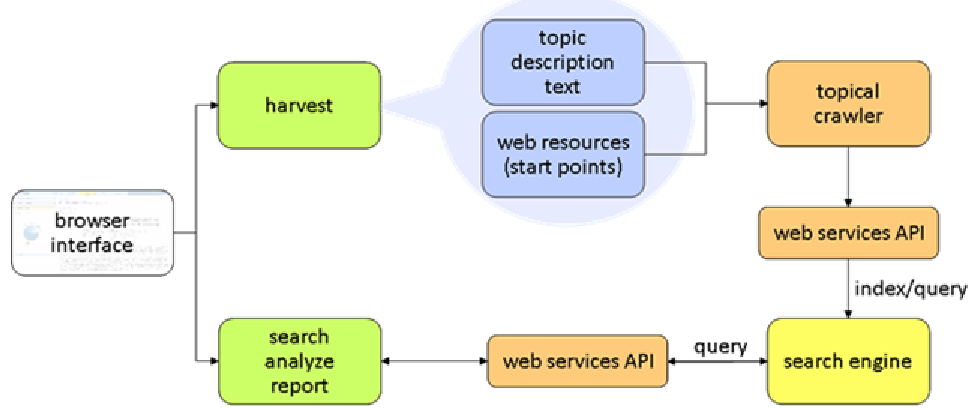 Figure 1: The functional diagram highlighting the abstraction of components via web services.
Experimental Insights: Depth vs. Relevance
The authors tested these strategies across nine topics in English and French. The results provide a clear physical intuition for why "Focused" crawling is superior for professionals:
1. The Reach Problem
Standard "Breadth-First" strategies are essentially "stuck" at the surface (Depth 2) because they waste time following every irrelevant link. In contrast, the Soft Focused Strategy reached Depth 18 within an hour—finding information that would be virtually invisible to a human browser or a shallow crawler.
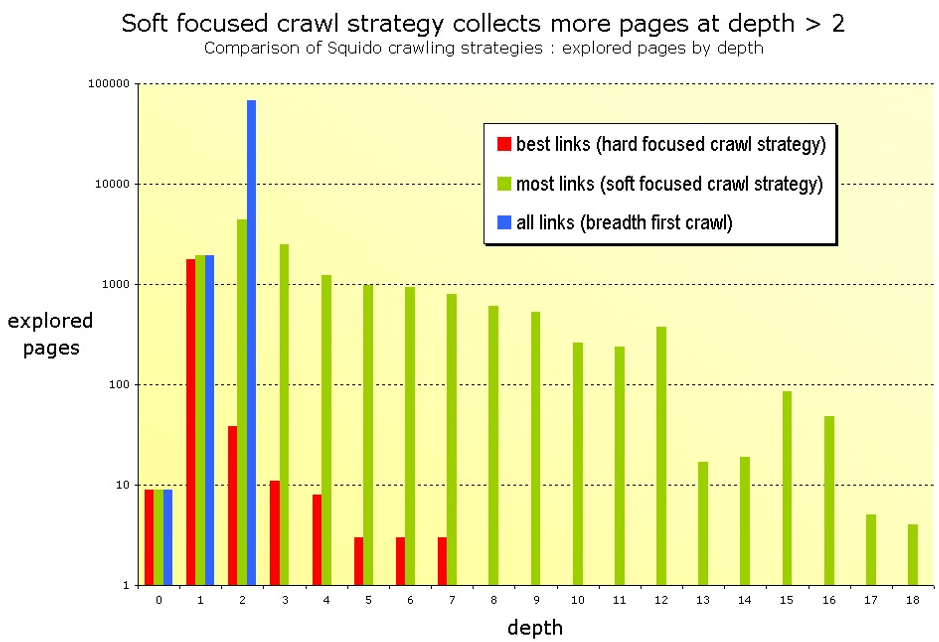 Figure 5: Visualization of how focused strategies penetrate much deeper into the web graph.
2. The Harvest Rate
When measuring "Relevant Documents" (>80% similarity to the topic), the Hard Focused strategy dominated the early timeline. It prioritized quality over quantity, making it ideal for experts who need the "top results" as quickly as possible.
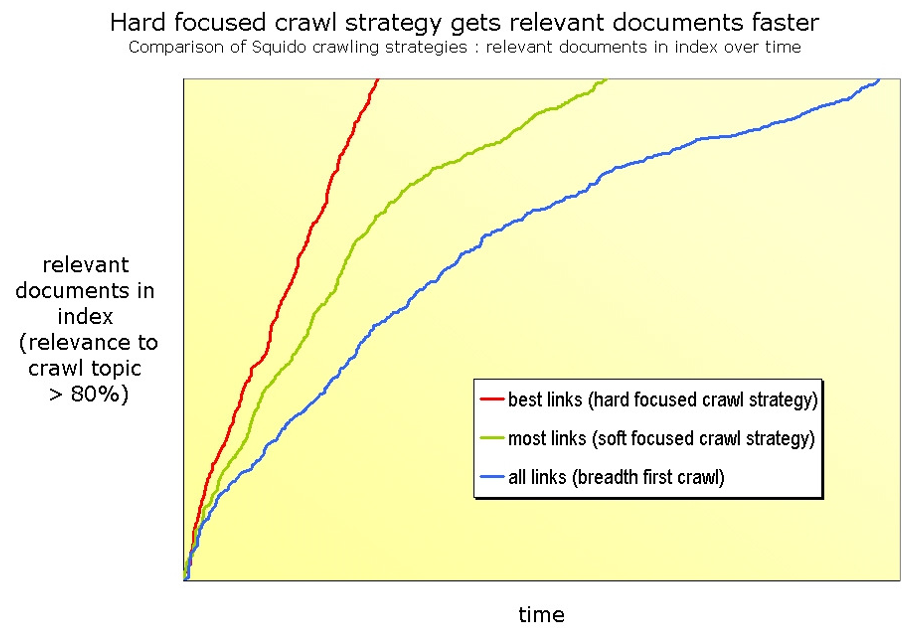 Figure 6: Cumulative count of relevant pages. The Hard-Focused curve rises the steepest, showing superior efficiency.
Critical Analysis & Takeaways
The brilliance of Squido is its Implicit Personalization. As users refine their crawl parameters, the retrieval system learns to enhance relevance based on actual professional needs.
Limitations: The study notes that only 15% of relevant pages were shared across the three strategies. This suggests that no single strategy is the "silver bullet"; rather, a hybrid approach or multiple passes might be necessary for comprehensive market intelligence.
Future Outlook: This work laid the groundwork for modern automated "Intelligence Agents." In the future, integrating LLMs to replace the 2010-era keyword-ranking functions would likely propel the "Hard Focused" precision to even higher levels, allowing for even more nuanced qualitative analysis of retrieved content.
Final Summary
Squido represents a significant step toward democratizing high-end web mining. By providing a scalable SaaS platform with optimized topical crawling, it empowers knowledge workers to move past the "search engine hit" and into the "knowledge discovery" phase of their work.