
Mining the Brain's Hidden Patterns: A Data Mining Approach to Epilepsy Research
9653_Mining reproducible activation patterns in epileptic intracerebral EEG signals application to interictal activity.
This paper introduces a robust signal processing and data mining framework to identify reproducible spatio-temporal activation patterns in intracerebral EEG (stereoEEG) during interictal periods. Utilizing the APRIORI algorithm, it converts transient paroxysmal events into a transactional database to discover "sequential activation sets" across four epilepsy patients.
Executive Summary
TL;DR: Researchers have developed a new way to map how epilepsy manifests between seizures by treating brain activity like a searchable database. By applying the APRIORI algorithm—the same technology used in market basket analysis—to intracerebral EEG, they can now prove that "interictal" spikes follow reproducible, sequential paths across specific brain networks.
This work sits at the intersection of Clinical Neurophysiology and Data Science, shifting the focus from "where is the spike?" to "how does the spike travel through the network?"
The Problem: The Chaos Between Seizures
For patients with drug-resistant epilepsy, surgery is often the last resort. Surgeons need to identify the Epileptogenic Zone (EZ). While seizures (ictal periods) provide the best clues, they are rare. Interictal events (spikes between seizures), however, happen thousands of times a day.
The problem? These spikes appear chaotic. Analyzing them manually is impossible due to the sheer volume of data (100+ channels over hours). Previous methods looked at the shape of the spikes or simple co-occurrence, but they failed to capture the reproducible order in which different brain structures activate.
Methodology: From EEG Signals to Transactional Data
The authors propose a three-step pipeline that transforms raw electricity into logical sequences:
1. Event Detection & Fusion
Instead of looking at the whole EEG, they focus on "Transient Paroxysmal Events." Using a Page-Hinkley algorithm, they detect sudden jumps in high-frequency energy (20-80 Hz). When these spikes happen close together in time, they are fused into a "multichannel event."
2. The Data Mining Core (APRIORI)
This is the paper's brilliant insight. They treat each multichannel event as a "shopping basket" and each brain structure as an "item."
- Itemset: A group of brain regions that fire together.
- Support: The frequency of this group's appearance.
- Itemsequence: The specific chronological order (e.g., Amygdala Hippocampus Entorhinal Cortex).
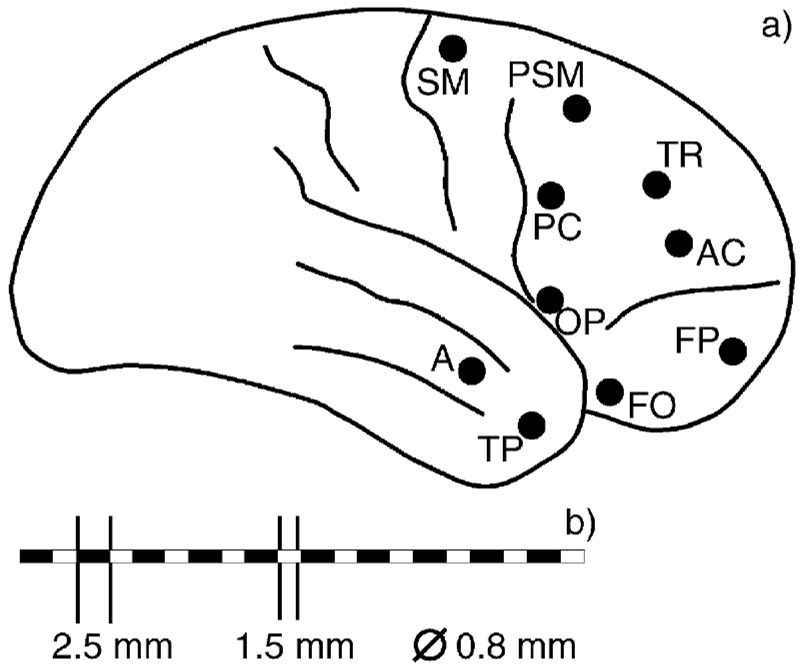 Figure 1: The holistic workflow from signal recording to pattern extraction.
Experimental Evidence
The study analyzed four patients with either Frontal Lobe Epilepsy (FLE) or Medial Temporal Lobe Epilepsy (MTLE).
Finding the "Signature" Sequence
In Patient III (MTLE), the algorithm extracted a 5-item set involving the Amygdala, Hippocampus, and Temporal Pole.
- Insight: The system found that in nearly 50% of events, the activation started in the Anterior Hippocampus (B3), then moved to the Amygdala (A2) 10ms later, and finally reached the Posterior Hippocampus (C3) 30ms later.
Real vs. Random
To prove this wasn't just noise, the authors ran 100 simulations of random distributions. The results were stark: large activation sets (like the 6-structure network in Patient I) appeared hundreds of times in real data but zero times in simulated noise.
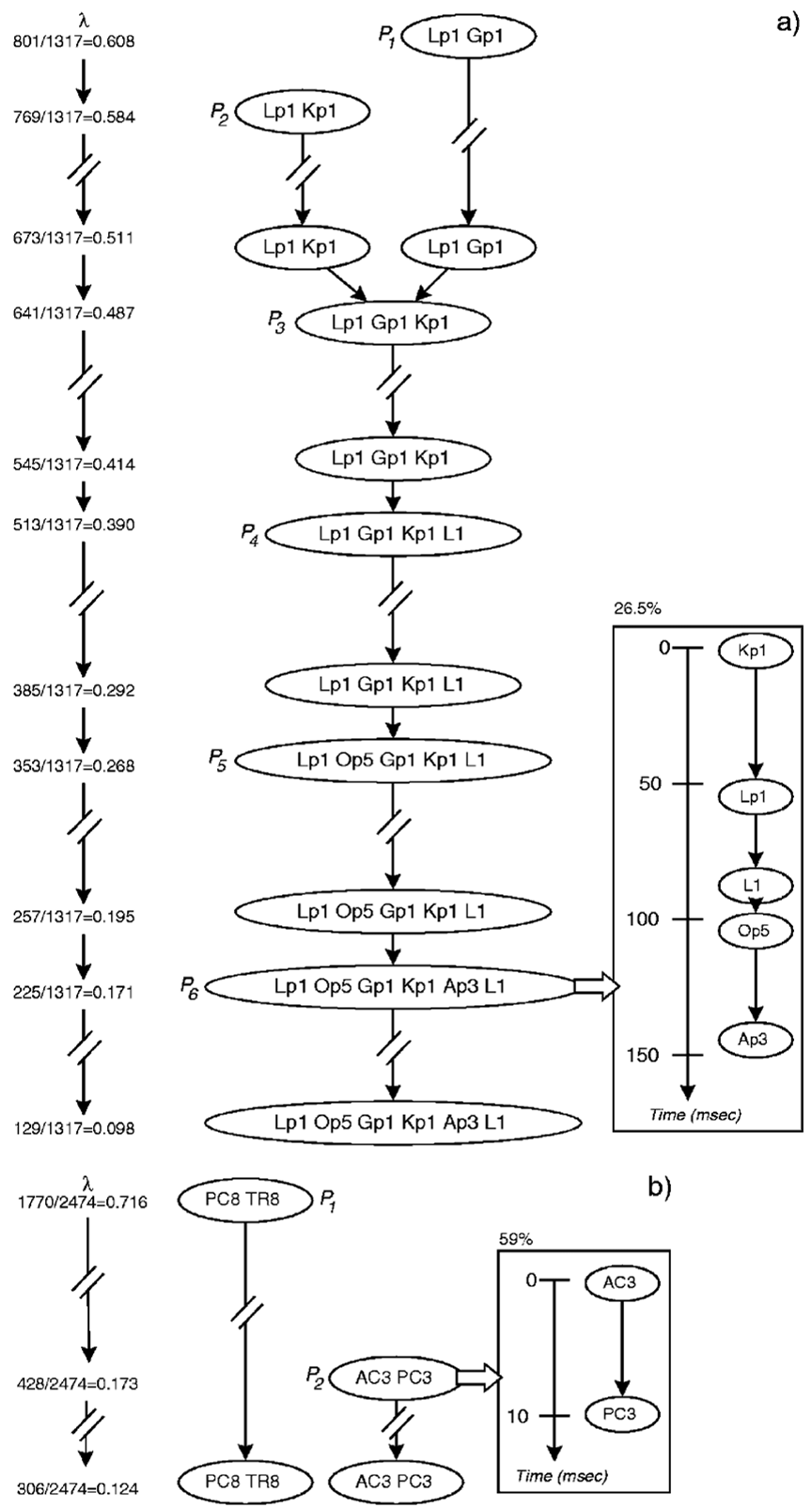 Figure 2: Evolution of activation sets (ellipses) as the support threshold decreases.
Critical Insight & Conclusion
The true value of this paper lies in its unsupervised nature. Unlike standard clustering, it doesn't require the researcher to guess how many patterns exist. It naturally reveals how networks "merge" or "split" depending on the statistical threshold (the support value).
Limitations
A key limitation is the spatial sampling bias. The algorithm only knows what the depth electrodes tell it. If a critical hub in the brain network isn't implanted with an electrode, the "sequential activation set" remains incomplete.
Final Takeaway
By proving that interictal spikes are highly organized sequences, this methodology provides a statistical "fingerprint" of a patient's epilepsy. Future clinical systems could use this to automate the mapping of epileptogenic networks, reducing the time required for presurgical evaluation and increasing surgical precision.