
LBSN 2010: The Architecture of Mobility and the Birth of Social-Spatial Intelligence
9964_LBSN 2010 workshop report The Second ACM SIGSPATIAL International Workshop on Location Based Social Networks (San Jose, California - November 2, 2010)
The LBSN 2010 workshop report documents the second ACM SIGSPATIAL international forum focused on Location-Based Social Networks. The workshop highlighted SOTA advancements in geo-social event detection and semantic trajectory mining, establishing LBSN as a critical frontier for integrating physical movements with virtual social graphs.
TL;DR
The LBSN 2010 workshop marked a pivotal moment in the evolution of social media, moving beyond the desktop into the "real world." By synthesizing wireless technology and location sensing, researchers introduced sophisticated methods for Geo-social Event Detection and Semantic Trajectory Mining, effectively turning urban movements into a high-dimensional social signal.
Problem & Motivation: Beyond the Virtual World
In 2010, the "virtual world" was largely disconnected from our physical existence. While users uploaded photos and blogged from desktops, the rich context of where they were remained untapped. The challenge was twofold:
- The Semantic Gap: A GPS coordinate (lat, long) means nothing without the context of whether that place is a coffee shop, a workplace, or a festival.
- The Noise in the Signal: Distinguishing between normal daily routines (Geographical Regularities) and significant social events (festivals, emergencies) required a baseline of human mobility that didn't yet exist.
Methodology: Mining Human Mobility
The workshop's core contributions centered on transforming raw location data into actionable intelligence through two primary lenses:
1. Geo-social Event Detection
Ryong Lee and Kazutoshi Sumiya (Best Paper Winners) proposed a system that monitors "Geographical Regularities." Instead of simply looking for keyword spikes on Twitter, they modeled the normal behavior patterns of crowds.
- Intuition: By establishing what a "normal day" looks like in a city, any deviation in the density or movement of geo-tagged tweets identifies a "geo-social event" (e.g., a local festival).
2. Semantic Trajectory Similarity (MSTP)
Josh Jia-Ching Ying et al. addressed the recommendation problem. Rather than recommending friends based on mutual contacts, they looked at Semantic Trajectories.
- The Insight: If two people visit similar types of places in a similar sequence (e.g., Gym -> Coffee Shop -> Tech Park), they likely share interests, even if they never visit the exact same coordinates.

Experiments & Results: Mapping Japan and Beyond
The papers presented utilized large-scale, real-world datasets:
- Twitter-based Detection: Experimental results in Japan demonstrated that geographical regularities effectively filtered out the noise of global trends to highlight hyper-local events.
- Trajectory Mining: The MSTP-Similarity approach outperformed traditional spatial similarity metrics by focusing on the "intent" behind the movement (semantic tags) rather than just Euclidean distance.
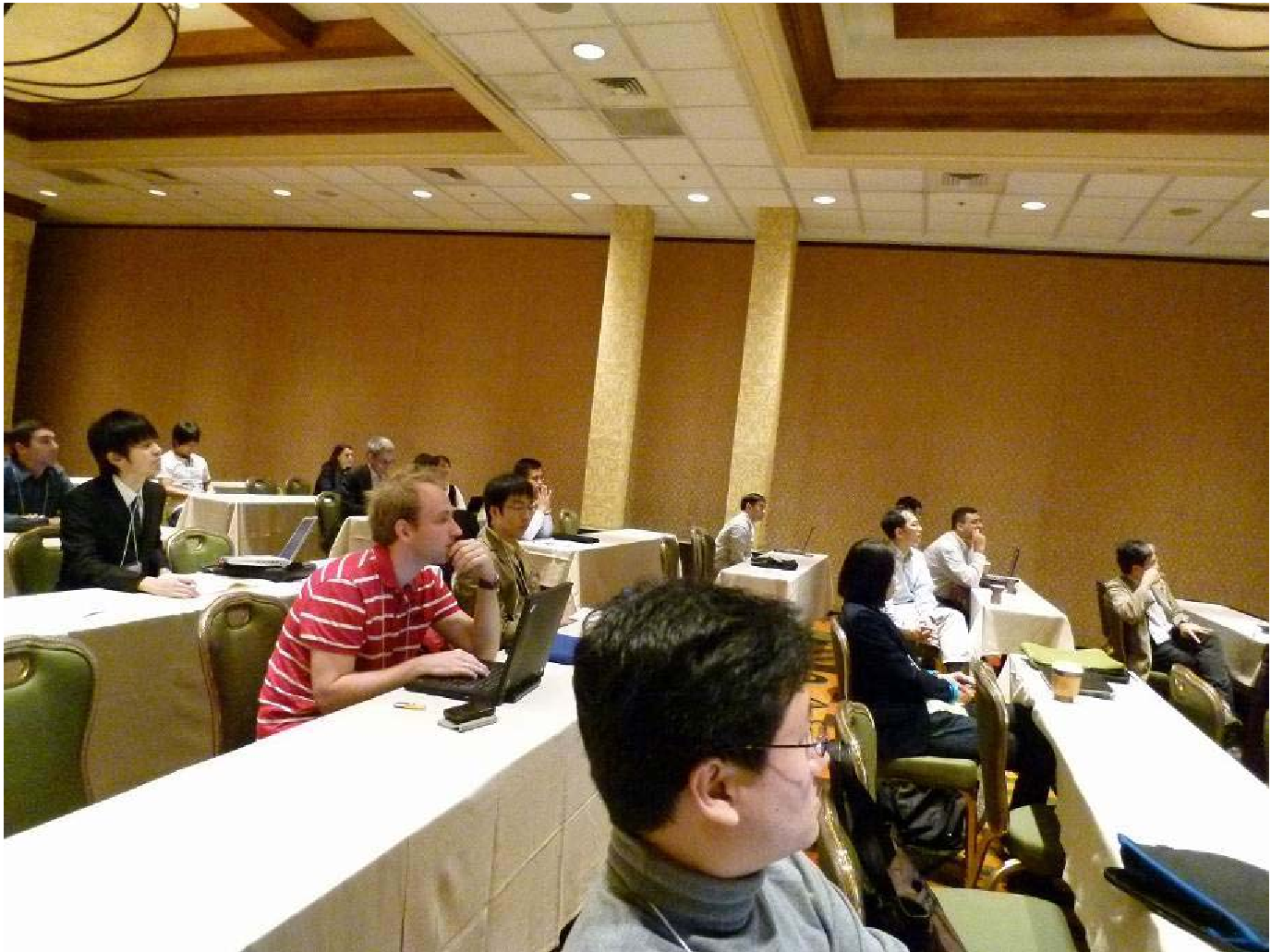
The workshop itself was a significant data point in the field's growth, drawing 33 researchers from Microsoft Research, NEC Labs, and top-tier universities, making it the most attended parallel workshop of ACM SIGSPATIAL 2010.
Critical Analysis & Conclusion
The "LBSN" Takeaway
LBSN 2010 provided the blueprint for what we now take for granted in apps like Foursquare (at the time), Instagram, and modern recommendation engines. The transition from raw spatial data to semantic social intelligence was the most critical leap.
Limitations & Future Work
While groundbreaking, the methods in 2010 relied heavily on users manually "checking-in" or geo-tagging tweets. The field has since moved toward passive sensing and privacy-preserving location mining. The workshop accurately predicted that location would become one of the "most important aspects in people’s everyday lives," a prediction that materialized in the ubiquitous location-based services we use today.
Legacy: This workshop helped define LBSN not just as a technology, but as a bridge bringing our virtual social graphs back to the physical world.