
A Gift from the City: How Mobile Circulation Redefines Technology in Rural China
A gift from the city: mobile phones in rural China
This paper explores the ethnographic phenomenon of "mobile phone gifting" in rural Northern China, where phones circulate from urban migrant workers to their rural relatives. It identifies that gifting is a primary driver of mobile penetration in regions with low income, bypassing traditional market-based acquisition.
TL;DR
In rural China, the journey of a mobile phone often begins not in a store, but as a "gift" from a city-dwelling relative. This paper investigates how these "traveling mobiles" sustain social bonds, bridge the digital divide, and simultaneously create new usability hurdles for rural users who inherit devices designed for an urban elite.
Background: Beyond the "Out of the Box" Myth
In the world of tech design, we are obsessed with the "First User" experience. We focus on unboxing, initial setup, and the intent of the purchaser. However, in rural Northern China, this model is fundamentally broken. Many users own devices they never chose—and often, devices they struggle to operate. This work positions mobile phones not as mere tools, but as social currency that redistributes wealth and maintains "networks of intimacy" between migrant workers and their home villages.
Problem & Motivation: The Mismatch of Design and Environment
The authors identify a critical gap: prior literature assumes possession equals choice. In reality:
- Physical Mismatch: Urban phones are designed for indoor use. Rural phones are charged in dusty courtyards using universal "all-in-one" battery chargers because original cables are lost in the move.
- Functional Mismatch: A high-end smartphone may lack a physical FM radio or loud speakers, which are "must-have" features for farmers who want music to accompany them in the fields.
- The Barrier of Sophistication: Advanced features like touch-screen "slide-to-unlock" can become insurmountable barriers for older users with limited literacy or callused hands.
Methodology: Tracing the Life of a Device
The researchers traced specific devices from Beijing to three distinct villages (A, B, and C) through 45 rural interviewees. They analyzed the directionality of gifting, discovering a rigid social hierarchy:
- Urban to Rural: Migrants gifting to parents.
- Generational: Older siblings (earning income) gifting to younger students.
- Gendered: Husbands gifting "hand-me-downs" to wives after buying a newer model for themselves.
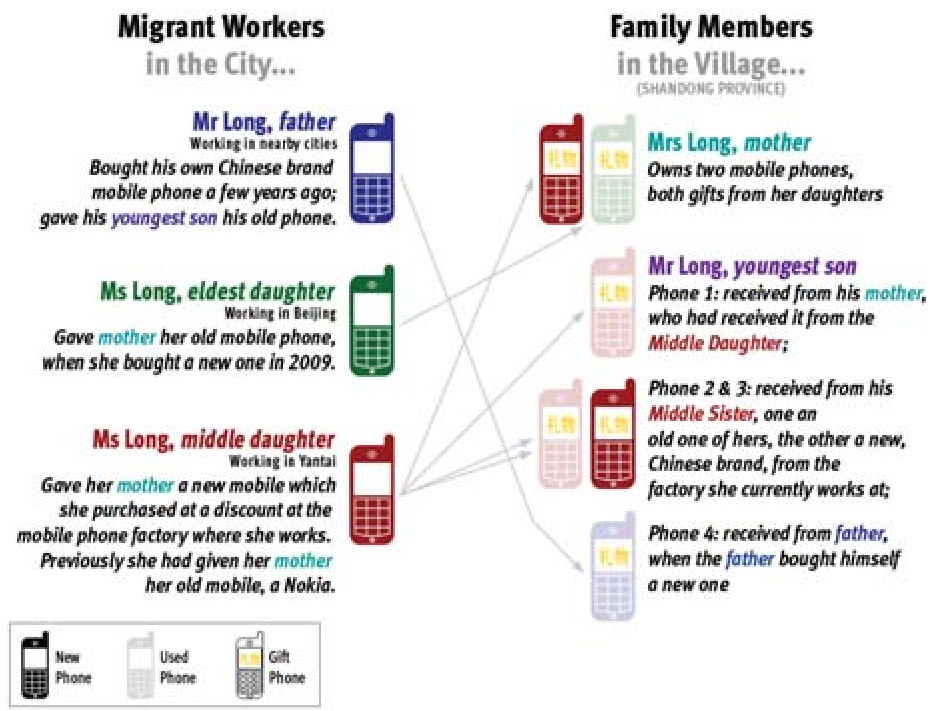 Figure 1: The complex web of gifting within a single family, showing how one girl's upgrade cycle fuels the connectivity of four other people.
Key Insights: Sentiment vs. Utility
The "gift" is rarely about the hardware's specs. Its value lies in:
- The Duty to Care: Children provide phones to ensure they can "find" their parents, effectively using the phone as a tether of filial piety.
- Digital Heirlooms: Old photos, MP3s, and e-books left on the phone by the previous owner are often kept as sentimental "scents" of the giver, or utilized by the younger generation (like 16-year-old Bing Long) as a window into urban fashion.
- The Power of the Lock: The study highlights a tragicomic moment where a mother receives a "Shanzhai" (copycat) smartphone. While it gave her "face" (prestige), she couldn't bypass the lock screen or turn off the music, eventually returning it to its box—a "gift" that remained a brick.
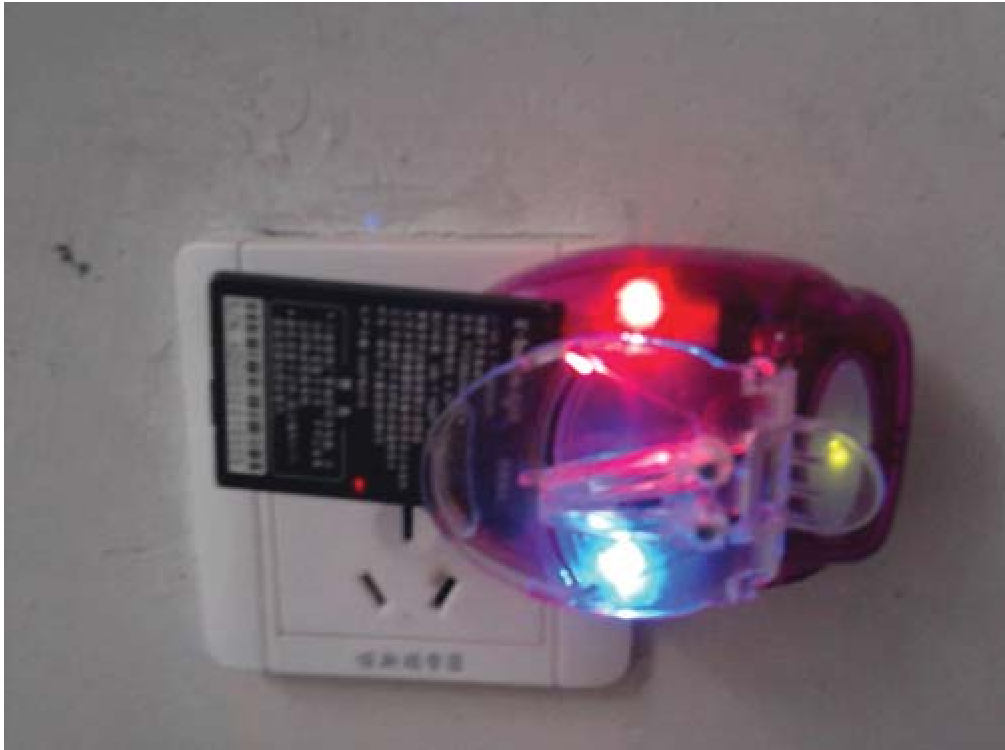 Figure 2: A universal wall-socket battery charger. Rural users frequently remove phone backs to swap batteries/SIMs, exposing internals to extreme dust—a condition rarely tested in urban labs.
Experiments & Results: The Social Impact
The results show that mobile phones serve as tools of individual freedom for rural women. They use them to coordinate card games or visit their own families (natal families) without the constant oversight of mothers-in-law.
However, the Ablation of Usability is clear: when a phone "travels," it loses its manual, its specific charger, and its original UX intent. The "results" of this study aren't benchmarks, but a qualitative map of how technology is "domesticated" into existing Chinese social structures (Guanxi).
Critical Analysis & Conclusion
Takeaway
The ultimate contribution of this paper is the call for "Design for Re-appropriation." Instead of obsessing over the first buyer, designers should include:
- Accessible "Reset & Tutorial" modes for secondary users.
- Hardware durability that accounts for the constant removal of cases/backs.
- Systems that recognize digital content as a "legacy" to be passed on.
Limitations
The study is geographically limited to Northern China (Shandong/Hebei), which is relatively affluent compared to the remote interior. In poorer provinces, the "gift cycle" might be slower or non-existent.
Future Outlook
As smartphones become ubiquitous, the "digital divide" is no longer about access to hardware, but the usability of the software for "traveling" users. The next frontier of HCI is not making things "smarter," but making them more "transferable."