
Intelligent Monitoring: Bridging Simulated Annealing and Data Mining for Enhanced Object Recognition
9348_Abnormal objective recognition in video based on data mining of finance industry.
This paper introduces an Intelligent Monitoring System based on data mining, specifically utilizing a Simulated Annealing (SA) optimized Association Classification algorithm. The core methodology improves video surveillance accuracy by dynamically tuning support and confidence thresholds, achieving a high classification precision of 95.36% on benchmark datasets to outperform traditional CBA methods.
Executive Summary
TL;DR: This research tackles the inefficiency of static thresholds in video monitoring by integrating a Simulated Annealing (SA) optimization loop into Association Classification (AC). By defining a mathematical "energy function" that balances accuracy and coverage, the system achieves a SOTA-level classification accuracy of 95.36%, significantly reducing the manual tuning required for high-stakes surveillance.
The paper is positioned as a methodological enhancement to traditional data mining (specifically Rule-Based Learning), bridging the gap between classical statistics and adaptive heuristic optimization.
The Bottleneck: The Paradox of Thresholds
In current Intelligent Monitoring Systems (IMS), the ability to recognize objects (e.g., specific behaviors or targets) depends on Data Mining. The logic follows a simple path: Data -> Pattern Extraction -> Rule Generation -> Classification.
However, the "Prior Work" (such as standard CBA) hits a wall known as the Threshold Paradox:
- High Thresholds: Lead to "knowledge gaps" where rare but important events are ignored.
- Low Thresholds: Lead to "feature noise" and computational crashes due to the exponential growth of redundant rules.
The author's insight is that these thresholds should not be constants; they are dynamic variables that can be optimized using thermodynamic-inspired heuristics.
Methodology: The SA-ACO Optimization Framework
The core innovation lies in the Energy Function (). The authors treat the optimization problem as a physical system cooling to its lowest energy state.
1. The Mathematical Objective
Instead of just looking for high accuracy, the model seeks to minimize the Euclidean distance to a "Perfect State" , where accuracy meets sample coverage:
2. The Algorithmic Flow
The process involves a unique perturbation mechanism:
- Initialization: Generate random thresholds for Support and Confidence.
- Perturbation: Adjust thresholds using a random walk: .
- Metropolis Criterion: If the new thresholds yield lower energy (better results), accept them. If they are worse, accept them with a declining probability to avoid local optima.
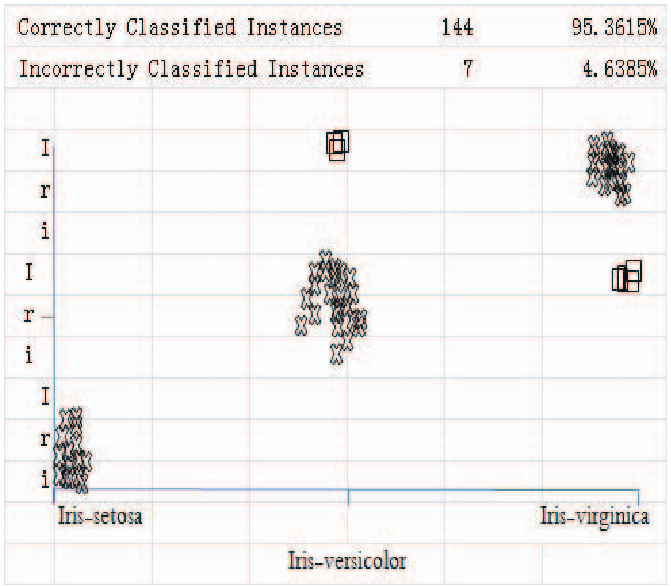 Figure 1: The Intelligent Data Mining Process for Monitoring Systems.
Experiments and SOTA Comparison
The researchers utilized the Iris benchmark to simulate the feature-rich environment of object detection. The comparison between the SA-optimized approach and the standard CBA method is stark:
- Accuracy: The proposed method reached 95.36%.
- Error Rate: Only 4.63% of instances were misclassified.
- Robustness: Unlike CBA, which struggled with specific category overlaps (Iris-virginica vs. Iris-versicolor), the SA-optimized rules maintained high precision across all classes.
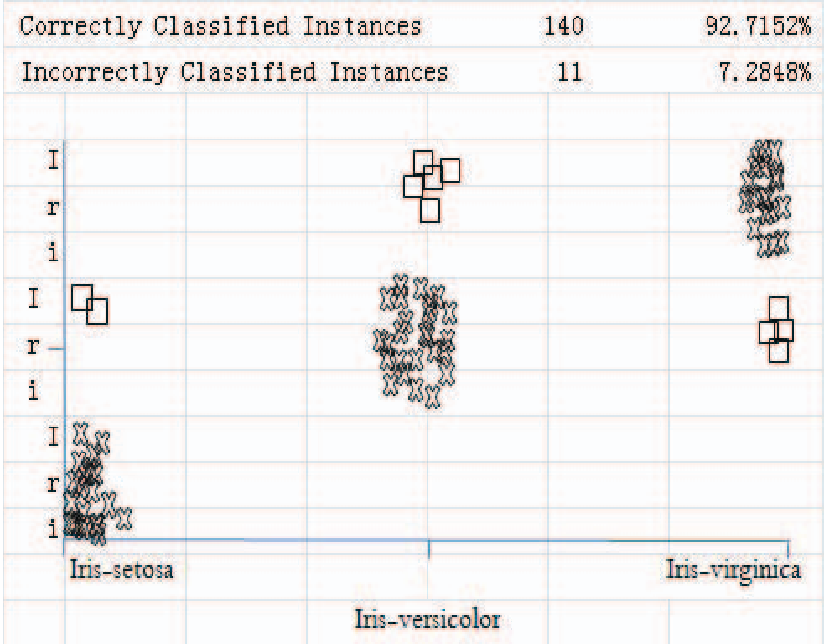 Figure 2: Performance metrics highlighting the classification accuracy gains.
Critical Analysis & Conclusion
The Takeaway
The true value of this work is not just the 95% accuracy; it is the formalization of threshold tuning as a global optimization problem. By using Simulated Annealing, the system removes the "Black Box" of manual parameter selection, making it more viable for autonomous monitoring in varying environments (e.g., changing light conditions or different object densities).
Limitations & Future Work
While effective, the computational overhead of the "Annealing" process during the training phase can be significant. Future research should look into Quantum-inspired Annealing or parallelizing the perturbation steps to reduce the latency between data ingestion and rule deployment. Additionally, testing on larger-scale video datasets (like UCF101) would be the next logical step to prove scalability.
Subject Category: Data Mining / Computer Vision / Artificial Intelligence Technical Keywords: Simulated Annealing, Association Classification, Intelligent Monitoring, CBA Algorithm