
SP2P SIP: Leveraging Social Intelligence to Slash P2P Latency
Abstract-P2P SIP (peer to peer session initiation protocol) systems have emerged as a new trend in multimedia realm due to their abilities to overcome the shortcomings of conventional SIP systems. Most of P2P SIP systems were implemented using Chord, a Distributed Hash Table (DHT) based routing algorithm which can provide scalability and reliability. Previous studies on P2P SIP systems did not address node heterogeneity, location information and mobility issues all together. For node heterogeneity, nodes with different capabilities (processing power, storage and bandwidth) should be treated suitably. For location information, the signaling latency is correlated with the distance between end users. This will influence call setup latency greatly. As to mobility, the node churn property will involve additional messages to maintain a stable DHT-based network and increases call setup latency. To conquer these problems, we propose a hierarchical social network-based P2P SIP system. The social network property can increase routing efficiency when calling friends. In addition, the proposed hybrid (structured/ unstructured) overlay is more resilient to cope with node churn. Simulation results show that our approach can improve 32% call setup latency with non-buddies and reduce 63% maintenance cost in comparison with the conventional Chord-based approach. In addition, we improve lookup efficiency from O(logN) to O(1) when making calls with buddies, where N is the number of nodes in a DHT-based network
The paper proposes SP2P SIP, a hierarchical peer-to-peer (P2P) Session Initiation Protocol (SIP) system that leverages social network properties and a hybrid overlay. It combines a Chord-based "main net" for super nodes (SNs) with unstructured "sub nets" for ordinary nodes (ONs), achieving SOTA-level call setup efficiency by exploiting buddy relationships.
TL;DR
The paper introduces SP2P SIP, a hierarchical P2P system that optimizes multimedia session setups by integrating social network data into the routing logic. By utilizing a hybrid structured/unstructured overlay and a "super node" hierarchy, it achieves O(1) lookup efficiency for friends and reduces overall maintenance costs by 63%, effectively solving the latency and churn issues inherent in traditional Chord-based P2P networks.
The Bottleneck: Why Traditional P2P SIP flails in Mobile Environments
Standard P2P SIP implementations typically rely on Chord, a Distributed Hash Table (DHT). While Chord is reliable and scalable, it has three fatal flaws in the context of mobile telephony:
- High Latency: A lookup requires
O(logN)hops. In a global network, these hops traverse the public internet, adding significant delay. - Ignorance of Heterogeneity: It treats a high-powered server the same as a battery-constrained mobile phone.
- Churn Sensitivity: In mobile environments, nodes join and leave frequently. Maintaining a stable Chord ring under high "churn" generates massive message overhead.
The authors' core insight is simple yet profound: People usually call their friends. By optimizing for this "Social Network" property, we can bypass the complexity of the DHT.
Methodology: The Hierarchical Hybrid Approach
SP2P SIP departs from "flat" architectures by categorizing nodes into Super Nodes (SNs) and Ordinary Nodes (ONs).
1. Hybrid Architecture
- Main Net (Structured): High-capability SNs form a Chord ring. They serve as the backbone.
- Sub Net (Unstructured): ONs attach to an SN. This makes the system resilient; if an ON (the mobile phone) leaves, the core Chord ring remains untouched, slashing maintenance traffic.
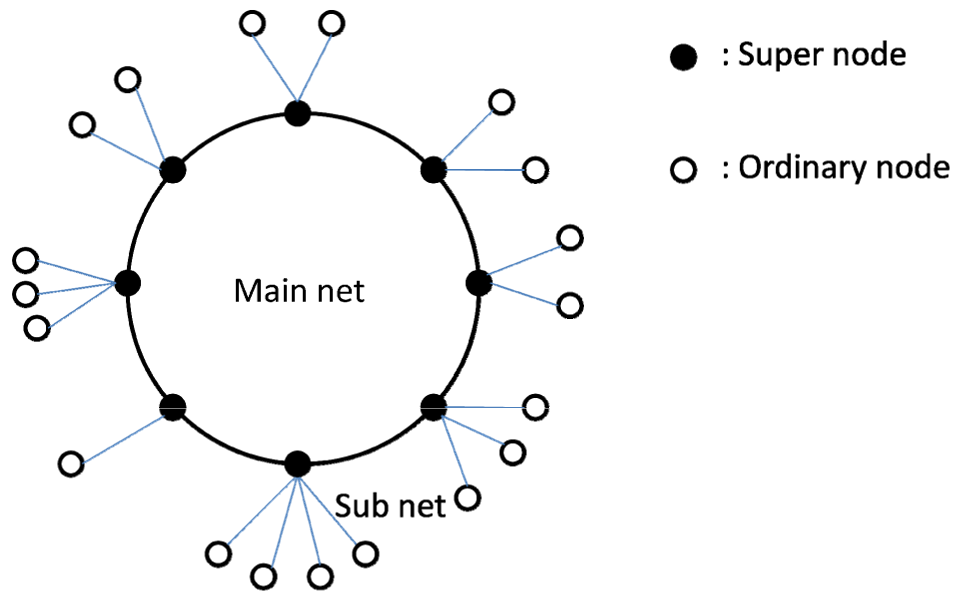 Fig 1: The hybrid overlay combining SNs and ONs.
2. Social-Based Shortcuts
Each node maintains a Contact Table. When calling a "buddy," the node looks up the buddy’s SN (the contact) and connects directly. This bypasses the multi-hop Chord search entirely, resulting in O(1) lookup.
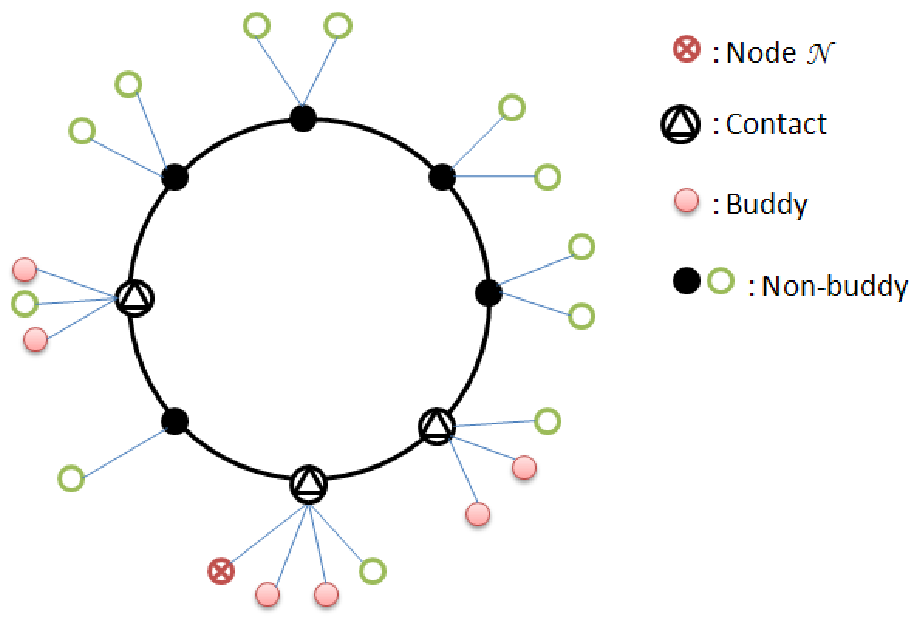 Fig 2: Utilizing social relationships to find "buddies" via common contacts.
Experimental Validation: Beyond Chord
The authors utilized Overlay Weaver to simulate networks up to 10,000 nodes.
Call Setup Latency
By assuming friends are often geographically closer (domestic vs. international hops), the system significantly reduces delay. In a 10,000-node setup, even if only 30% of calls are to buddies, SP2P SIP improves latency by 86% compared to standard Chord.
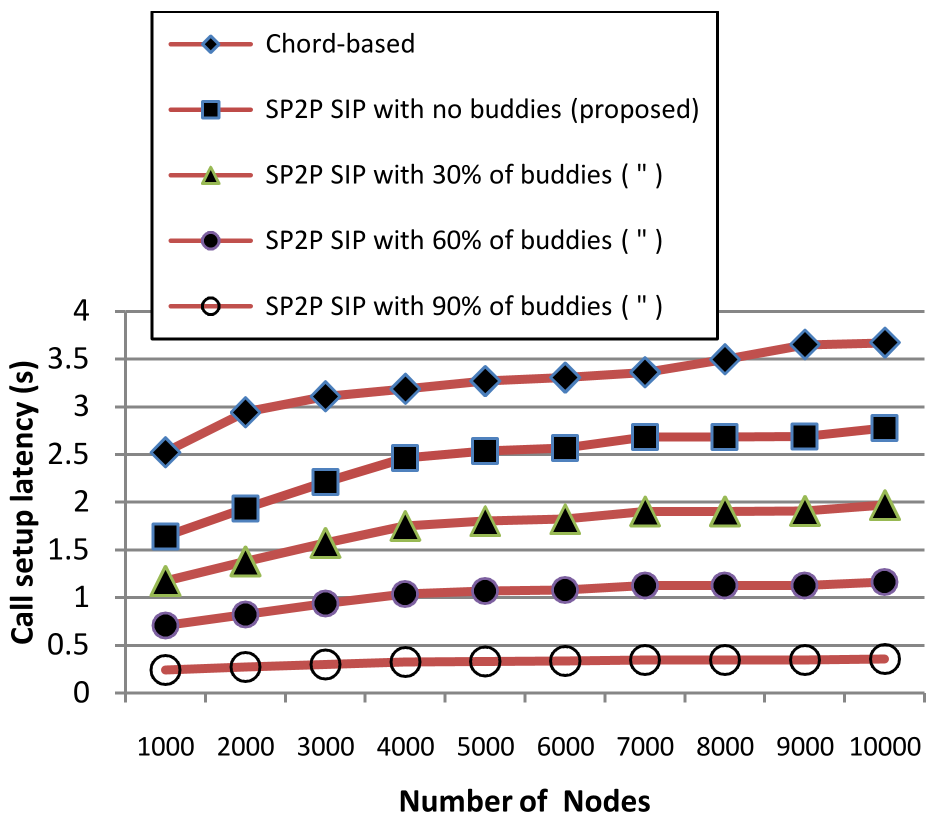 Fig 3: Call setup latency decreases as the percentage of social calls increases.
Churn Resilience
In mobile scenarios, "node churn" is the enemy. However, because SP2P SIP isolates ON churn within the sub-nets, the "Main Net" stays stable. As shown in the results, while Chord's performance degrades as churn increases (moving left on the X-axis), SP2P SIP remains remarkably flat.
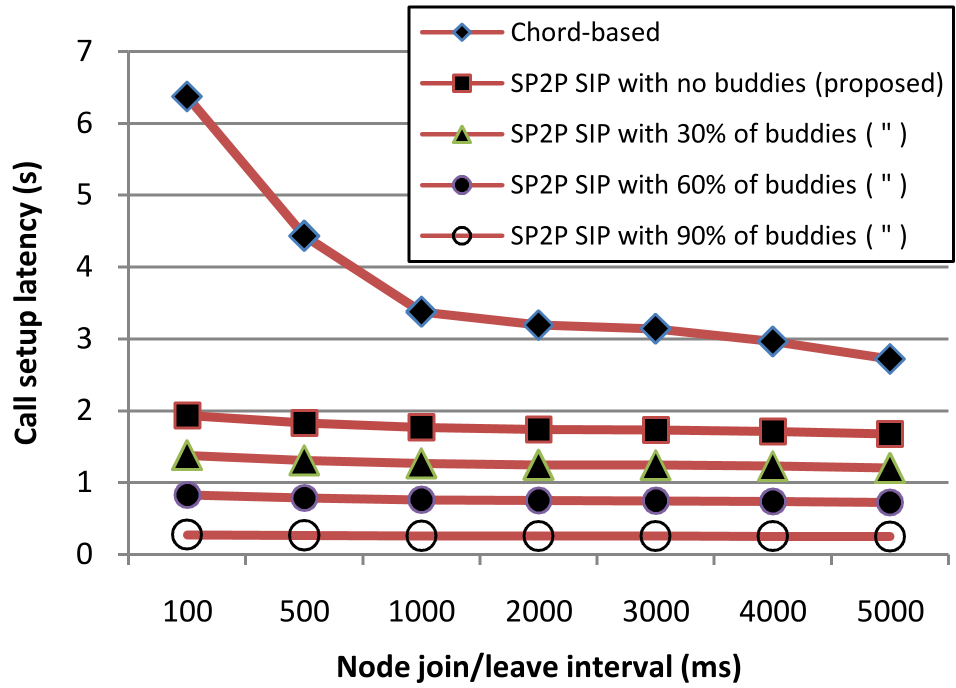 Fig 4: Resistance to node churn compared to traditional DHT.
Critical Insight & Conclusion
The SP2P SIP architecture proves that physical network topology and social topology should not be decoupled. By effectively using SNs as geographic/social anchors, the system provides a "best of both worlds" scenario: the deterministic search of DHTs for discovery and the instant-access efficiency of social graphs for frequent interactions.
Takeaway: This work provides a blueprint for modern decentralized apps (dApps) and P2P communication tools. To scale, decentralized systems must adopt hierarchical roles and context-aware routing rather than striving for perfect peer symmetry.