
OCDBG: Tackling Subset Redundancy in Academic Social Network Recommendations
Academic Social Network Scholars Recommendation Model Based on Community Division
The paper introduces OCDBG (Overlapping Community Discovery Based on GraphChi), a scholar recommendation model that combines core network pre-merging with label propagation. It leverages the GraphChi framework to parallelize community detection, achieving SOTA recommendation accuracy on the SCHOLAT academic social network.
TL;DR
In the era of information overload, finding relevant academic collaborators is a needle-in-a-haystack problem. This paper presents OCDBG, a community detection model that optimizes the Label Propagation Algorithm (LPA) process. By merging core networks in advance and utilizing the GraphChi parallel framework, the authors achieved an 80% precision rate in scholar recommendations while cutting processing time by over 50% compared to standard baselines.
Problem & Motivation: The Subset Trap
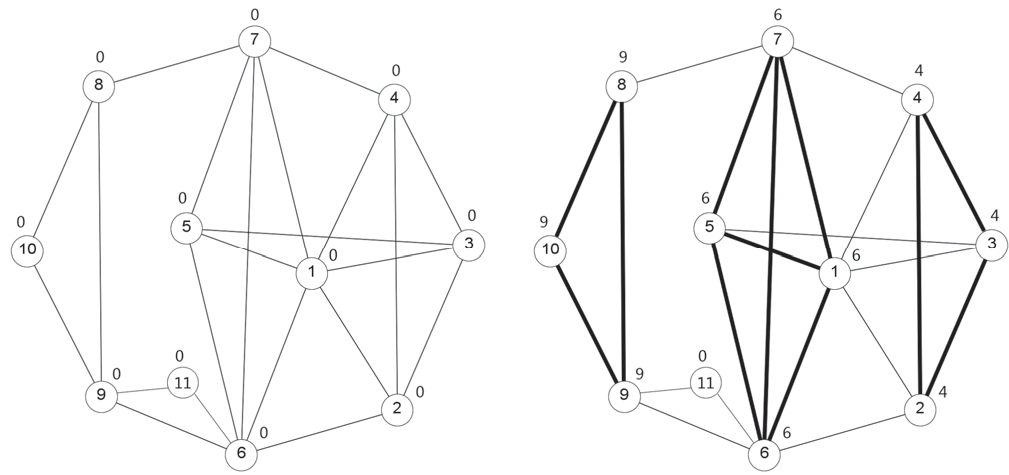
Community discovery is the backbone of recommendation engines. However, classic algorithms often fall into the Subset Community trap. Imagine two dense groups of scholars that are closely related; a standard Label Propagation Algorithm might identify Group A as a community, but also mistakenly identify a sub-segment of A as a separate overlapping community.
This redundancy leads to:
- Over-recommendation: Users see the same group of people in different lists.
- Computational Waste: Iterating over redundant labels slows down the system.
- Low Accuracy: The topology doesn't reflect the true "scholarly circles."
Methodology: Core Merging & Parallel Execution
The authors introduce a three-phase pipeline to solve these issues:
1. Finding Core Networks
The model identifies "Completed Graphs" (cliques) as the seeds of communities. It starts with the highest-degree nodes to ensure the most influential scholarly clusters are captured first.
2. The Merging Strategy
Prior to label propagation, the model calculates a 'close' metric between newly found codes and existing ones. If the intersection is dense enough (close ≥ 1), the cores are merged. This "pre-emptive strike" eliminates subset redundancy before the expensive propagation phase begins.
3. Parallel Propagation via GraphChi
To handle thousands of nodes on standard hardware, the authors use GraphChi. This system uses "parallel sliding windows" on disk-based storage, allowing for massive graph processing without requiring high-end distributed clusters.
Experiments & Results: Speed Meets Precision
The authors tested OCDBG against the CDBG baseline using both artificial LFR benchmarks and the real-world SCHOLAT dataset (8,775 users, 23,382 relationships).
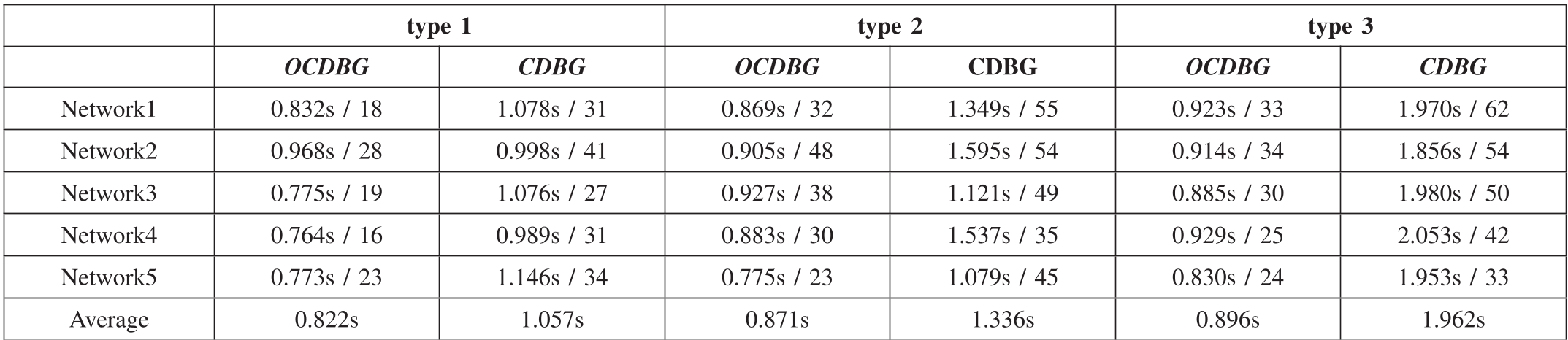
- NMI (Accuracy): In large-scale types (Type 3), OCDBG reached an NMI of 0.9864, consistently higher than CDBG.
- Efficiency: OCDBG's average runtime was 0.896s, compared to 1.962s for CDBG—a performance boost of over 2x.
- Recommendation Quality: When recommending 5 scholars, OCDBG achieved a Precision of 0.80, a massive leap from CDBG’s 0.52.
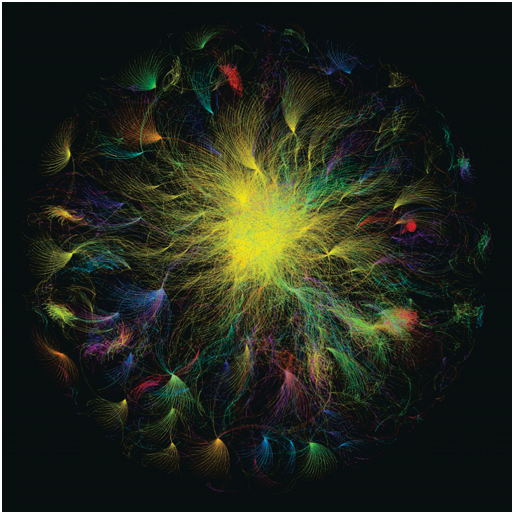
The visualization below demonstrates how merging the core networks results in a more "compact" and logically sound community structure (Right) compared to the fragmented original (Left).
Critical Analysis & Conclusion
The OCDBG model proves that structural "pre-processing"—identifying and merging core cliques—is just as important as the propagation algorithm itself. By cleaning the topological noise early, the model produces higher-quality scholar recommendations.
Limitations: Currently, the model treats all node weights as equal. In real academic settings, a "Senior Professor" node should likely carry more weight in propagation than a "New Student" node. The authors plan to integrate node weighting into the next iteration to further refine discovery accuracy.
Takeaway: For developers building recommendation systems on complex graphs, the lesson is clear: don't just propagate labels; understand the core structures of your cliques first.