
FLC: Scaling Link Community Detection to Millions of Users
Accelerating Link Community Detection in Social Networks
The paper introduces Fast Link Clustering (FLC), an optimized link-based community detection algorithm designed for large-scale social networks. By leveraging the power-law degree distribution of social graphs, FLC significantly reduces the computational complexity of the baseline Link Clustering (LC) method, enabling it to scale to networks with millions of nodes like YouTube while maintaining high accuracy in detecting overlapping and hierarchical structures.
TL;DR
Link-based community detection is the gold standard for uncovering how users belong to multiple social circles (overlapping communities). However, it has been notoriously slow. This paper introduces Fast Link Clustering (FLC), which prunes the computational overhead by focusing on "small-degree" node interactions. The result? A massive jump in scalability that allows community detection on datasets like YouTube to complete in hours instead of failing entirely.
Background: The Scalability Wall
In social networks, nodes are people and links are relationships. Most algorithms try to group nodes, but since a person can be part of a family, a workspace, and a hobby group simultaneously, Link Clustering (LC)—grouping the relationships instead—is more intuitive.
The problem is complexity. In a typical LC approach, you must calculate the similarity between every pair of adjacent links. For a node with degree , this requires operations. In large social networks, "hubs" with thousands of connections create a computational bottleneck that brings standard algorithms to a halt.
The "Reduced Graph" Insight
The authors observed a critical property of social networks: the Power-Law Distribution. While a few nodes have massive degrees (hubs), most nodes have very few connections.
Through empirical analysis of the YouTube network, they found that nodes with a degree account for only 21% of links but consume 95% of the total computation time.
The FLC Strategy:
- Identify Hubs: Set a degree threshold (typically proportional to ).
- Separate the Graph: Links connected to hubs are set aside (), while links between low-degree nodes form the core graph ().
- Fast Clustering: Perform community detection only on .
- Re-integration: Assign the links in back to the communities formed by their endpoints.
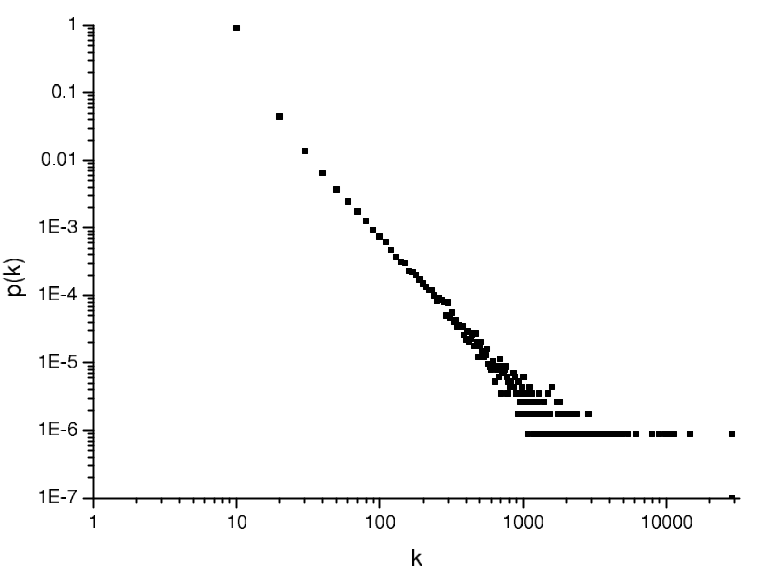 Figure 1: The FLC algorithm optimizes the workflow by splitting the graph based on node degree.
Methodology: From Dendrograms to Density
Beyond graph reduction, FLC optimizes the Dendrogram construction. Instead of merging the single most similar pair of links at each step (which takes iterations), FLC uses a set of thresholds . Links with similarity above a threshold are merged in bulk, drastically reducing the number of iterations from to .
To find the most "natural" level of communities, the algorithm uses Partition Density (). By monitoring the change in across levels, the algorithm can stop automatically when the community structure is most distinct.
Experimental Results: Scaling to YouTube
The researchers tested FLC against the original LC on several real-world datasets, including YouTube (1.1M nodes), DBLP, and Amazon.
- Scalability: While the original LC could only handle small subgraphs, FLC processed the entire YouTube network in 5 hours.
- Accuracy: Using metrics like Average Precision and Community Coverage, FLC proved that it wasn't just faster—it was often more accurate. By ignoring the "noise" or high-order complexity of hubs during the initial merge, it avoided over-clustering disparate regions.
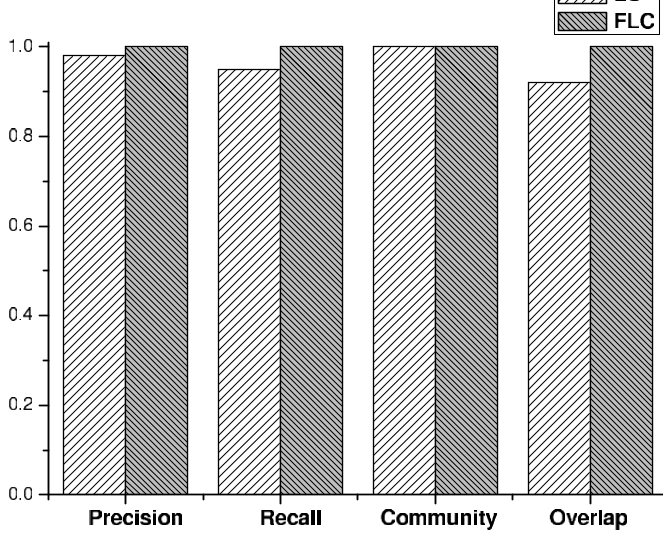 Figure 2: Performance metrics across YouTube, DBLP, and Amazon datasets showing FLC's competitive accuracy.
Critical Insight & Conclusion
FLC demonstrates that for large-scale graph mining, not all data points are created equal. In social networks, the sparse "long tail" of low-degree nodes actually provides the structural scaffolding necessary to define community boundaries. By treating high-degree hubs as "link-assignees" rather than "link-calculators," we can achieve linear time complexity .
Limitations: Despite the speedup, memory remains a challenge. Representing a "line graph" (where links become nodes) still requires significantly more RAM than a standard adjacency list. Future work in this area will likely focus on Parallel Processing to distribute these memory requirements across clusters.
Takeaway: If you are building a recommendation engine or a social discovery tool, FLC offers a way to move past simple node-grouping and into the rich, overlapping world of hierarchical link communities without needing a supercomputer.