
Beyond All-or-Nothing: Reclaiming Privacy from Third-Party Social Apps
Access control for online social networks third party applications
The paper introduces a fine-grained access control framework for third-party applications in Online Social Networks (OSNs). It proposes an "attribute generalization" mechanism and models applications as Finite State Machines (FSMs) to balance user privacy with application functionality.
TL;DR
Third-party applications are the lifeblood of social networks, yet they represent a massive privacy "black hole." This paper presents a framework that replaces the "accept all or walk away" installation model with a Weighted Application Transition System. Users can now provide generalized data (e.g., just your birth year instead of the full date) while the application dynamically adjusts its service level.
The Problem: The "All-or-Nothing" Trap
When you install a "Horoscope" or "Quiz" app on a social platform, you are often met with a daunting permissions screen. You either give the developer your full profile—address, friends list, photos—or you don't get to use the app.
The authors point out that this is a violation of the Principle of Least Privilege. Most apps don't need your specific street address to function; a zip code or state would suffice. However, current APIs lack the nuance to handle "fuzzy" or generalized data, leading to massive, unnecessary data leakages.
The Insight: Mapping Apps as Finite State Machines (FSM)
The core methodology of this work is treating an application not as a static entity, but as a Transition System.
- Attribute Generalization: Instead of a binary choice, users can provide data at different "granularity levels." For an address, the levels might be:
Specific Address -> City -> State -> Country -> Null. - State-Based Execution: The app is modeled as an FSM where high-value states (e.g., "Full Comparison with Friends") require specific data, while lower states (e.g., "Daily Horoscope") require less.
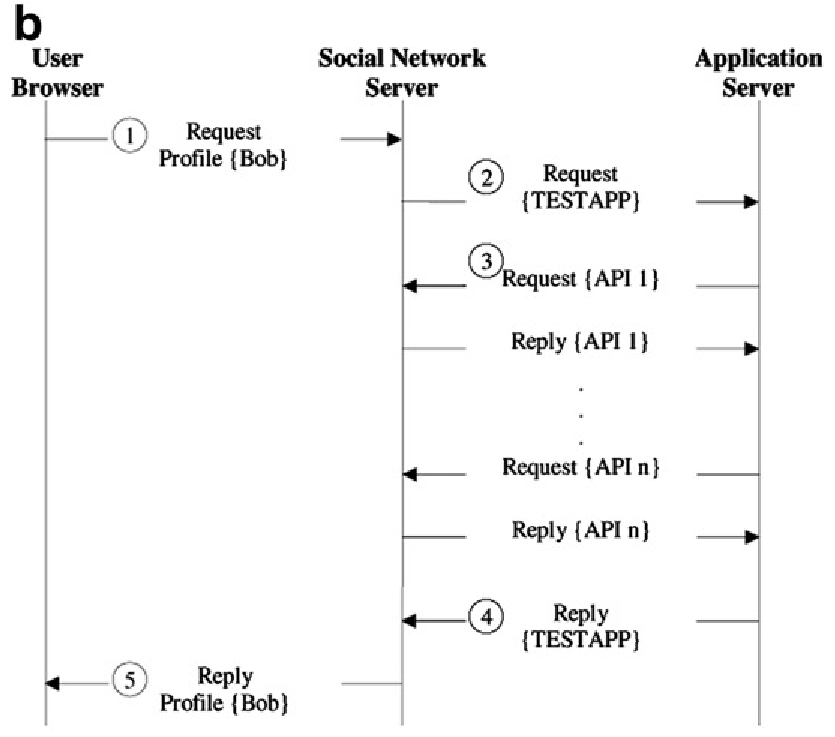 Figure: The framework architecture showing how the Request Management module filters API calls based on User Preference Sheets.
Solving for the "Minimal Exposure"
How does a user know the minimum amount of data they need to give up to get the feature they want? The authors solve this by transforming the privacy configuration into a Shortest Path Problem.
By assigning "weights" to different data attributes (based on how sensitive the user feels they are), the system calculates a path through the FSM. The "shortest" path is the one that reaches the desired application state while incurring the lowest "privacy cost."
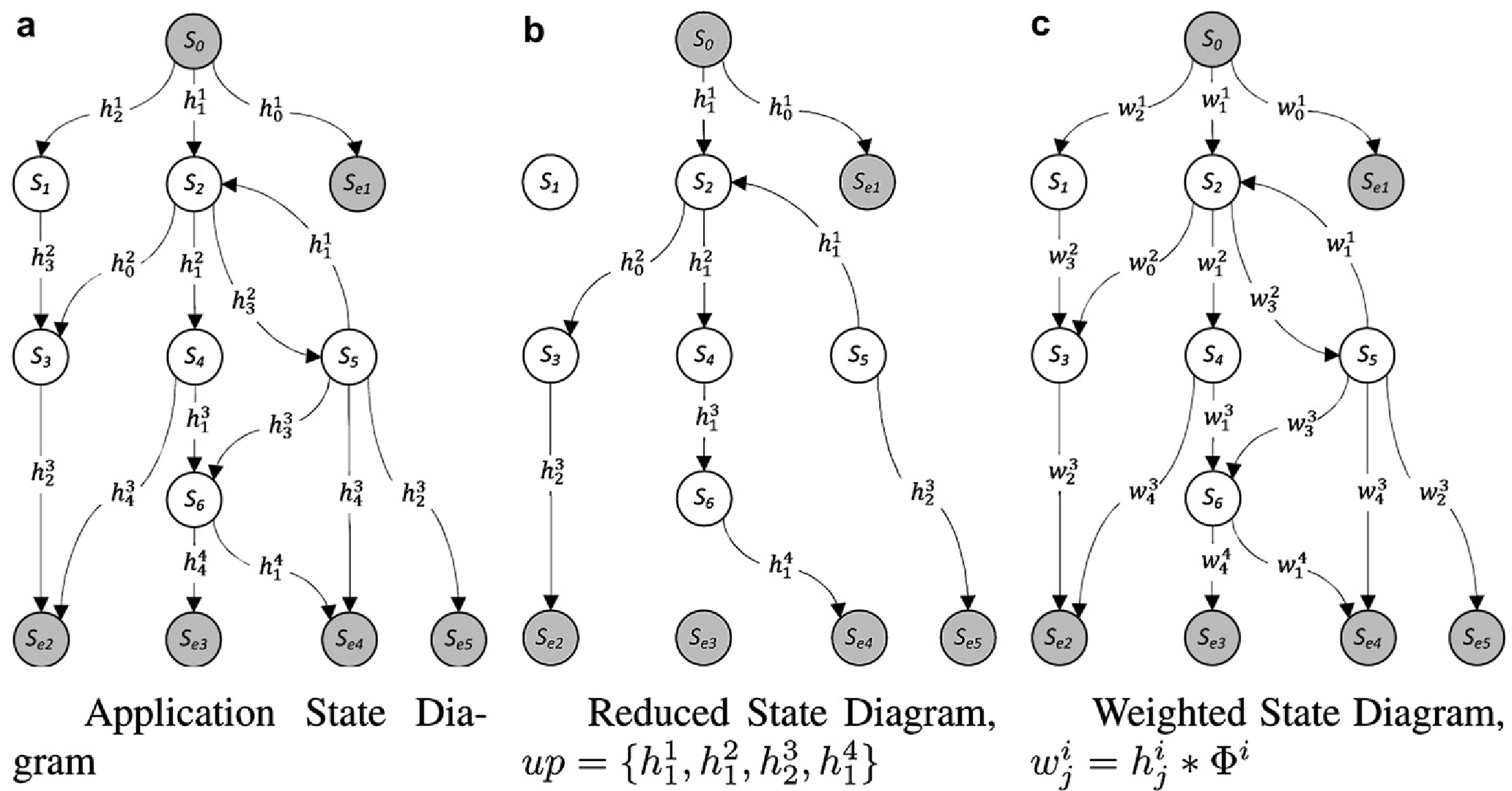 Figure: The algorithm used to compute the optimal user preference vector for a target final state.
Does it Work? Proof-of-Concept and User Study
The researchers built a prototype using Drupal, modifying its "Profile" module to intercept API hooks. They tested this with a "Horoscope" app that could function at "Minimal," "Intermediate," or "Maximum" service levels depending on whether the user shared their full birthday or just their birth month.
Key Results:
- User Satisfaction: Participants significantly preferred the generalization approach over the standard Facebook-style installation.
- Concern Reduction: Privacy anxiety dropped from a mean of 3.60 to 3.23 when users felt they had control over the "specificity" of their data.
- Trade-offs: The study found that the "willingness to reduce application capabilities for security" was the strongest predictor of user satisfaction.
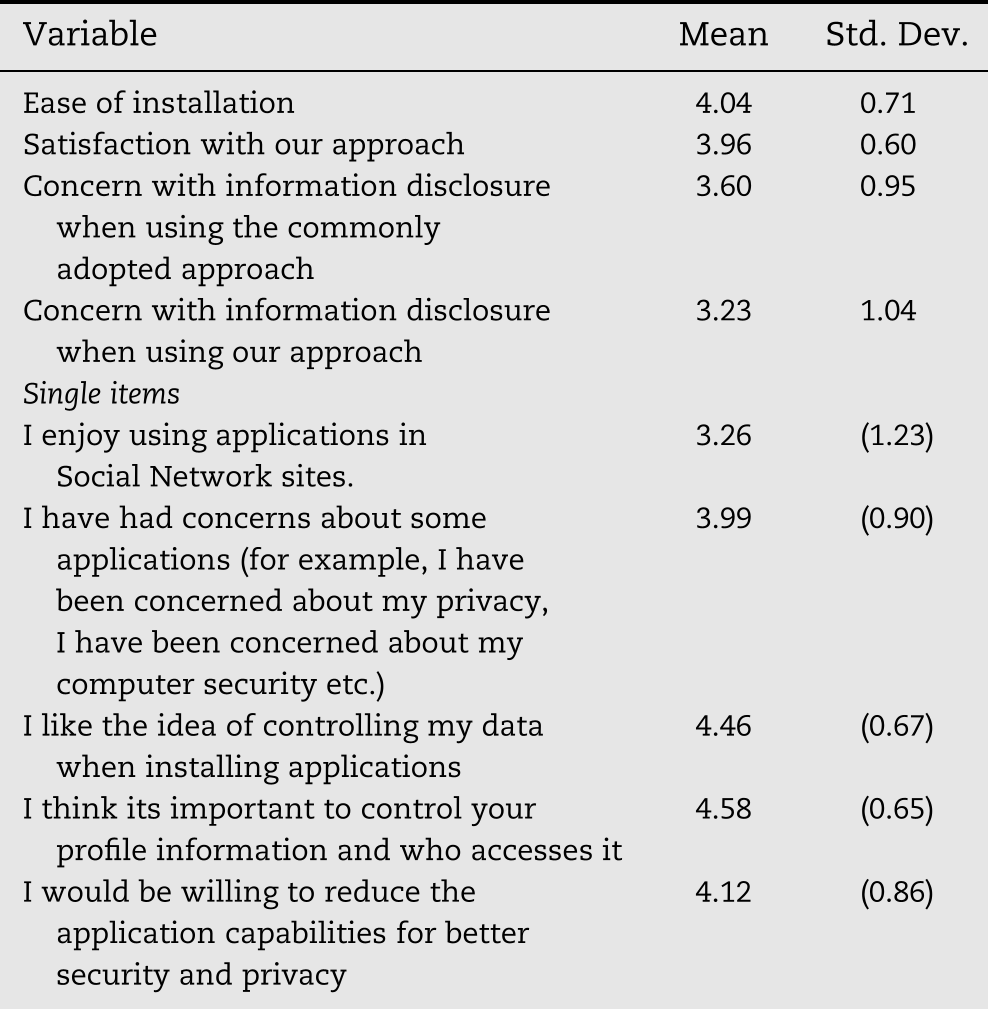 Table: Mean scores for ease of installation and satisfaction using the proposed framework.
The Takeaway: Privacy as a Spectrum
This paper serves as a vital reminder that usability and privacy are not a zero-sum game. By designing APIs that support generalized attributes and applications that can "gracefully degrade" their service, we can build a more secure Web 2.0 ecosystem.
Limitations: The model currently assumes developers will honestly register their FSMs. Future work must address how to enforce these policies "in the wild" once the data leaves the social network's server.
Author Analysis: This work predates modern privacy regulations like GDPR, yet its technical approach to "Data Minimization" via FSMs remains a masterclass in applying formal methods to practical UX problems.