
Healthcare4Life: Reimagining Telehealth as a Social, Extensible Ecosystem for Seniors
Accessible Telehealth- Leveraging Consumer-level Technologies and Social Networking Functionalities for Senior Care
The paper introduces Healthcare4Life, a web-based telehealth framework designed for senior care that leverages consumer-level technologies and social networking. It employs an OpenSocial plug-in architecture to allow third-party developers to contribute health applications, effectively achieving a "Facebook-like" ecosystem for elderly health management.
TL;DR
The rising cost of healthcare and the isolation of the elderly demand more than just "digital clinics." This paper proposes Healthcare4Life, an open-source, web-based platform that replaces expensive, proprietary telehealth hardware with a plugin-based social network. By treating health applications as "gadgets" (similar to Facebook apps), the system empowers seniors to track vitals, play cognitive games, and connect with peers in a unified, accessible environment.
The Problem: The "Clinical Silo" in Senior Care
Traditional telehealth is broken for the average consumer. The paper identifies three critical failure points:
- Vendor Lock-in: Systems are closed, making it impossible to add new features without expensive upgrades.
- Clinical Centrality: Designs focus on the doctor's data needs, ignoring the patient's motivation and lifestyle.
- Social Isolation: Physical health is monitored, but the mental toll of loneliness—a major health risk for seniors—is ignored.
The authors argue that for telehealth to be effective, it must be ubiquitous, affordable, and social.
Methodology: The "Facebook" of Health
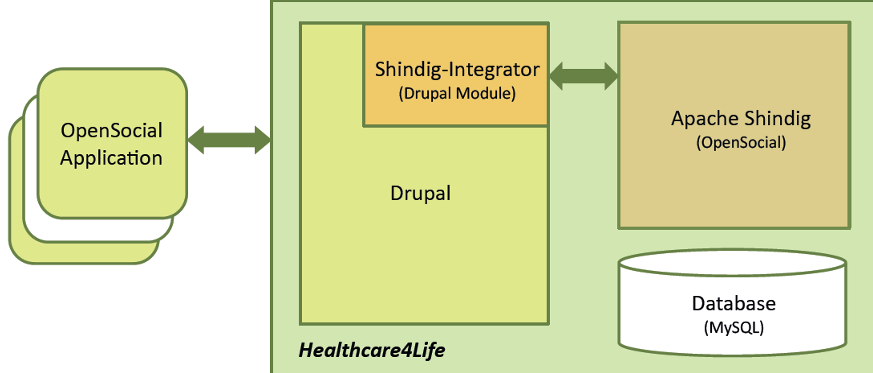
The researchers developed a framework centered on extensibility. Instead of building a monolithic app, they created a Container Architecture.
1. The Plugin Architecture
Using OpenSocial and Drupal, the team built a host environment where any third-party developer can "plug in" a new health tool. This eliminates vendor lock-in and allows the library of exercises, games, and trackers to grow indefinitely.
2. The Senior-Centric Interface
Recognizing that "digital natives" and "seniors" have different UX needs, the design emphasizes:
- Linear Navigation: Preventing users from getting lost in nested menus.
- Iconic UI: Large, colorful buttons with text-image pairing.
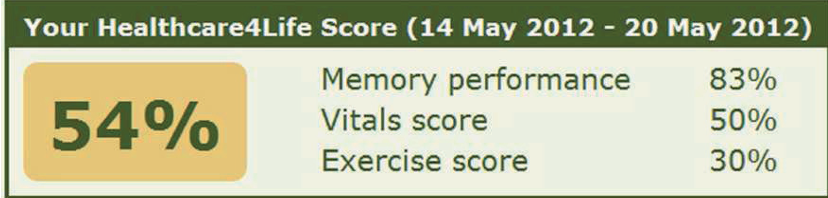
- Summative Feedback: The "Healthcare4Life Score," which distills complex vitals into a single, easy-to-understand metric.
Experiments & Results: Real-World Veteran Testing
The team conducted a 6-week study with 43 seniors. The results were telling of both the system's potential and the inherent challenges of social health.
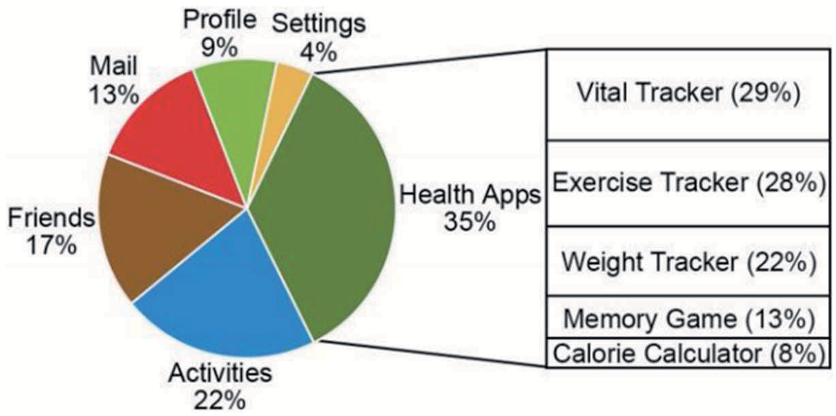
- Engagement: The Vital Tracker (29%) and Exercise Tracker (28%) were the most used modules, proving that seniors are eager to self-monitor when tools are accessible.
- The "Friend" Friction: Interestingly, while users liked the "idea" of social support, many were reluctant to add "strangers" as friends. Only 33% felt motivated by the social features, citing privacy concerns. This highlights a critical design challenge: Social health requires built-in trust/acquaintance loops, not just "Facebook-style" global networking.
Critical Insight & Future Outlook
The core achievement of this work is the shift from Telehealth as a device to Telehealth as a platform. By leveraging the OpenSocial standard, the authors demonstrate that consumer-level web technologies can replace specialized medical hardware.
Takeaway for the Industry: The future of senior care isn't a new blood pressure cuff; it's an open ecosystem where the cuff, the memory game, and the family group chat all feed into the same interface. However, for "Social Telehealth" to succeed, we must move beyond the "Facebook model" of public sharing and toward private, trusted micro-networks (e.g., family + specific care circles).
Conclusion
Healthcare4Life proves that senior technology doesn't have to be "dumbed down"—it just needs to be open and intuitive. While privacy remains a hurdle for social features, the shift toward extensible, plugin-based care offers a viable path to making healthcare affordable and proactive for the aging population.