
The Power of Preprocessing: Achieving 92%+ Accuracy in Diabetes Risk Stratification
Accurate Diabetes Risk Stratification Using Machine Learning: Role of Missing Value and Outliers
This paper presents an optimized machine learning (ML) framework for diabetes risk stratification using the Pima Indian Diabetes dataset. By combining a novel median-based preprocessing strategy with a Random Forest (RF) feature selection and classification hybrid, the study achieves a state-of-the-art accuracy of 92.26% (10-fold CV) and nearly 100% (Jack-knife CV).
TL;DR
Diabetes diagnosis is notoriously difficult for Machine Learning due to the "noisy" nature of medical data—filled with missing values and statistical outliers. This study proves that a Random Forest model, when paired with a strict median-based preprocessing strategy, can outperform existing SOTA benchmarks by over 10%, reaching an accuracy of 92.26% on the Pima Indian dataset.
Background: The Hidden Saboteurs of Medical ML
Most researchers focus on building "fancier" models. However, the real problem in diabetes stratification lies in the data. The Pima Indian Diabetes dataset, a gold standard in the field, is plagued by:
- Meaningless Zeros: Values like 0 for Insulin or Blood Pressure that signify missing data.
- Statistical Outliers: Extreme values that skew the "mean," misleading delicate algorithms like SVM or Logistic Regression.
While previous works achieved modest results (74-80%), they often used simple mean-imputation or ignored outliers. This paper argues that the median is a far more robust anchor than the mean for medical diagnostics.
Methodology: The "Median-Median" Framework
The authors designed a rigorous pipeline consisting of two stages of data refinement before the training phase:
1. Robust Imputation & Outlier Handling
- Group Median Imputation: Instead of a global average, missing values (zeros) were replaced by the median of the patient's specific group (Diabetic vs. Control).
- IQR-Based Outlier Replacement: Outliers were identified via the Inter-Quartile Range (IQR) and replaced by the median, preventing "extreme" patients from warping the model's decision boundary.
2. The Hybrid Architecture
The study evaluated 60 different combinations of feature selection and classifiers. The winner? Random Forest (RF) for both.
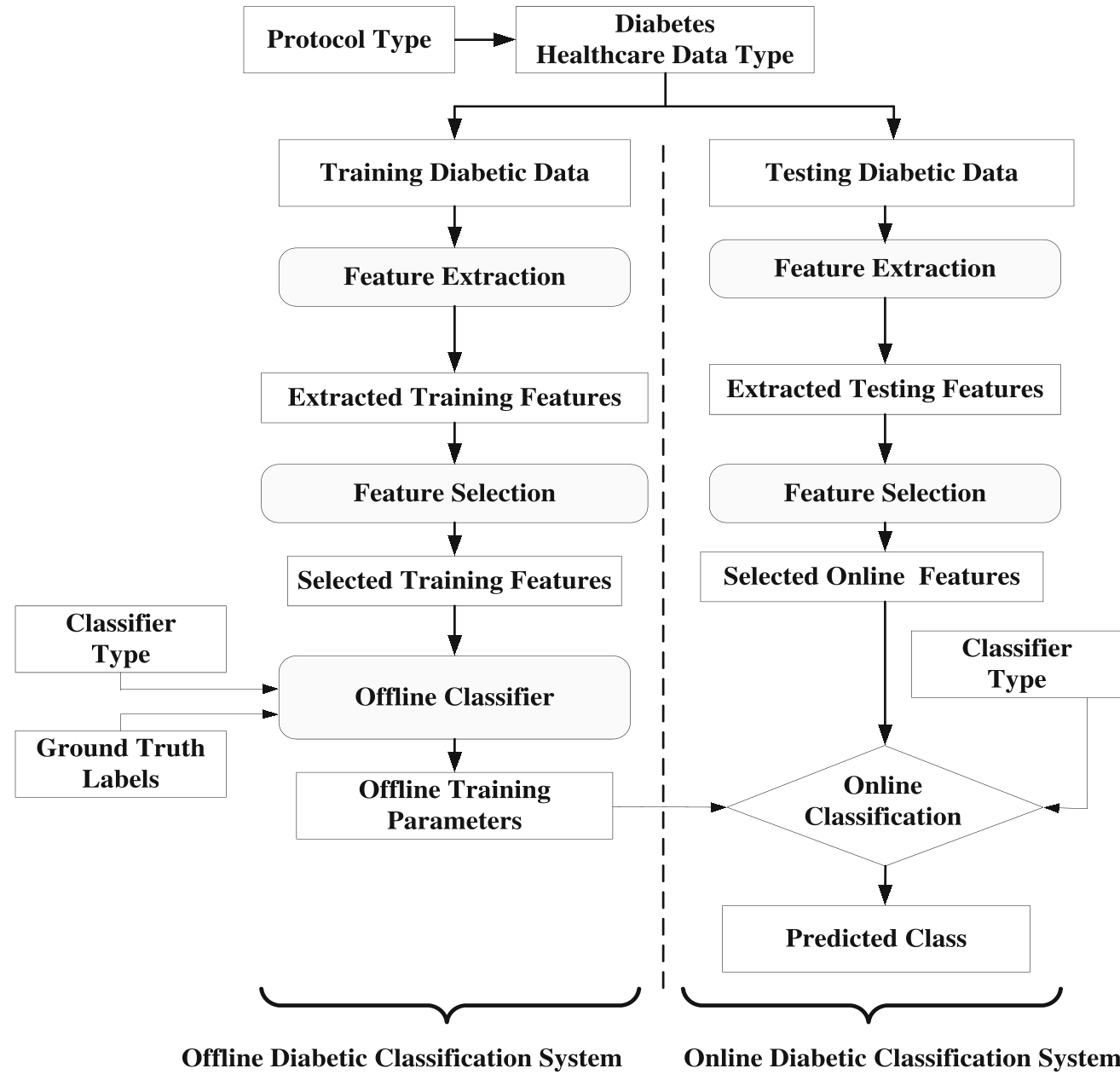 Figure 1: The dual-segment architecture showing the offline training and online testing workflows.
Experiments and Results
The authors tested their hypothesis against 10 classifiers (including ANN, SVM, and Naive Bayes) across five cross-validation protocols (K2 to Jack-knife).
| Metric | Result (K10 Cross-Validation) |
|---|---|
| Accuracy | 92.26% |
| Sensitivity | 95.96% |
| Specificity | 79.72% |
| AUC | 0.93 |
Key Insight: Why Random Forest?
The results showed that RF outperformed LDA, SVM, and even Artificial Neural Networks. This is because RF is naturally robust to non-linear data and provides an internal mechanism to rank feature importance (Permutation Importance Index), which works synergistically with the median-imputed data.
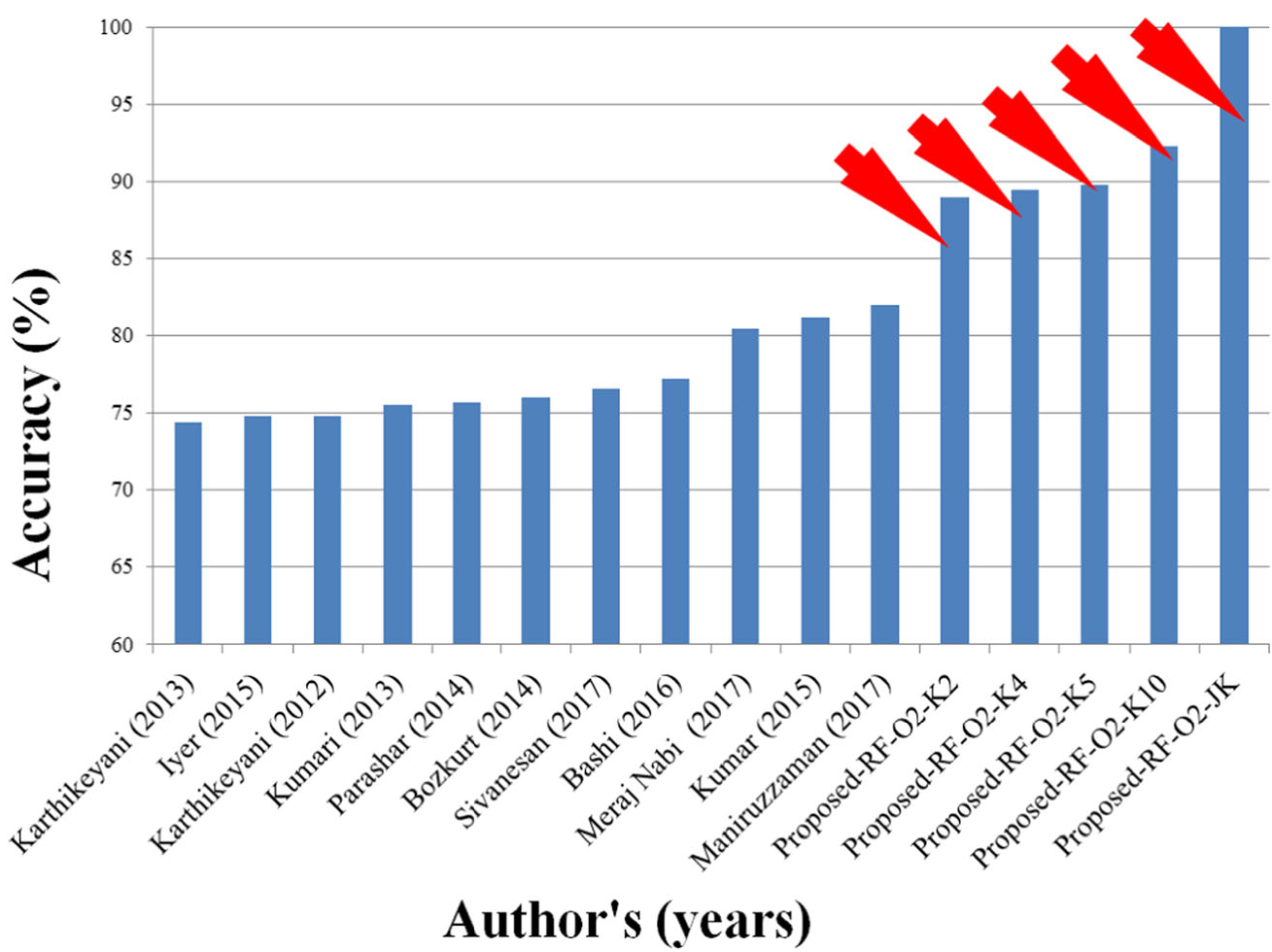 Figure 2: Performance leap of the proposed RF-RF method compared to historical benchmarks (2012-2017).
Deep Insight: Stability and Reliability
The study doesn't just claim accuracy; it proves stability. The authors introduced a Reliability Index (RI), calculating the ratio of standard deviation to the mean accuracy. Their findings revealed that as the data size increases, the system's reliability stabilizes within a 2% tolerance limit. This makes the model a candidate for real-world clinical decision support systems.
Critical Analysis & Conclusion
This paper serves as a vital reminder for AI practitioners: Data cleaning is not a preliminary chore; it is the core of the methodology. By simply switching from mean-based to median-based imputation and using an ensemble FST-Classifier approach, the authors closed a 10-year performance gap in diabetes prediction.
Limitations: The specificity (79.72%) is notably lower than the sensitivity (95.96%), suggesting the model is better at catching diabetic cases than it is at clearing "control" cases (i.e., it has more false positives than false negatives). Future work should focus on balancing this trade-off for clinical application.