
High-Precision Heartbeat Detection: Turning Bed Vibrations into Clinical Grade Data
Accurate Heartbeat Detection on Ballistocardiogram Accelerometric Traces
The paper presents a fully automated, unsupervised method for heartbeat detection using a MEMS accelerometer to capture Ballistocardiogram (BCG) signals from subjects in a lying position. The system employs a two-step signal processing pipeline (candidate extraction and adaptive annotation) to identify J-peaks, achieving a median sensitivity of 98.9% and precision of 98.1%.
TL;DR
Researchers have developed a breakthrough automated system for monitoring heart activity without a single wire touching the body. By placing a MEMS accelerometer under a mattress and applying a sophisticated two-step signal processing algorithm, they can detect heartbeats (J-peaks) with 98.9% sensitivity. The timing error is as low as 4.7 milliseconds, making it accurate enough for Heart Rate Variability (HRV) analysis—the gold standard for assessing stress and cardiac health.
The Challenge: BCG is Messy
While Electrocardiograms (ECG) measure electrical signals with sharp, easy-to-spot "R-peaks," Ballistocardiography (BCG) measures the mechanical recoil of the whole body as blood is pumped.
The problem? The BCG signal is notoriously "noisy" and varies wildly between individuals based on body mass, posture, and mattress type. Unlike the singular spike of an ECG, a BCG heartbeat looks like a series of undulating waves (the IJK complex). Identifying the exact J-peak among these waves is the "Holy Grail" of non-intrusive cardiac monitoring.
Methodology: Detection via Sophisticated Calibration
The authors propose a system that doesn't just look for peaks, but learns the "rhythm" of the subject.
1. The Detection Signal ()
Instead of analyzing the raw, jagged BCG signal directly, the system generates a squared and low-pass filtered energy curve. This curve acts as a "envelope" that highlights where a heartbeat likely occurred, even if the individual peaks are small.
2. Automated Subject Calibration
Since every body reacts differently to the bed frame, the system performs a 1-minute automated calibration. It calculates the statistical distance between the energy envelope's maximum and the actual mechanical J-peak. This creates a "subject-specific search window."
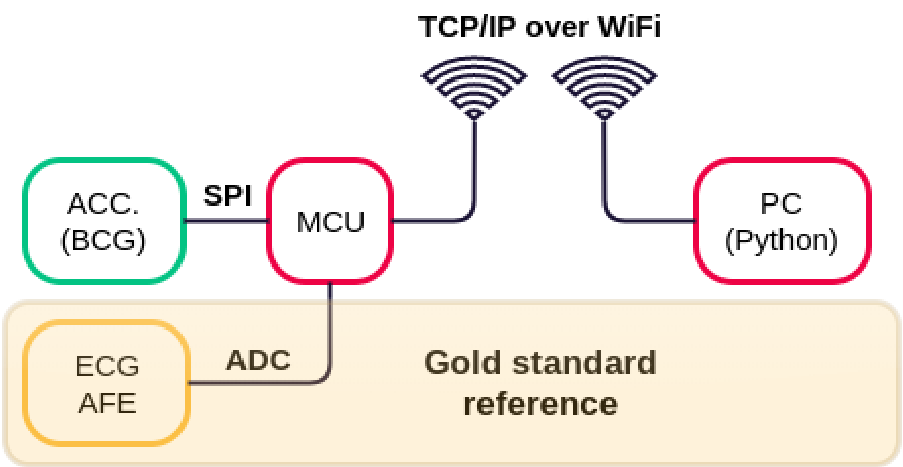 Figure 1: The hardware architecture showing the MEMS accelerometer integration and the reference ECG used for validation.
3. The Refinement Pass
If the system detects an unusually long gap between beats, it doesn't give up. It automatically lowers its "prominence threshold" () to hunt for weak beats that might have been missed due to a shift in sleeping position.
Experimental Results
The system was tested on two datasets (DS1 and DS2) involving 30 healthy volunteers.
- Accuracy: The median F1-score was 98.5%, indicating extremely few false positives or missed beats.
- Timing Precision: The discrepancy between the BCG-derived intervals and the ECG gold standard was only 4.7 ms (MAE). Given that the sampling period is 4 ms, this means the error is practically at the hardware's resolution limit.
- Consistency: The high value of 99.8% proves that the heart rate calculated from bed vibrations is almost identical to that of a medical ECG.
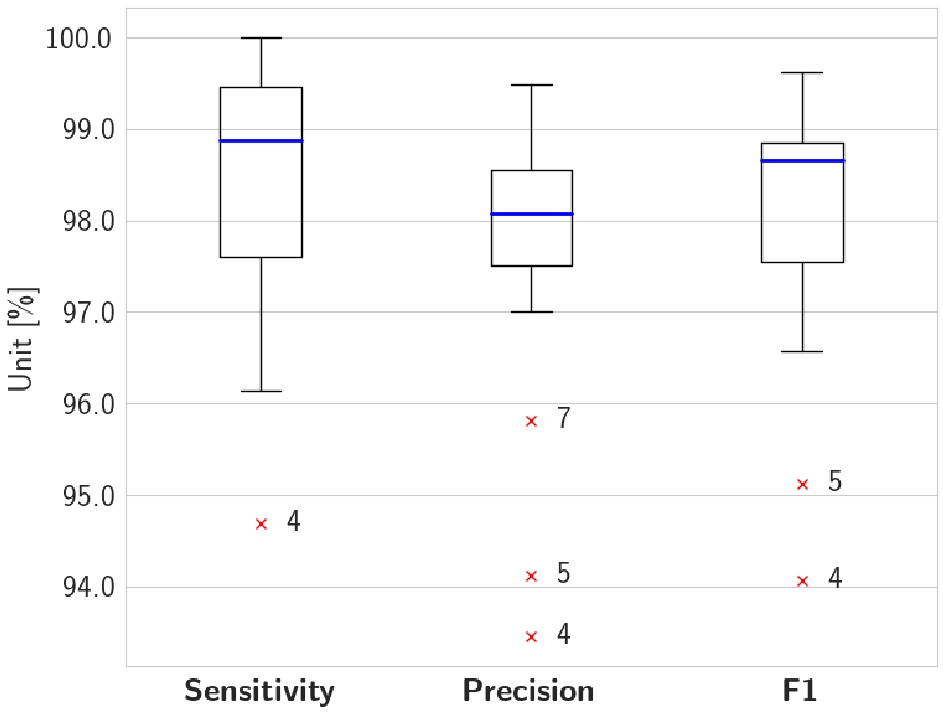 Figure 2: Statistical evidence showing near-zero bias in heartbeat interval estimation across the population.
Critical Insight & Future Outlook
The most impressive feat of this work is its unsupervised nature. Most BCG research requires a simultaneous ECG "guide" to help the algorithm find the peaks. This method removes that crutch.
Limitations: The current study focused on healthy subjects in a supine position. Future work needs to address more complex scenarios, such as subjects with arrhythmias (where heartbeat intervals are irregular) or significant motion artifacts during restless sleep.
Conclusion: This technology paves the way for "Smart Beds" that can monitor heart health and sleep quality for the elderly without requiring them to wear a watch or strap on electrodes. It is a major step toward making the "Internet of Things" (IoT) a proactive tool for digital health.