
Achieving Self-Congruency: Why We Become Someone Else Online
Achieving self-congruency? Examining why individuals reconstruct their virtual identity in communities of interest established within social network platforms
This qualitative study investigates the psychological and social drivers of identity reconstruction in anonymous social network communities, focusing on the QQ platform. It identifies seven key factors—vanity, disinhibition, enjoyment, new social network access, escape from old networks, privacy concern, and disturbance avoidance—integrating them into a framework based on Self-Discrepancy and Regulatory Focus theories.
TL;DR
In anonymous digital spaces like QQ, users often abandon their physical identities to build "reconstructed" versions of themselves. This study finds that this isn't just about hiding; it's a strategic move to close the gap between who we are (Actual Self) and who we want to be (Ideal Self), driven by a mix of vanity, privacy needs, and the desire for social freedom.
Background: The Anonymity Shift
In the physical world, your identity is "anchored" by your body, social background, and personality. You can't easily change your age, gender, or history during a face-to-face meeting. Early research into social media focused on "nonymous" sites like Facebook, where your online life is a direct extension of your offline life. But what happens in the "shadows" of anonymous interest-based communities? This paper explores the "Why" behind the virtual masks people wear on platforms like QQ.
The Core Conflict: Why Reconstruct?
The authors argue that identity reconstruction is a response to Self-Discrepancy. Most of us suffer from a gap between our "Actual Self" and our "Ideal Self."
- The Actual Self: Who you believe you actually are.
- The Ideal Self: The person you aspire to be.
- The Ought Self: The person you feel obligated to be (the "responsible" version).
In the physical world, the "Ought Self" dominates due to social norms and laws. Online, these constraints vanish. By reconstructing an identity, users can shrink the gap between their actual and ideal selves, reaching a state of Self-Congruency—a psychological "sweet spot" of satisfaction.
Methodology: Peeking Behind the Avatar
The researchers interviewed 47 members of various interest groups on QQ (China's second-largest social platform). They categorized the findings into seven distinct motivations, mapped across two psychological focuses: Promotion (seeking gains) and Prevention (avoiding losses).
1. The Promotion Focus (Seeking Pleasure)
- Vanity: Acting out an "outstanding" version of oneself to gain admiration.
- Disinhibition: Feeling "released" to discuss sensitive topics or behave more freely.
- Enjoyment: The pure fun of "role-playing" a different persona (e.g., a female user using a male avatar).
- Accessing New Networks: Pretending to be someone else (e.g., a nurse pretending to be a lawyer) to bridge into new social circles.
2. The Prevention Focus (Avoiding Pain)
- Privacy Concerns: Protecting real-world data from leaks or hackers.
- Avoidance of Disturbance: Using fake contact info to stop spam and "creepers."
- Escape from Old Networks: Hiding from "toxic" acquaintances or old friends who might ask for favors.
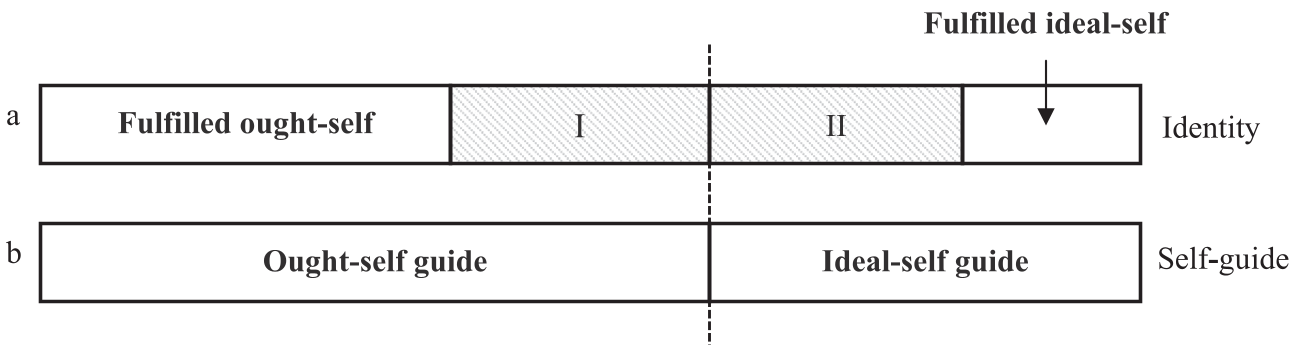 Figure 1: The gap between the Actual Self and the Self-Guides (Ideal/Ought) creates the motivation for change.
Key Results & Insights
The study found that a staggering 98% of the participants had fabricated at least one of the eight core identity attributes (Name, Age, Gender, etc.).
- Privacy is Paramount: Privacy concern was the most cited factor (26 out of 46 users), showing that identity reconstruction is often a defensive shield.
- Disinhibition & Disturbance: Both factors saw high engagement (18-19 users), suggesting that the "freedom to speak" and the "right to be left alone" are equally valuable to the modern netizen.
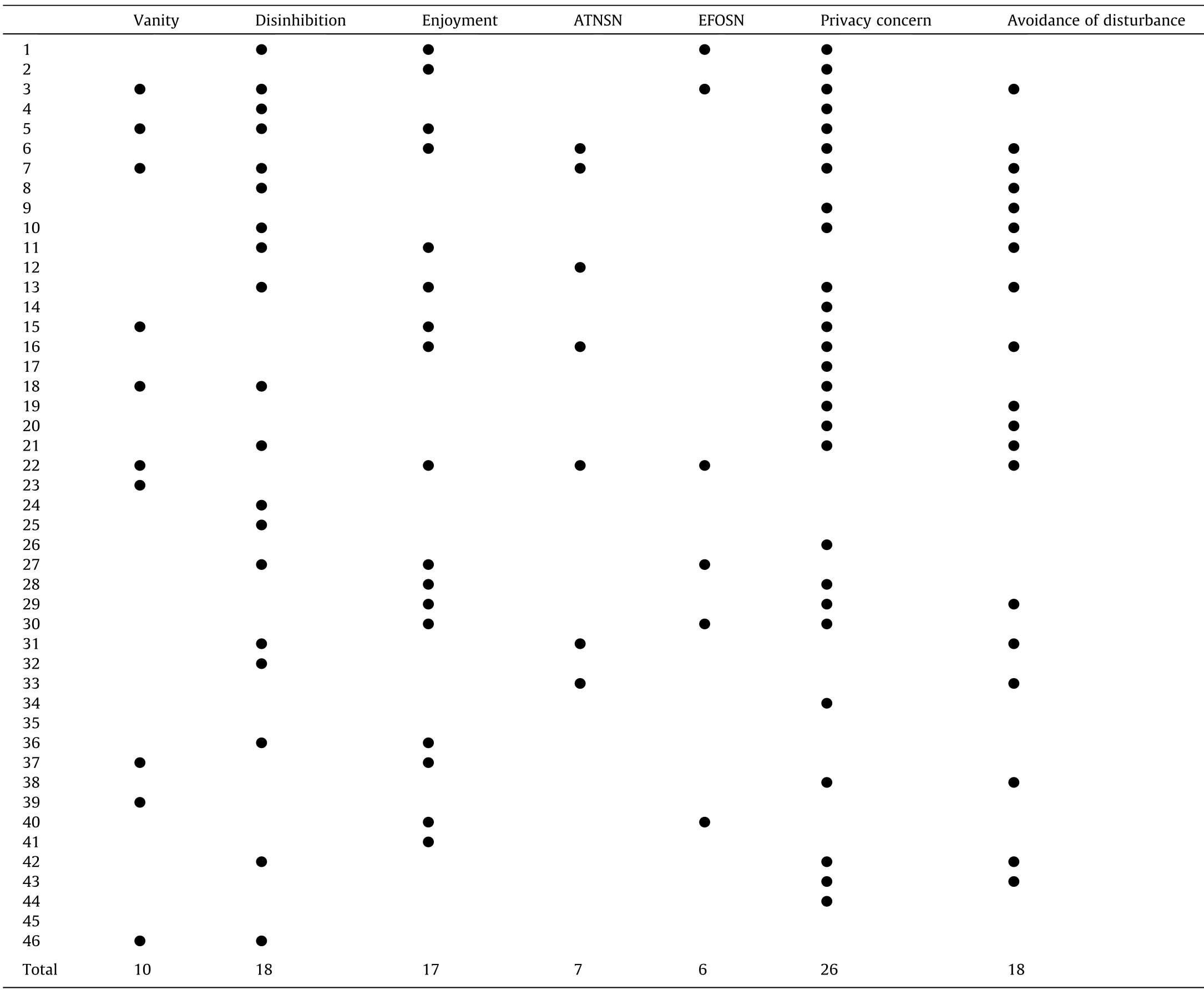 Table 1: Frequency of motivations across the 46 participants who reconstructed their identities.
Academic Perspective: Why This Matters
This work contributes a unique lens by applying Regulatory Focus Theory to social media. It moves beyond the idea that "online faking" is purely deceptive. Instead, it frames it as a self-regulatory mechanism. We "fake it" to survive socially and thrive psychologically.
The introduction of "Vanity" and "Escape from Old Networks" as formal academic factors in social network research provides a more nuanced view of social capital. We don't just use social media to gain capital; we use it to prune the negative capital (burdensome relationships) from our lives.
Conclusion & Future Look
The paper suggests that platform operators should stop forcing "Real Name" policies if they want to retain users. Instead, they should provide tools that help users express their "Ideal Selves"—such as achievement badges or customizable privacy filters.
Limitations: The study is centered on Chinese cultural contexts within QQ. Future research needs to see if Western "Individualism" leads to different reconstruction patterns compared to the "Collectivism" often seen in the East. As we move toward the Metaverse, the ability to reconstruct ourselves will only become more profound.