
Empowering Ants with a Sense of Smell: A Scalable Leap for Social Network Pathfinding
Using the ACO algorithm for path searches in social networks
The paper introduces an extended Ant Colony Optimization (ACO) algorithm tailored for large-scale social networks. By integrating a biologically-inspired "sense of smell" (odor diffusion) into the classic ACO, it enables efficient path searching in graphs with millions of nodes, achieving near-optimal results with significantly reduced response times.
Executive Summary
TL;DR: This paper presents a significant modification to the Ant Colony Optimization (ACO) algorithm, specifically designed for the "Small-World" topology of massive social networks. By introducing a "sense of smell" (odor diffusion), the authors enable ants to locate targets in graphs with hundreds of thousands of nodes—a task where classic ACO traditionally fails.
Positioning: This work moves beyond traditional "static" graph pre-processing. It sits at the intersection of biologically-inspired metaheuristics and large-scale network analysis, providing a SOTA-level balance between the optimality of Dijkstra’s algorithm and the speed required for real-time digital services.
Motivation: Why Ants Get Lost in the Crowd
Searching for a relationship path between two individuals in a network of millions (like LinkedIn or Facebook) is a "needle in a haystack" problem.
- The Dijkstra Fatigue: While Dijkstra is optimal, its execution time on massive graphs is prohibitive for real-time user requests.
- The ACO Paradox: Classic ACO relies on pheromone trails. In a graph with 200,000 nodes, the probability of an ant "randomly" stumbling upon the target is near zero. The ants get "lost," leading to failed searches or extremely high costs.
- The Adaptability Gap: Most existing speed-up techniques (hierarchies, clusters) require hours of pre-processing. If a user adds a new friend, the whole structure may need a costly refresh.
Methodology: The "Odor" Breakthrough
The authors' core insight is simple yet profound: In nature, predators don't just follow trails on the ground; they catch the scent in the air.
1. Identifying Food Sources
The algorithm identifies "Celebrity" nodes (high centrality) as Food Sources (). These are more likely to be requested or serve as bridges.
2. Odor Diffusion
Instead of pheromones (which are on edges), "Odor" is a property of the nodes. A food source radiates an odor that decreases in intensity () as you move further away. This creates a "gradient field" around the target.
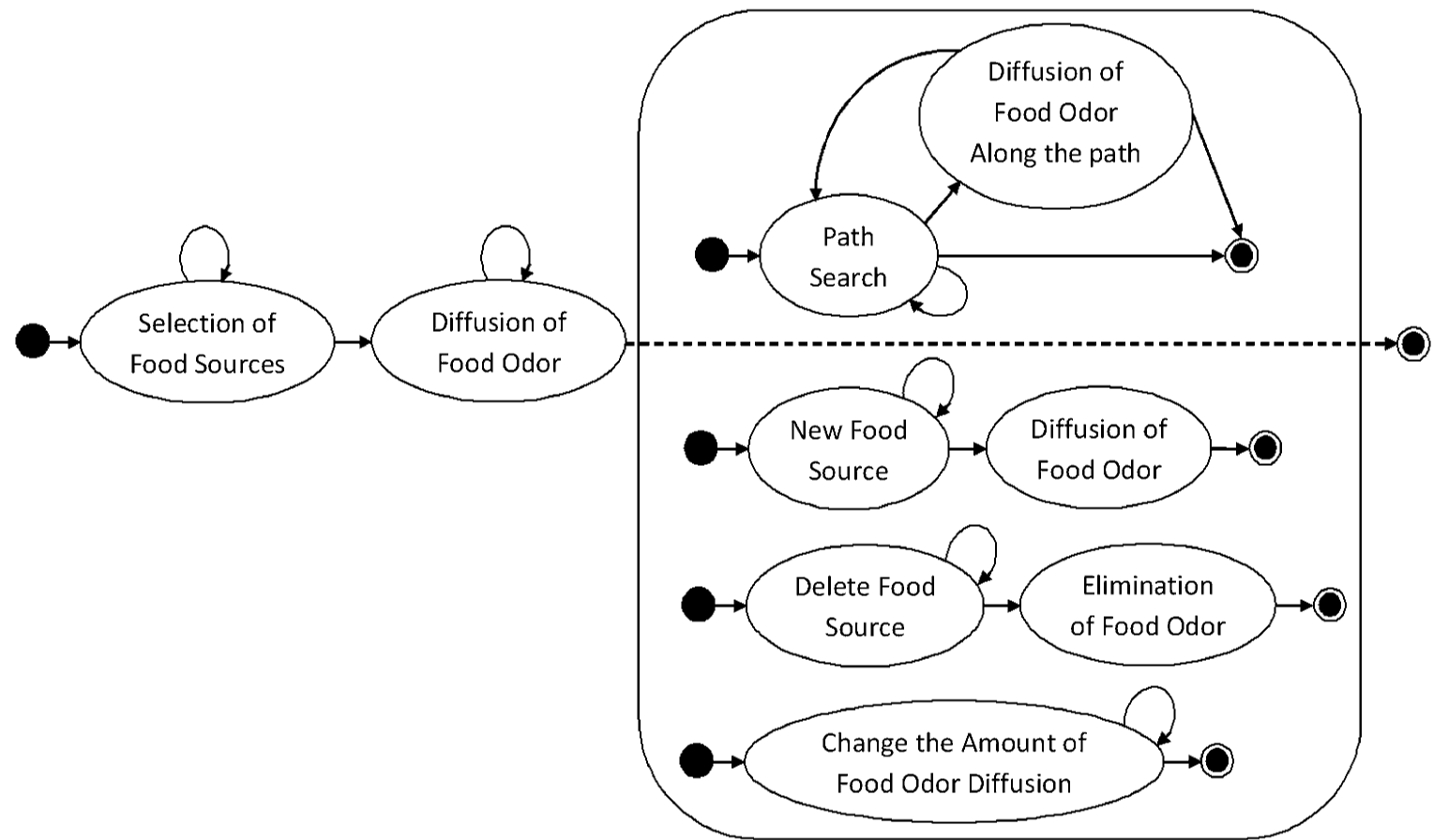
3. The Hybrid Search Phase
Ants use two navigation systems:
- Pheromone Tracking: Following the collective memory of successful paths (classic).
- Odor Guidance: As soon as an ant enters a node with a detectable scent (), it stops its random walk and moves directly up the gradient toward the "smellier" nodes.
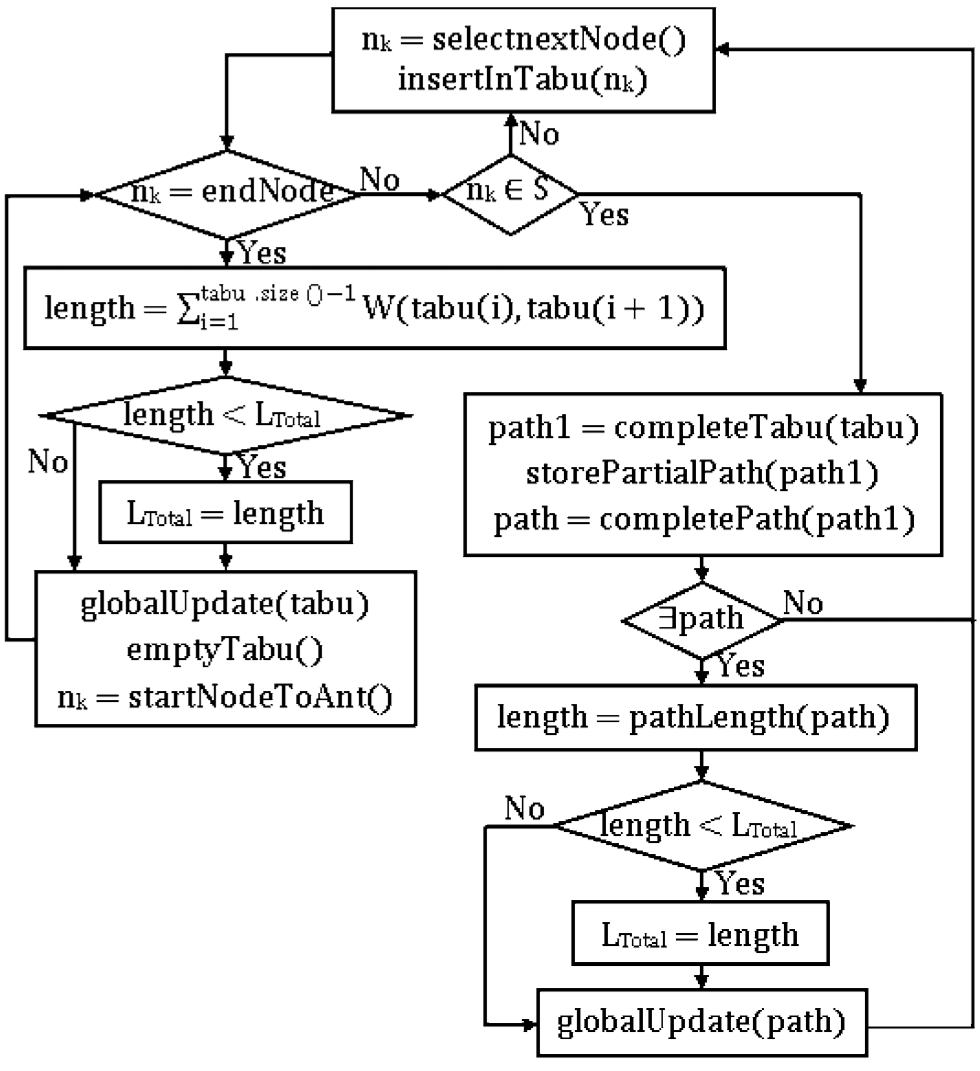
Experimental Showdown: Slashdot and Epinions
The researchers tested their approach on the Slashdot (82k nodes) and Epinions (131k nodes) datasets.
| Metric | Dijkstra (Optimal) | Classic ACO | Proposed ACO (37% Odor) |
|---|---|---|---|
| Success Rate | 100% | Failed (>70% trials) | 100% |
| Mean Path Cost | 3.18 | 18.97 | 3.18 |
| Response Time | 551,284 ms | 345 ms | 48 ms |
As shown in the results, specifically in Table 6, the response time is a staggering 11,000x faster than Dijkstra, while the path cost is practically identical to the theoretical optimum.
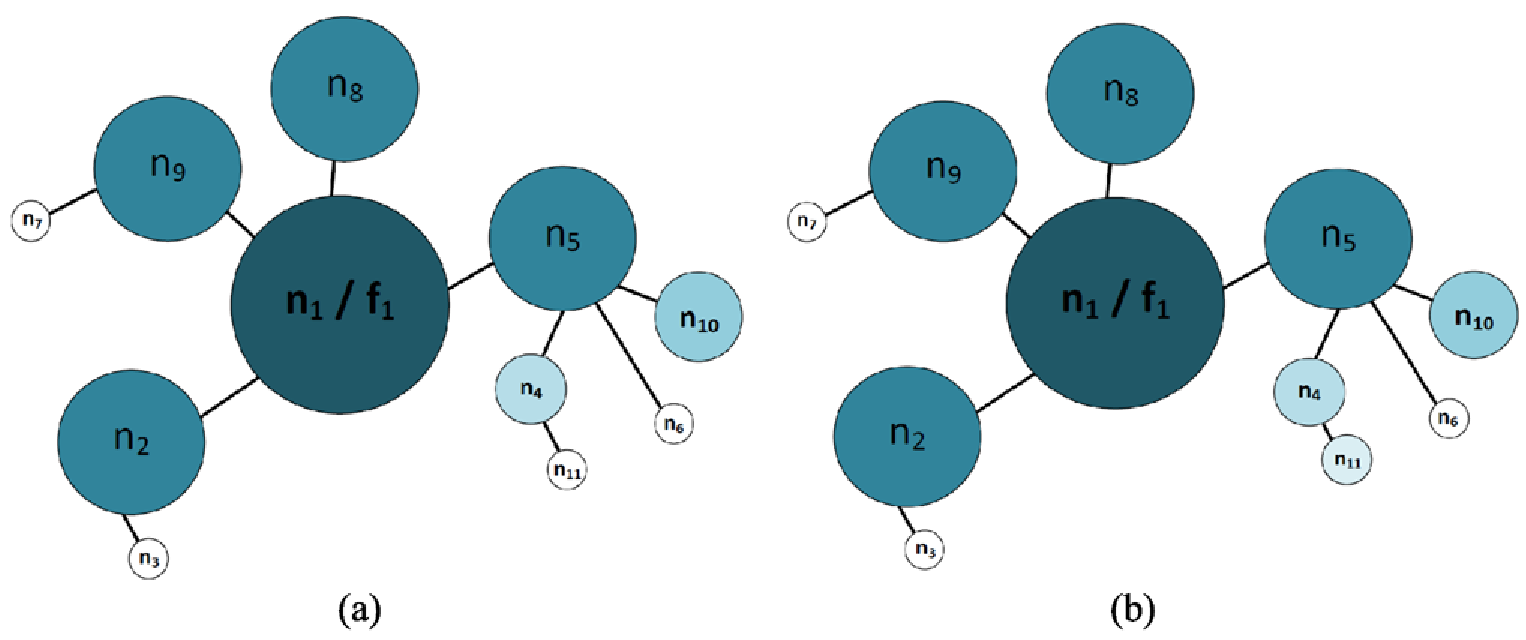 Visualizing how odor diffusion (colored nodes) expands the "vision" of the ants, making the target exponentially easier to hit.
Critical Insight & Conclusion
The true value of this work is Scalability. While other algorithms degrade as the number of nodes increases, this modified ACO remains stable because it focuses on edges (connectivity) rather than raw node count.
Takeaways for Practitioners:
- Inductive Bias Matters: By incorporating the physical intuition of "scent," we can guide stochastic models in high-dimensional spaces.
- Dynamic Readiness: Because the "odor" is localized, updating the graph when a node changes only requires a local odor recalculation, not a global graph rebuild.
Limitations: The method relies on the "Small-World" property (short paths between any two nodes). In extremely "sparse" or "long" graphs where no central hubs exist, the odor diffusion might be less efficient unless the threshold is set very low.
Future Work: The authors suggest applying this to Dynamic Graphs (real-time streaming networks), where relationships appear and disappear in milliseconds.