
Toward an Active Aging Society: Bridging Social Connection with Value Contribution
Toward an Active Aging Society: An IT Model to Engage the Aging Population
This paper introduces an integrated IT model that combines social networking with a service-exchange platform specifically designed for the aging population. By allowing elderly users to act as "value contributors" rather than mere service recipients, the model achieves a unique SOTA approach in promoting active aging and mental well-being.
TL;DR
As the global population ages, the "Demographic Time Bomb" poses a massive threat to social security. This paper proposes a transformative IT model that shifts the elderly from being "burdens" to "contributors." By integrating a Social Network (for connection) with a Service Network (for skill-sharing), and utilizing an aging-friendly UI, the platform empowers seniors to remain productive, mentally healthy, and socially engaged.
Background: The Crisis of "Worthlessness"
In Australia and globally, the dependency ratio is plummeting—by 2050, there will only be 2.7 working-age people per senior. While governments push for longer working lives, traditional industries are often physically unsuitable for the elderly. The real tragedy, however, is the social isolation and sense of worthlessness that follows retirement. Current platforms like Facebook or eBay either ignore the skill-wealth of seniors or present technical barriers that are too high for those with declining eyesight or motor skills.
The Core Innovation: Value Creation through Integration
The authors argue that social connection alone is insufficient. Their model introduces three pillars of engagement:
- Recognition & Reward: Users earn monetary compensation or "Senior Titles" (Level 1-10) to validate their expertise.
- Service-to-Social Loop: When a senior creates a service (e.g., mentoring, light repairs), it populates their social timeline. Purchasing a service triggers a group chat, turning a transaction into a lasting friendship.
- Bayesian Quality Control: To ensure the community thrives, services are ranked using a weighted formula that balances raw ratings with user experience levels.
Platform Architecture
The system leverages a sophisticated backend to ensure security and real-time responsiveness.
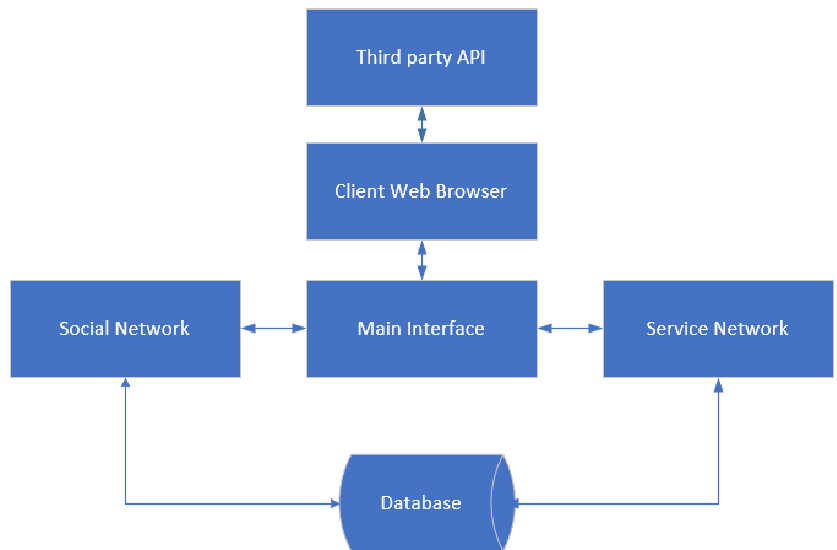 The architecture utilizes ASP.NET MVC for security and Google Firebase for real-time messaging, minimizing server load while maximizing the "live" feel of the social interactions.
Methodology: Designing for Biological Reality
One of the paper's strongest contributions is its focus on Gerontechnology (Aging-Tech). The designers recognize that "standard" UI is often a barrier for the elderly.
1. Combating Physical Decline
- Visual Impairment: The platform includes native controls for font magnification and color scheme adjustment (targeting Presbyopia and Cataracts) directly in the header.
- Motor Control (Fitts' Law): Clickable areas are expanded using Bootstrap grid systems to accommodate hand tremors or reduced precision.
2. Cognitive Load Reduction
To support users with early-stage dementia, complex tasks (like registration) are broken into "micro-steps." Tooltips are provided at every field level to prevent memory-overload.
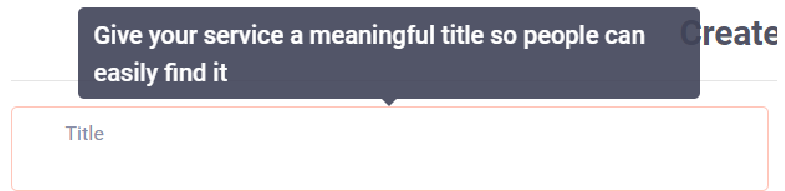 Contextual tooltips reduce the "cognitive distance" between the task and the help menu.
Experiments: The Weighted Rating (WR) System
The heartbeat of the platform is the Weighted Rating formula, which prevents new but high-quality services from being buried: Where is votes, is average review, is the user's achieved level, and is the mean vote. This ensures that a senior's reputation (Level) carries weight across different service categories.
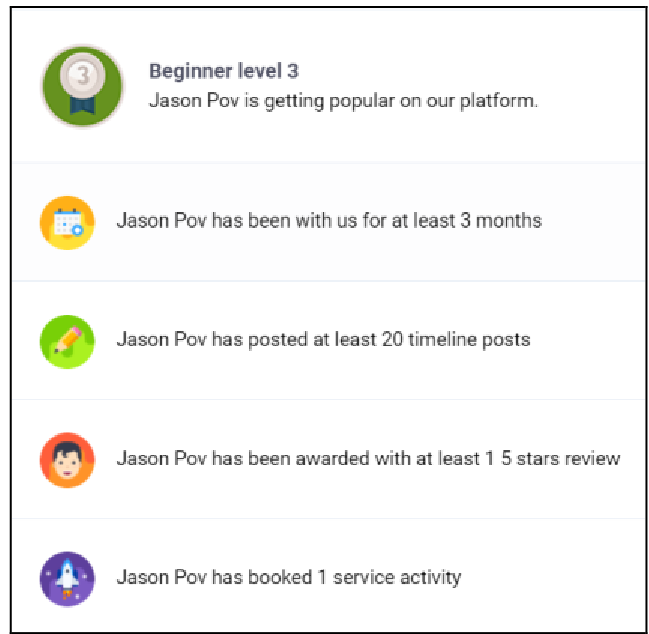 The leveling system (1-10) serves as a digital "badge of honor," encouraging long-term participation and establishing trust within the community.
Critical Analysis & Conclusion
Takeaway
This model succeeds because it treats the elderly as assets. By providing a hybrid space where a transaction (Service) leads to a relationship (Social), it mimics the organic way humans have always interacted in local communities, now scaled through IT.
Limitations & Future Work
While the architecture is robust, the current study lacks large-scale longitudinal data on actual user retention. The authors' future plan to use a "point-based engagement" metric will be vital to seeing if "Active Aging" translates into measurable improvements in mental health.
Final Thought
The solution to an aging society isn't just better healthcare—it's better purpose. This platform provides the digital infrastructure for that purpose.