
UARF: Bridging the Gap Between Smart Homes and Chronic Disease Management
16407_Active monitoring for lifestyle disease patient using data mining of home sensors.
This paper proposes the User Activity Recognition Framework (UARF), a layered architecture designed for the active monitoring of lifestyle disease patients (e.g., diabetes, hypertension) at home. The system integrates multi-modal sensor data from smart appliances, wearable devices, and mobile apps to recognize daily life patterns and provide medical interventions.
TL;DR
The paper introduces the User Activity Recognition Framework (UARF), a robust, layered system designed to transform a standard smart home into an active medical monitoring environment. By mining data from ambient sensors (noise, CO2, magnetic) and medical devices, it reconstructs a "Life Log" and scores patient lifestyle habits to prevent the deterioration of chronic conditions like diabetes.
Problem & Motivation: The Interoperability Crisis in e-Health
Patients with "lifestyle diseases"—such as diabetes or hypertension—spend the vast majority of their time at home, yet clinical intervention typically occurs only during rare hospital visits. While modern homes are flooded with sensors, two major issues remain:
- Fragmentation: There is no unified standard to process data from a refrigerator sensor, a blood glucose meter, and a smartphone app simultaneously.
- Context Gap: Raw data (e.g., "high noise levels") lacks medical meaning without a framework to translate signals into activities like "exercise" or "meal prep."
The authors' insight is to create a layered middleware that abstracts device-specific protocols into a unified data analysis layer.
Methodology: The User Activity Recognition Framework (UARF)
The core of the system is a four-layer architecture that moves from raw hardware interaction to high-level medical knowledge.
The Layered Architecture
The UARF ensures that vertical communication between physical devices and digital services is seamless.
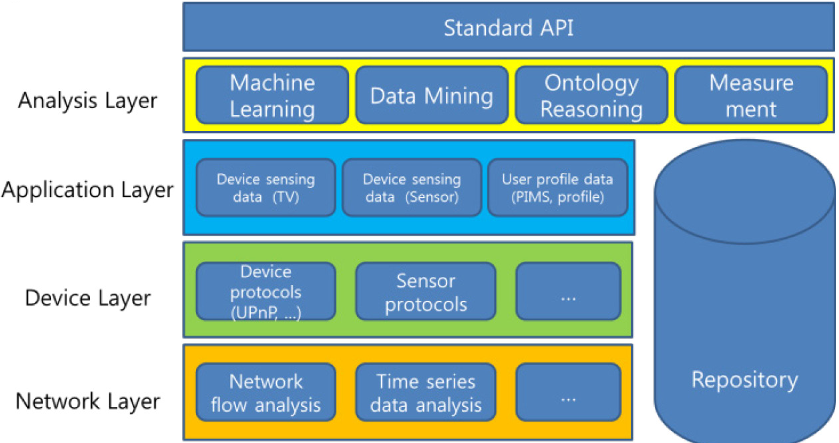
- Device & Network Layers: Handle the heterogeneity of sensors (embedded Linux, D-MAP protocols).
- Data Analysis Layer: The "engine room" where supervised learning occurs. When the system detects a peak in sensor activity (like noise), it asks the user via a smartphone: "What were you doing?" This feedback creates a labeled dataset for future autonomous recognition.
System Configuration
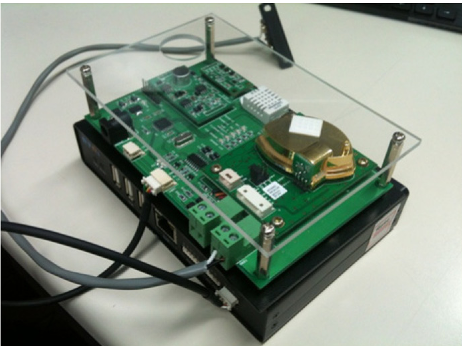
The deployment involves a specialized sensor board monitoring temperature, luminance, humidity, noise, CO2, and magnetism.
Experiments & Results: Scoring a Healthy Life
The system's efficacy was tested through two primary applications:
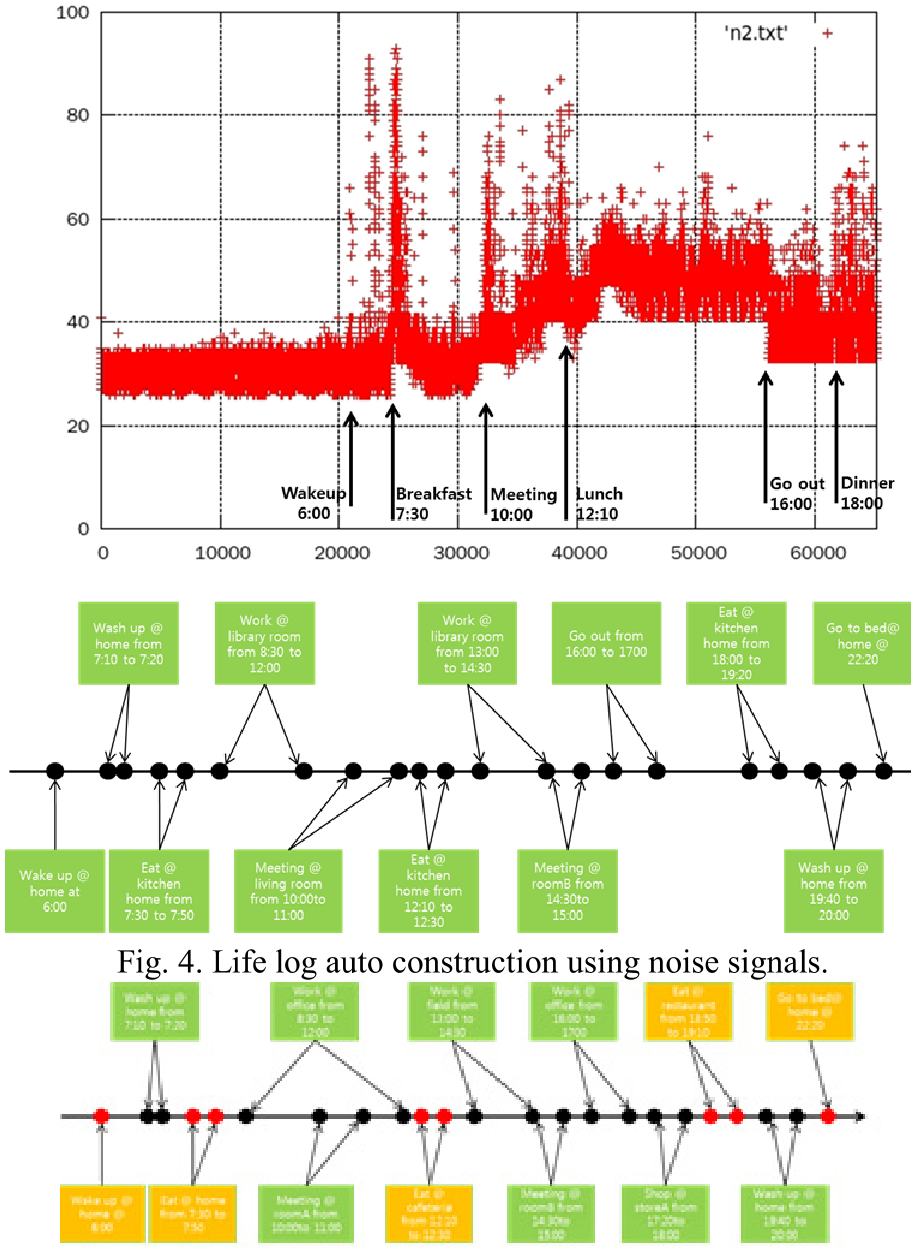
- Life Log Auto-construction: By analyzing peak signals (e.g., noise), the system could successfully categorize segments of the day into "Activities of Daily Living" (ADL).
- Balanced Lifestyle Service: The system quantifies health by calculating a daily score. For instance, a patient might receive 15 points for a timely meal and 10 points for sufficient sleep, providing an intuitive "Health Score" out of 35.
Critical Incident Detection: One of the most compelling results was the scenario-based detection of an insulin shock. By combining camera vision with noise/motion data, the system could identify a fall and immediately alert emergency units with the likely cause (hypoglycemia), potentially saving lives in a way traditional blood-glucose monitoring alone cannot.
Critical Analysis & Conclusion
UARF represents an important shift from reactive healthcare to proactive monitoring.
Strengths:
- Inductive Bias: By focusing on "life patterns" rather than just clinical markers, it captures the holistic health of the patient.
- Active Learning: The human-in-the-loop feedback solves the "cold start" problem of activity recognition in new environments.
Limitations:
- Privacy: Constant camera and noise monitoring in the home raises significant ethical concerns that need addressal via edge computing.
- Scalability: The reliance on manual user labeling for the supervised learning phase might be burdensome for elderly patients.
Final Takeaway: The future of chronic disease management lies not in better medical devices, but in more intelligent frameworks that can weave existing home data into a coherent medical narrative.