
ActiveBrain: Reimagining Social Networks as Life-Sustaining Tools for the Elderly
ActiveBrain: Online Social Platform for Active and Healthy Ageing
ActiveBrain is a multi-platform online social ecosystem designed to promote "Active and Healthy Ageing" among the elderly. It integrates cognitive training games, life-story sharing, and healthcare support tools to combat digital exclusion and age-related cognitive decline.
Executive Summary
TL;DR: ActiveBrain is not just another cognitive training app; it is a holistic social ecosystem that addresses the multidimensional challenges of ageing. By combining "Brain Training," "Stories Sharing," and "Senior Support," the platform seeks to keep the elderly mentally sharp, socially connected, and physically monitored through a unified digital interface.
Academic Positioning: This work represents a shift from purely medical "cognitive rehabilitation" toward a "biopsychosocial" model. It positions digital platforms as a "third place" for seniors—a space between home and the clinic where social interaction becomes the primary driver for health.
The "Digital Divide" and the Social Loneliness of Ageing
As the global population ages, a silent crisis emerges: the digital exclusion of seniors. Prior work often classifies the elderly as a "hard-to-change" group, citing barriers like poverty, lack of technical support, and "technological anxiety."
The authors argue that the missing link in current technology design for seniors is social relevance. Most platforms are either too clinical (focusing only on exercises) or too complex (generic social networks). ActiveBrain bridges this gap by making social interaction the reward for cognitive effort.
Methodology: The Three Pillars of ActiveBrain
The project team utilized "Design Science," an iterative process focused on solving real-world problems through artifact creation. Their findings led to a three-pronged architecture:
1. Cognitive Training (The Science of Plasticity)
Leveraging the brain's "neural plasticity," the platform offers games designed by neuropsychological experts. Unlike traditional games, these focus on preserved skills and adapt to the user's specific cognitive profile.
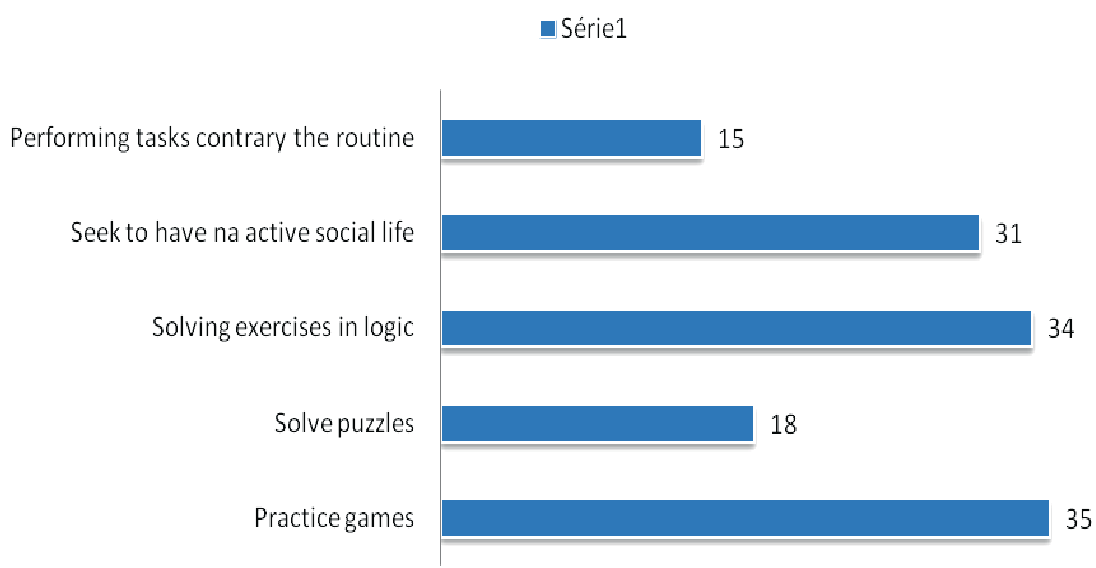 Figure 1: Specialist inquiry results showing that logic games and social life are perceived as the most effective stimulators.
2. Stories Sharing (The Cultural Anchor)
This module uses "Life Stories" to stimulate autobiographical memory. By sharing traditions and memories, seniors transition from being "patients" to being "contributors," which enhances their sense of self-worth and belonging.
3. Support to the Elderly (The Clinical Bridge)
ActiveBrain acts as a "ubiquitous computing" bridge. It allows for:
- Remote Monitoring: Real-time physiological data collection.
- Therapeutic Dialogue: Reformulating the therapist-patient relationship into a continuous feedback loop rather than occasional face-to-face visits.
Key Results & Insights
The research highlights a significant shift in senior behavior:
- From Passive to Active: Unlike television, online games allow seniors to take unique strategy roles, making them active participants in their mental health.
- Cost Reduction: By facilitating remote therapy, the platform increases the number of patients a single therapist can treat, reducing the financial burden of chronic disease management.
- Inclusive Design: The inclusion of family and caregivers in the "gaming" experience prevents the isolation often felt when using assistive technology.
 Figure 2: The overarching conceptual framework of the ActiveBrain project.
Critical Analysis & Conclusion
Takeaway
The success of geriatric technology depends on empowerment, not just assistance. ActiveBrain’s greatest contribution is the realization that "social networks" have the potential to enrich senior life more deeply than simple diagnostic tools.
Limitations
A major challenge remains the "Software Obsolescence Trap." By the time a senior becomes comfortable with a specific interface, the underlying technology often becomes outdated. Maintaining a stable, consistent UI while updating the backend is a critical engineering hurdle for this demographic.
Future Outlook
The next frontier for ActiveBrain is likely the integration of AI "Virtual Coaches" who can offer personalized emotional support, making the platform not just a tool for interaction, but a constant companion in the journey of active ageing.